Tesla keeps hyping robotaxis as its future. But it’s trailing rival Waymo in a field yet to prove profitable
Nothing is more important to Tesla than its ambitious plan for self-driving “robotaxis.” But even as it hosts an event for its Cybercab service Thursday, it...
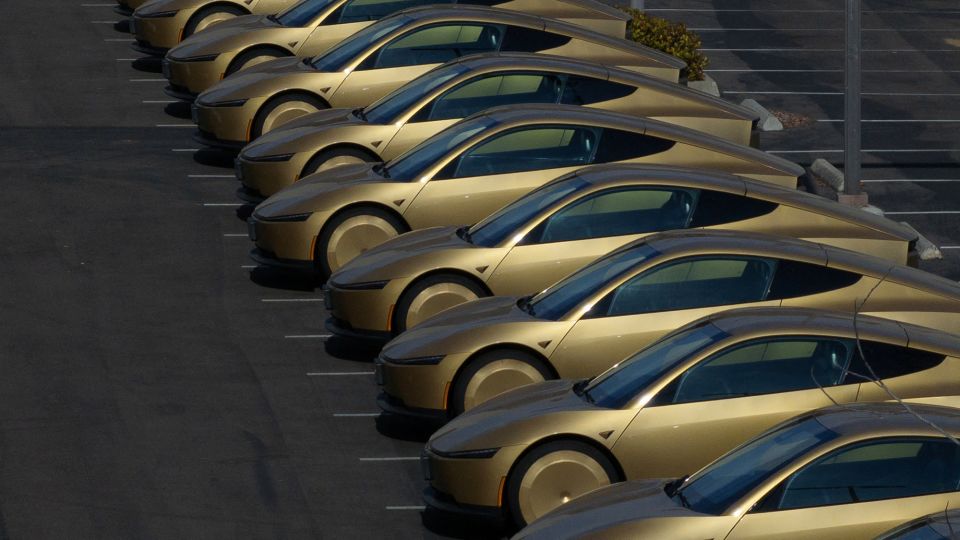
Nothing is more important to Tesla than its ambitious plan for self-driving "robotaxis." But even as it hosts an event for its Cybercab service Thursday, it still has a long way to catch up to the competition in an industry where few have made any money at all.
Tesla has stayed relatively mum about its presentation Thursday evening, except for a a 51-second video of the Cybercab posted on the social media platform X. The video showed the vehicle on Austin streets and images of people using an app to hail one, but had little narration. But the public first got a look at the Cybercab at a glitzy Hollywood event two years ago, and prototypes have been seen in cities across America since then.
Even if the company pulls off the technological feat that would be full Cybercab service, however, it might run into a much larger issue – profits.
Tesla did not respond to requests for comment.
Tesla is far behind robotaxi targets – and a rival
The company has been running a robotaxi service using its Model Y SUV since June 2025, sometimes with a company employee behind the wheel. More recently, its robotaxis have run without a driver in the some cars.
Tesla CEO Elon Musk has arguably banked the company on the Cybercab's success. He predicted last year that the company's robotaxi service would be available to half of the American population by 2025, and told investors in January that the company will eventually "make several times more Cybercabs per year than all our other vehicles combined."
But Tesla only offers unsupervised rides in six cities in Texas and Florida, and investors may have grown skeptical of Musk's confident predictions.
Shares of Tesla ( TSLA ) are up only 7% over the last six months and closed Wednesday down more than 20% year-to-date.
"Investing is about betting on the future," said Bryant Walker Smith, an expert in autonomous vehicles and an affiliated scholar at the Center for Internet and Society at Stanford Law School. "Tesla is very good at selling that future. But at least with respect to automated driving everywhere and all the time, the company has been far less successful at actually delivering it."
And if Tesla wants to be successful, it also has a long way to go to get past a key rival: Waymo, the self-driving car service from Google parent Alphabet.
Waymo said in March that it was up to 500,000 paid rides in its driverless cars a week and that number had doubled in the previous year. The company rolled out its service in three more cities – Denver, San Diego and Tampa – on Tuesday, bringing it to 14 cities in which it provides driverless rides. And it said that through March, it had provided 220 million miles of driverless rides to customers since it began in 2018.
Topics in this story
Gathered from external sources. Rights to this text belong to whoever originally published it.