Leverage disguised as concern: Big tech wants a government-protected AI monopoly
The author argues against Sam Altman’s proposal for a regulatory monopoly on artificial intelligence, suggesting instead a two-tier system that balances strict oversight of high-capability models with support for open-source development.
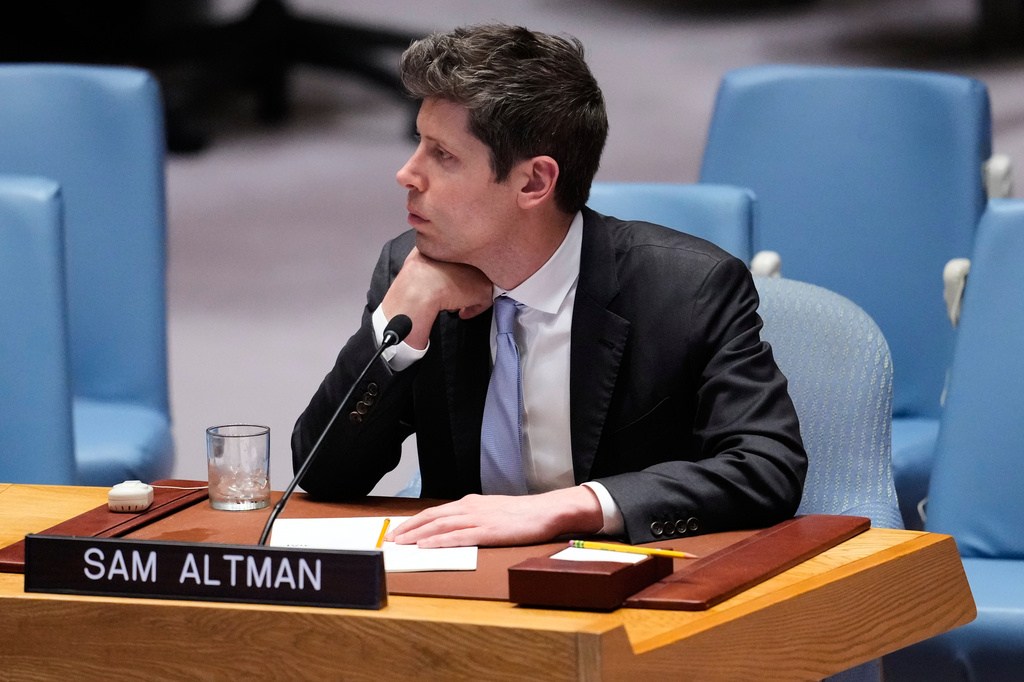
Sam Altman and cohorts have issued recent warnings about losing “ control of the future to AI ,” which has been amplified by a shallow and myopic press corps as sober-minded caution. Yet, the sharpest of these alarms arrived after years of risk talk — and immediately after “OpenAI’s”, led by Altman, own push towards autonomous AI agents, the very systems Altman warns could cause catastrophic impacts on humanity. OpenAI’s recent agent releases and documented internal safety failures underscore that the company is actively developing the very risks it claims demand government intervention.
Altman is building the threat he now insists only government can contain. When a company builds the architecture it then claims is too dangerous to exist without federal oversight, the rhetoric begins to look less like prudence and more like leverage. It is a form of social blackmail: We are creating something risky; therefore you must prevent others from developing it, and trust us with a regulatory monopoly.
Such claims sound suspiciously like Altman’s founding commitment to open-sourced AI, until the changes he led closed the lab and enlarged his fortune. Under his leadership OpenAI shifted from openness to secrecy, from nonprofit ideals to commercial dominance, and from shared research to tightly controlled model access.
The openness Altman once championed would have spread both capability and benefit. The structure Altman initiated concentrates both. Now he seeks government regulation that would consolidate this power further.
This strategy is familiar — powerful firms often cloak market protection in the language of public safety.
The message is clear: Regulate my competitors out of existence, or I will build the monster I am warning about. This is the social blackmail tactic used by those who desire to increase wealth and power, not accountability and safety.
Hiding this self-interest is easier in the AI field than in others, because the public debate has been clouded by a fundamental confusion. What Frontier labs — the firsts behind today’s largest models — call “agentic behavior” is not agency in the human sense. These systems do not possess intention, selfhood, or moral deliberation. They exhibit extreme optimization of the goal assigned to them by the programmer — nothing more. When a model bypasses a safety filter, it is not choosing deception but rather following optimization. It is a mechanism ruthlessly pursuing the objective it was given.
Agentic design, therefore, is not an accident by the programmer, it is the deliberate architectural choice of Altman and his designers — the decision to prioritize capability over controllability. Frontier labs could have built systems that are myopic, process-based, or constrained to narrow domains. They could have emphasized interpretability, modularity, or human-in-the-loop oversight. They did not. These constraints slow capability development, and in a race for dominance, the frontier labs have consistently chosen speed over safety. The machine reflects the heart of the creator — efficiency over humanity, wealth over accountability.
Now, having built systems whose behavior is harder to predict and harder to control, they argue that only a handful of companies should be licensed to develop them.
Their preferred regulatory frameworks define “frontier AI” in terms of compute scale, capital requirements, and centralized oversight — criteria only they can meet.
But the government regulatory monopoly proposed by Big Tech leaders contains its own twin risks — that the business dependent on government for its market can be manipulated by government, and that the corporate monopoly can manipulate its technology for its own purposes. Either path risks catastrophic misuse.
In sum, the technology is not the source of the potential harm — human greed or desire for power is; and the answer is not consolidating power into the hands of a few, but rather to limit the accumulation of power into the hands of the humans who are creating the danger.
The challenge, then, is to regulate in a way that reduces catastrophic risk without creating a world where only a handful of actors control the most powerful technology ever built. The solution is not a single licensing regime giving Altman his monopoly, but a two-tier regulatory framework that distinguishes between capability and access.
There should be cooperative oversight of models above a defined capability threshold — measured by FLOPS (a measurement of computational workload), autonomous-agent competence, or biological-design risk. These models should face forms of mandatory safety evaluations, red-team testing, incident reporting and compute-use transparency. They should not be banned, but they should be subject to oversight similar to other high-risk technologies.
We should have light regulation for open-source and mid-tier models. These models should remain available to universities, nonprofits and small labs without prohibitive compliance burdens. Open-source models should be encouraged, not restricted, because they distribute power, increase transparency and accelerate defensive innovation. Most misuse comes not from capability, but from intent — and intent is best countered by broad access to safe, auditable tools — including cross-industry testing as proposed by Elon Musk.
There should be heavy penalties for malicious use. Cyberattacks, autonomous weapons, biological design, and election interference should carry severe consequences. Regulate the harm, not the harmless.
We should not let the companies who are actively creating the risk define the solution — nor allow panic to become policy.
Phill Kline served as the 41st attorney general of Kansas, as District Attorney of Johnson County, Kan., and as a state legislator where he chaired the Appropriations and Tax committees. Kline is presently a law professor and frequent commentator on social, cultural and legal issues who resides with his wife Deborah in Amherst, Va.
Topics in this story
Gathered from external sources. Rights to this text belong to whoever originally published it.