‘Infinite Demand For Robots:’ Inside Matter Venture Partners’ $450 Million Bet On Physical AI
There's almost an infinite demand for robots right now, including humanoids, says Matter Venture Partners Haomiao Huang. But they may not look like humans.
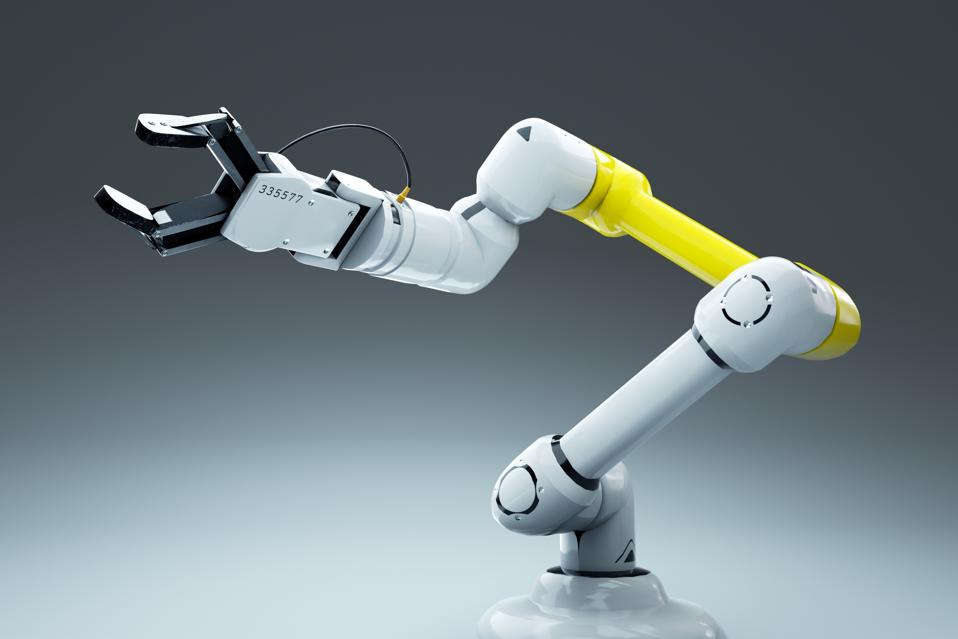
AI is eating the world, to paraphrase Marc Andreessen's famous quote on software. And if so, hardware and physical AI are its teeth, says Haomiao Huang, founding partner of Matter Venture Partners, which just closed a $450 million second fund.
We can all see that agentic AI is finally doing real work: tell an agent to go build something, research something or fix something, and it comes back when it's done. It might not be perfect, but it's often serviceable if not excellent. The physical world, however, is not yet like that. There, we still have to do our own work ourselves.
Changing that is exactly what Matter Venture Partners is betting on.
The Silicon Valley firm closed its second fund at $450 million last month, up from its $300 million first fund. The goal, Huang told me in a recent Humanoid Daily podcast , is to back early-stage hard tech startups in semiconductors, robotics and physical AI, quantum computing, advanced manufacturing and energy. Its investors and limited partners read like a map of the global chip supply chain: ASML, TSMC, Quanta Computer, Resonac, Nitto Denko, Sojitz, the Development Bank of Japan and Kleiner Perkins.
"If AI is going to eat the world, hardware will be its teeth," founding partner Haomiao Huang said in the fund announcement.
"I think the amazing potential of AI is just that it can do almost anything and everything. But when you think about it, we live in a physical world, right?" Huang told me. "And when you think about where it can find its greatest expression in terms of uplifting our lives, making our health better, making our daily lives better, doing the things that we don't want to do or can't do, it's going to be through robots. It's going to be through physical AI."
Unsurprisingly, hardware is also what AI runs on. Chips, data centers and fabs are the choke points, Huang says, so physical systems matter on both the supply side and the demand side.
Huang, who earned his PhD at Stanford working on some of the earliest controllable quadcopter drones, has an interesting way of describing the gap between digital and physical.
A modern chip is designed almost entirely in software. It's verified in simulation, then taped out once or twice.
"Can you imagine a space launch company that's like, I'm going to design everything in software and then just launch a rocket once and it works?" he asks. "Or even building furniture, right?"
AI and world models are making it possible to design and simulate almost anything digitally. The bottleneck is turning that design into a real object, reliably and repeatedly.
Topics in this story
Gathered from external sources. Rights to this text belong to whoever originally published it.