Trump downplays cybersecurity fears as outages spread
We don’t want theories or blanket assurances based on feelings — we want to know that the people responsible for protecting our country are being transparent and are taking every threat and every failure seriously.
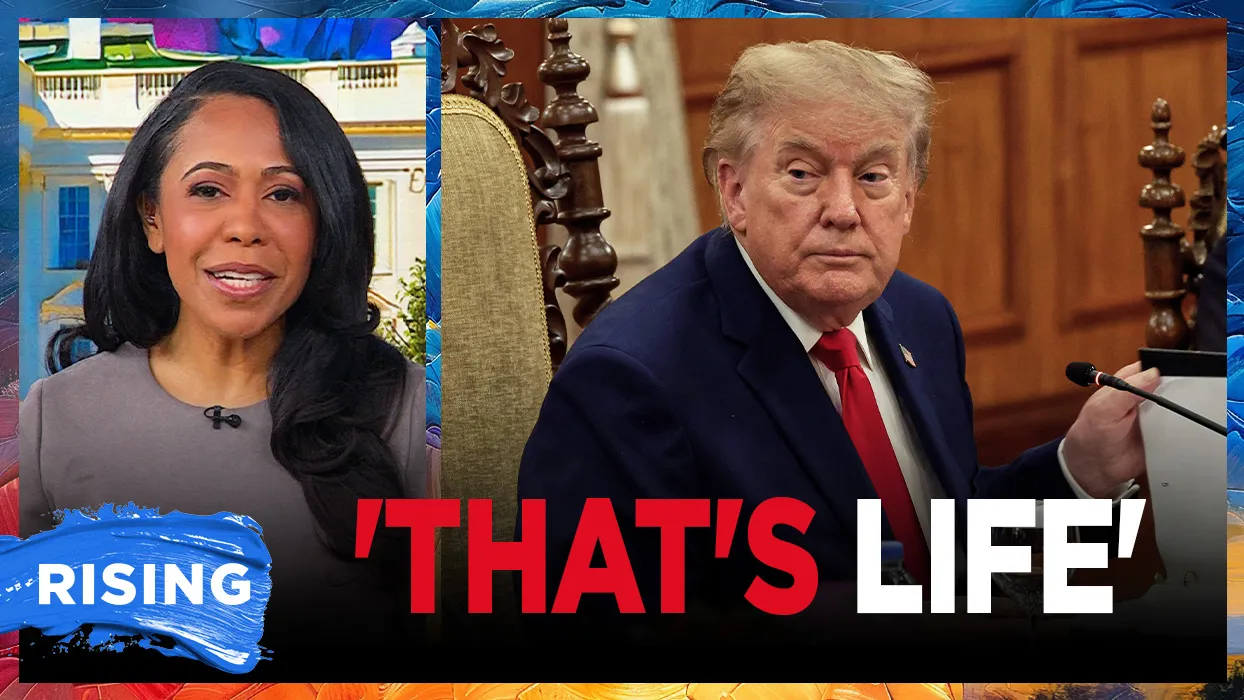
President Trump is downplaying the recent string of chaotic tech failures affecting air travel, banking and office communications. Here’s what he told reporters in the Philippines on Tuesday:
Trump: “We’ve got, it’s going to be very much under control.”
Reporter : “Are you concerned with all these outages, FAA?”
Trump: “ No, that’s life. It’s life. When you’re big and powerful and you have all the money, things like that happen.”
That’s an interesting way to describe a situation that left thousands of Americans dealing with travel disruptions and uncertainty on your watch.
Then you have Homeland Security Secretary Markwayne Mullin suggesting on Fox News that “SI,” aka “super intelligence,” could be contributing to the outages, according to an unnamed source he knows. His theory came from an alleged technology industry contact who suggested AI systems may be making changes faster than older infrastructure can handle. Mullin also said he was 98 percent certain there was no cyberattack, citing a lack of evidence of malicious activity.
This is not a statement to take lightly. Artificial intelligence has the capability to lead to some existential safety issues over decisions affecting our country’s infrastructure, especially if the systems goals are misaligned with human values. This is exactly the kind of things Bernie Sanders has been warning about and trying to regulate.
It doesn’t seem like officials know exactly what’s happening, and if that’s the case, they should be really uncomfortable asking Americans not to worry. Transportation Secretary Sean Duffy blamed the FAA outage on outdated equipment and alleged contractor. Companies like Microsoft, Chase Bank and United Airlines attributed their outages to internal software bugs, AI update failures, or production code issues rather than malicious events. All of this happening in a matter of days is not something you downplay.
Adding insult to injury, the New York Post reports that while travelers were still dealing with the fallout from Friday’s nearly five-hour FAA ground stop, Mullin flew on his government private jet to Baton Rouge to attend the LSU-Texas football game. The shutdown and subsequent recovery contributed to nearly 7,000 cancellations and almost 8,000 delays for average American travelers.
Still, Mullin defended his trip : “I would have never taken airspace if the airspace wasn’t open … we still got to live our life at the same time. We still have family friends, and but we also have work we do every day.”
He’s completely missing the point. Nobody is arguing that he isn’t allowed to enjoy a football game. The issue is judgment and optics. When you’re responsible for homeland security, and Americans are still dealing with the consequences of a major infrastructure failure, leadership means understanding the moment. Imagine the head of FEMA attending a football game the day after a consequential hurricane that left thousands out of sorts.
The Post also reported that Mullin watched from the private box of Ben Bordelon, CEO of Bollinger Shipping, a company with significant DHS contracts including a brand new one valued at $2.2 billion to build ships for the U.S. Coast Guard.
Newsweek reports that malicious code reached websites associated with 178 organizations yesterday, including CNN, the BBC, Zoom and HSBC. So we know that is indeed a real cybersecurity incident, even if leadership doesn’t want to look into the possibility that the others may be cyber incidents as well.
We don’t want theories or blanket assurances based on feelings — we want to know that the people responsible for protecting our country are being transparent and are taking every threat and every failure seriously.
Lindsey Granger is a NewsNation contributor and co-host of The Hill’s commentary show “Rising.” This column is an edited transcription of her on-air commentary.
Topics in this story
Gathered from external sources. Rights to this text belong to whoever originally published it.