US Open Influencer Credentials Double, And Tennis Etiquette Cracks
The U.S. Open nearly doubled its creator credentials to close to 100 this year. A halted Osaka match and viral ring-light clips show the cost of reach withou...
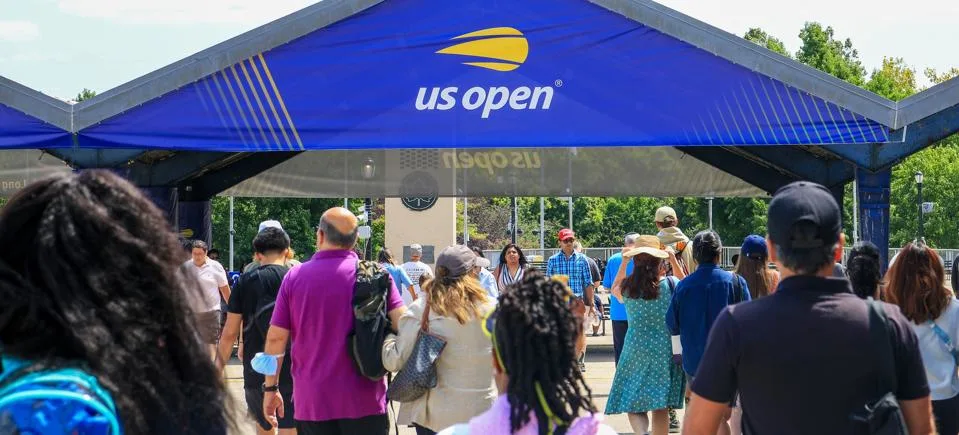
The chair umpire had to stop the match. During Naomi Osaka's first-round win at the U.S. Open on Monday, Kader Nouni paused play to ask a group in a hospitality suite behind his chair to sit down; they had been moving around and shooting photos, with a light, as Osaka prepared to serve. By midweek, clips of spectators holding ring lights during matches at Arthur Ashe Stadium were circulating widely, and the sport's most codified major had a new argument on its hands.
That argument is not really about tennis manners. It is about what happens when an institution built on silence between points invites in an audience whose job is to make noise.
The United States Tennis Association credentialed content creators as media for the first time in 2025, when it approved 54. This year, Front Office Sports reported the tournament approved close to 100 before qualifying week, and is separately paying roughly two dozen creators to produce content on the tournament's behalf across its three-week run. The USTA's own figure for last year's cohort: more than 5.5 million social engagements, according to Axios .
The commercial logic is not subtle. The 2025 U.S. Open drew 1.14 million fans, a 9% increase on the tournament's first million-fan year in 2024. Average ticket prices for the first day of main-draw play reached $296, up nearly 20% year over year, per TicketData figures cited by Front Office Sports. The tournament has become the place where fashion, finance and Hollywood go to be photographed, and creators are the people holding the cameras.
Players are split, but not the way you might expect
The top of the women's game is largely on the creators' side. World No. 1 Aryna Sabalenka told Front Office Sports she loves the attention: "It's more eyes on our sport." Former U.S. Open champion Daniil Medvedev said Wednesday the creator wave has brought tennis more upside than downside, and that he trusts the USTA to manage it — adding that a spectator who disrupts play with a light will likely be told to stop after the first time.
Jessica Pegula, the American world No. 3 and one of the tour's most active player representatives, has drawn a finer line. Weeks ago she credited influencers with helping grow the sport and making it trendier. After her second-round win Wednesday, asked about the ring-light videos, she said the behavior had gotten to be a little too much and called interruptions during play "a bit disrespectful" . Her distinction is worth keeping: creators showcasing the food, the merchandise and the fan experience is one thing; creators interrupting the match is another.
The former players are less enthusiastic, and their complaint is economic rather than aesthetic. Patrick McEnroe told Front Office Sports that the real tennis fan is starting to get priced out. Genie Bouchard said she is of two minds: she wants true fans to be able to go, and if brands and influencers are taking those seats, that comes with some sadness.
Here is the detail that matters for anyone running a brand, an event or a creator program: the people in the suite behind Nouni's chair were not there on U.S. Open creator credentials, tournament spokesperson Brendan McIntyre confirmed to Axios. They were guests. The credentialed creator program, whatever its flaws, did not produce the week's most viral etiquette failure. Hospitality did.
That shifts the accountability question. The USTA has said it reminds ticket holders and suite holders in advance to avoid anything that disrupts play, repeats the message on video boards, and lets chair umpires address the crowd when it crosses a line, much as they do with noise. It did not answer Front Office Sports' question about whether it is considering a ban on equipment like ring lights and flash cameras.
Kyle Hjelmeseth, founder of the creator talent agency G&B, made the sharper point to Axios: some creators know the institutional rules and ignore them, some never learned them, and once a brand or sponsor is in the mix, it is that brand's job to make sure everyone in the campaign understands the expected decorum. In other words, the ring light is a briefing failure before it is a behavior failure.
Tennis is not the only sport working this out. The ATP signed a global partnership with TikTok last August aimed at Gen Z and millennial fans through creator collaborations, and hosted its first Creator Summit in New York last week. The WTA launched its own creator program early this year. Front Office Sports reported this week that high school football administrators are now dealing with what they call the "pajama paparazzi" on their sidelines. Every rights holder chasing younger audiences is making the same trade: reach in exchange for control.
The U.S. Open's version of the trade is simply more visible, because the sport's norms are stricter and its cameras are everywhere. A ring light in a suite at Flushing Meadows is a small thing. What it exposes is not: the gap between inviting new messengers into a room and teaching them how the room works.
The USTA doubled the invitations this year. The lesson from Monday night is that the onboarding did not double with them.
Topics in this story
Gathered from external sources. Rights to this text belong to whoever originally published it.