Emma Raducanu Is Going to Drop Outside The Top 100 And Yet Her Ranking Tells the Wrong Story
I have been pretty harsh on Emma Raducanu over the years. Some of it, I still think, was more than justified. After all, I was hardly the only voice criticiz...
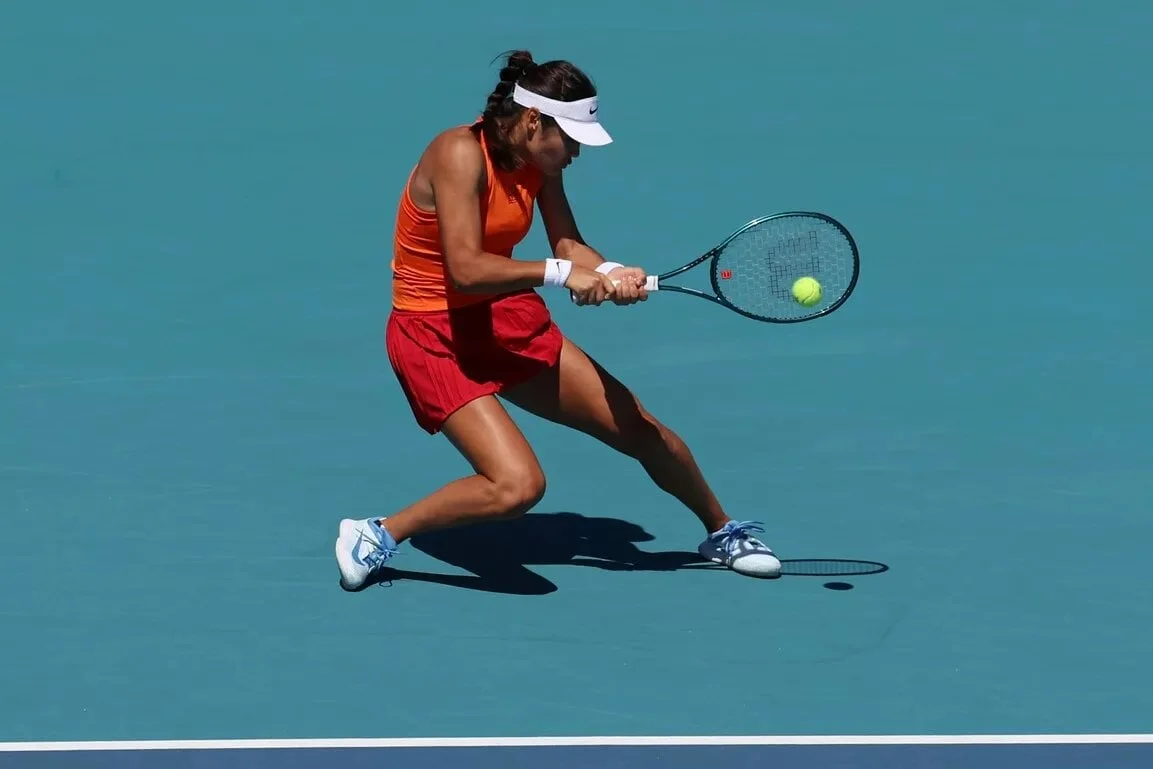
I have been pretty harsh on Emma Raducanu over the years . Some of it, I still think, was more than justified . After all, I was hardly the only voice criticizing her choices. The coaching turnover became ridiculous at times. Some scheduling decisions were impossible to understand. Too often a promising run would be followed by another absence or another reset or another explanation for why the momentum had disappeared.
Five years after winning the US Open, that remains her only professional singles title. There has also occasionally been a tendency around Raducanu to treat perfectly normal progress as evidence that another New York miracle might be just around the corner. It usually wasn't.
Yet looking at where her career stands right now, with Raducanu sitting at No. 100 and likely to fall outside the Top 100 once more, I find it difficult to summon much criticism. This time, at least, the ranking is telling a fairly cruel story. Because Raducanu wasn't playing badly when everything stopped, she was finally playing quite well.
Raducanu's Ranking Tells the Wrong Story
This Was Supposed to Be the Year Things Settled Down
Earlier this season, Raducanu's career seemed to be moving in a direction that looked almost boring. And that's a compliment. She finished 2025 at No. 29 after completing 50 matches for the first time in her career. She entered 2026 with an established ranking, climbed as high as No. 23, and began putting together fairly ordinary results that had been strangely absent from much of her post-US Open career.
She made the final in Cluj-Napoca in February. It was her first WTA Tour final since winning the US Open in 2021 . The final itself was awful, with Cirstea beating her 6-0, 6-2, but getting there mattered. She had finally strung together four victories at one tournament again and survived an almost three-hour semi-final along the way.
Then came Queen's. That week was probably the clearest evidence that Raducanu was beginning to resemble a high-level tour player rather than somebody perpetually trying to rediscover a version of herself from five years earlier. She beat Anna Blinkova 6-0 6-3, Cirstea 6-4 6-2, Kamilla Rakhimova 6-3 7-5 and No. 19 Iva Jovic 6-2 6-2 before losing the final to Donna Vekic 6-0 7-6(6). The run lifted her to No. 31, putting her comfortably inside Grand Slam seeding territory.
Yes, there were flaws; there always are. It was still only an 11-10 record for the season after Queen's. So she had not suddenly transformed into a title machine, and another heavy final defeat raised legitimate questions about how well she was handling the physical and emotional demands of consecutive matches deep into tournaments. But something resembling a foundation remained. And as per cue, her leg broke down.
What had initially been treated as a lower-leg problem developed into a stress fracture. Raducanu withdrew from Wimbledon on the eve of the tournament after medical advice told her to stop playing through it. She was supposed to be the No. 30 seed. Instead, she did not play at all. And that's kind of it. She hasn't played a competitive match since the Queen's final on June 14.
Wimbledon disappeared. So did the entire North American hard-court swing. So did the US Open, the tournament around which her career will probably always orbit whether she likes it or not. And now Beijing has gone too. The ranking has responded exactly as rankings do.
No sympathy. Raducanu was No. 31 after Queen's. She fell to No. 49 in July, No. 59 in August, No. 70 after the US Open, No. 89 in September, and is now No. 100. More points are due to disappear because she cannot defend last year's China Open result. As things stand, she is likely to leave the Top 100. That looks like regression. In reality, she has barely had the opportunity to regress at all.
Sympathy should not require rewriting Raducanu's career. There are reasons she reached this point with so little protection against another long injury absence. The coaching situation is one of them. By early 2026, Raducanu had already gone through an extraordinary number of different arrangements. Francisco Roig left after the Australian Open, with the pair disagreeing over how she should play.
She later reunited with Andrew Richardson, the coach who had been alongside her during the 2021 US Open run. There have been explanations for individual changes. Nick Cavaday left for health reasons. Some partnerships were trials rather than intended long-term arrangements. It would be lazy to treat every split as Raducanu recklessly firing another coach.
The overall instability has still been real. Players build careers through repetition: same voices, same routines, same technical ideas, same preparation. Raducanu has spent significant portions of her early twenties rebuilding those habits. Her scheduling has sometimes invited criticism too. There have been stretches where she played too little to establish rhythm, and others where physical problems made every decision feel temporary.
Most importantly, availability remains part of professional sport. Unfortunately, Raducanu has repeatedly been injured, but at some point the inability to stay healthy becomes part of the career assessment itself. Her 2023 season effectively ended after Stuttgart, before surgeries on both wrists and an ankle. She fought her way back through 2024.
Then she finally managed a much fuller 2025 season, and just as 2026 appeared to be developing into something stable, another serious physical problem arrived. That doesn't happen in a vacuum. Yes, there is bad luck, but some of it wasn't due to bad luck. It's as simple as that, and it cannot be ignored. Neither can the enormous gap between what happened in New York and everything since.
Raducanu won a Grand Slam at 18. She has still never won another title. She has reached only one Grand Slam fourth round since that US Open run, at Wimbledon in 2024. The WTA's own records show only one WTA 1000 quarter-final in her career so far. Those numbers are hugely disappointing for somebody who once produced one of the most astonishing tournament runs tennis has seen.
They are also perhaps why judging Raducanu has always been so difficult. What exactly was everyone supposed to expect after 2021? It's impossible to say, because Raducanu didn't gradually become a good professional tennis player and then win something enormous. She skipped the gradual part.
She arrived at Wimbledon ranked outside the Top 300, reached the fourth round, qualified for the US Open, and won ten consecutive matches without dropping a set. The public met the finished miracle before the player had experienced most of the ordinary stages required to build a career. Everything afterward was judged backward from that.
A quarter-final looked disappointing because she had already won a major. No. 30 looked disappointing because she had already been No. 10. A first-round loss looked like evidence that New York had been some enormous accident rather than what it usually is for a young player: a first-round loss.
The US Open trophy gave Raducanu financial security, fame, and opportunities that most players could never imagine. It also created an impossible reference point.
The Ranking Drop Is the Least Interesting Part
This is where I have become more sympathetic. Raducanu is only 23. That sounds obvious, but her career has been discussed for so long that she sometimes feels considerably older. She is younger than plenty of players who are still described as developing.
Her professional tennis education has also been bizarrely fragmented. One season brought instant global fame. Another brought surgeries. Another one was spent reconstructing a ranking. Just as she finally completed a relatively normal 50-match year, another significant injury removed several months.
Yet when she has actually been able to play for sustained periods, there have been signs of progress. She finished 2024 at No. 58. She finished 2025 at No. 29. She reached No. 23 this year. She's also made finals, so there is a trajectory, and overall it's been pretty positive.
That matters more to me than whether she is No. 99, No. 102 or No. 108 next Monday. The concern is what happens when she returns. Falling outside the Top 100 creates practical problems. Raducanu may no longer receive automatic entry into some events, and if her ranking remains around this level when the Australian Open entry list is determined in December, qualifying could become a possibility.
Wild cards will probably remain available to her at many tournaments because she is Emma Raducanu. That is another privilege worth acknowledging. But the objective for 2027 should probably have very little to do with rushing to repair a ranking. It should be staying on a tennis court.
If that means beginning the year in qualifying somewhere, qualify. If it means playing smaller events, play them. Even if it means returning slowly enough that the Australian Open becomes less important than being healthy in March, so be it. Raducanu has spent too much of her career trying to get back somewhere. Back to the Top 100. Back to being seeded. Back to the player from New York. At some point, perhaps the healthier project is simply finding out what player she can become from here.
Emma Raducanu falling outside the Top 100 would make an excellent headline. It sounds dramatic, and everybody will click. A Former US Open champion tumbles outside the world's best 100. Five years removed from New York, another low. All technically true. Also slightly misleading.
She did not spend the summer losing herself out of the Top 100. She spent it unable to play. Before the stress fracture, she was No. 31 and had just reached a WTA 500 final. Earlier in the year, she had climbed to No. 23, her highest ranking since 2022.
Of course, there are still criticisms to make of the career. There should be. The coaching instability has been excessive. The consistency has never matched the talent. Five years after winning the US Open, having one career title is a strange record. Most importantly, she has not yet shown that her body can withstand the uninterrupted demands of a full season.
But this particular fall feels different. For once, Raducanu had begun doing many of the things people had been asking her to do. She was playing regularly and was reaching finals. She was beginning to look less like the girl trying to recreate one impossible fortnight and more like a professional tennis player building a sustainable career.
Then she got hurt. Again. Perhaps that is the saddest part of the Raducanu story so far. Every time the conversation begins moving away from 2021, something seems to drag it back. Yet, she is still only 23. The story still has time to become considerably less complicated.
Right now, the ranking says No. 100. Soon it may say something worse. For once, though, that number probably tells us less about Emma Raducanu than it appears to.
Main Photo Credit: Geoff Burke – Imagn Images
Topics in this story
Gathered from external sources. Rights to this text belong to whoever originally published it.