The US Open wants to be for everyone. Not everyone knows the etiquette
The crowds at the US Open have been the dominant off-the-court storyline of the tournament. It might be a sign of where the sports industry is headed.
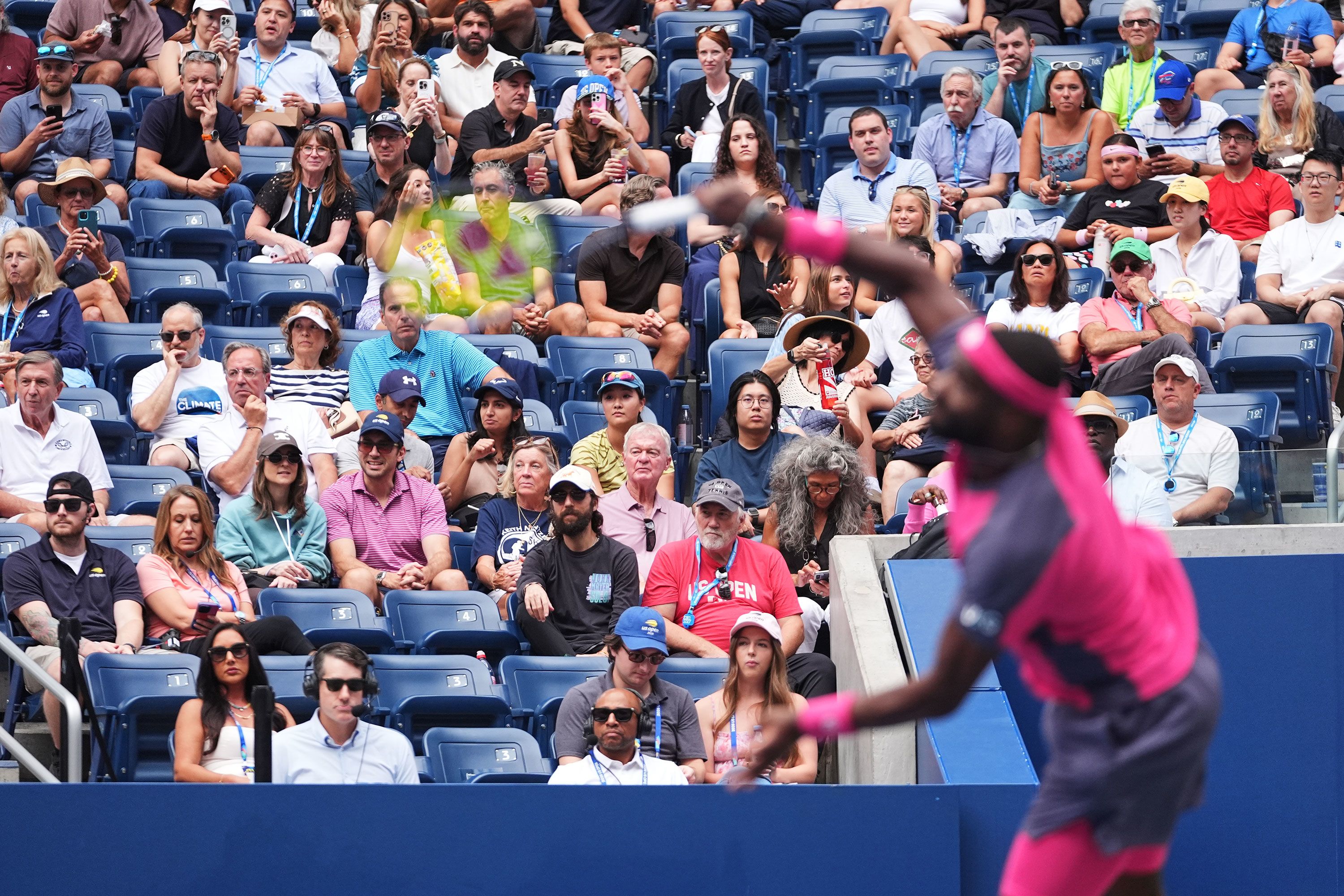
It makes sense that the most attractive audience to any money-making venture is whatever one is still relatively untapped. We’re living in an era where success is measured not in sustainability or even sheer size but nothing short of endless, indefinite growth. For a tennis tournament, that tantalizing market of maybe-future customers means people who do not currently know or care all that much about tennis. There’s no moral judgement to that characterization. Ignorance or even disinterest about tennis is a perfectly fine way to be as a person. Provided you’re not attending a high profile — and increasingly prohibitively pricey — tennis match in cushy, comped seats. The US Open would like to believe those people are either fans who just don’t know it yet or that such a disposition does not preclude enjoying themselves at a tennis match. It probably doesn’t. The weather this week in New York has been mostly glorious. The grounds of the US Open are buzzing with beautiful people. The food options are decadent. The Honey Deuce is dangerously delicious (based on a single, very professional sip taken by this serious journalist). And yet, the discourse around the tournament centers on the “close to 100” credentialed influencers creating tennis-adjacent content a little too close to the tennis itself. In viral videos, content creators are seen filming during active moments in the match. There have been concerns about the use of ring lights or camera flashes during play. The umpires have repeatedly reminded attendees to quiet down in between games. During the first week of the tournament, players were asked about the potential distraction or disturbance of such a presence at the Open. Coco Gauff said the light was a bigger issue than the sound, “because that does bother – and I am one of the more lenient players.” For Naomi Osaka, it was the opposite. “There was a moment where there was, like, people shouting and stuff, and you could hear it quite clearly. I think it bothered my opponent, too,” she said. “I don’t really see the lights, because obviously, like, when you are serving, you’re looking at the sun or you’re looking at the night lights. It was more the noise.” Regardless of the specifics, the upshot was, as Jessica Pegula put it: “People are down there trying to perform, and it’s their career and their job. It seems a bit disrespectful.” According to ESPN, the people in the viral videos are not among those credentialed by the USTA. The creator credential, issued for the first time last year, encompasses social media editors associated with traditional outlets, tennis-specific independent creators, and lifestyle influencers focused on food or fashion. That doesn’t prevent other paying guests from using the Open as a stage for filming content. The individuals, however, are less interesting than the ethos it reflects (get any large enough group together – with ample access to alcohol – and someone will misbehave.) Sports are in the midst of a global makeover from narrow manifestations of tribal interest to mainstays of the monoculture. Instead of meccas or meeting places for diehard fans, live sporting events try to position themselves as major cultural moments. It’s evident in the coverage – sports as soap operas, sports as fashion platforms or foodie destinations, sports as celebrity factories. It’s part of a larger everything-ization of, well, everything. Watch enough influencer content, for example, and they’re bound to say something about wanting their page to have something for everyone. That’s what success looks like these days: Being a brand with universal appeal. For sports this has been a boon and a bit of course correction. You can be a casual fan, a shameless bandwagoner. There’s less gatekeeping that, let’s be honest, disproportionately impacted certain demographics. There’s nothing wrong with being new to tennis. For their part, the athletes recognize that and the value of a broader audience. They are, after all, demanding increased prize money. “I have no problem with anybody doing anything, coming to watch the tennis. Putting asses in seats, you know, different age ranges, whatever, is huge for our sport,” Francis Tiafoe said. “That’s all I care about. “I can appreciate the influencers coming and kind of showcasing the US Open experience,” Pegula said. “I think that’s something that the US Open has utilized a lot as far as food and drinks and things to do and the shops. That part is part of a fan experience and something that people might not know and make them want to go.” “I definitely think it’s cool to have a new demographic and I definitely think it helps grow the sport,” Gauff said. “I think there is huge positives,” Osaka said. “Like, you want people to continue to grow the sport. I just think it has to be in a way that everyone knows the rules and the etiquette.” But of course, those are two sides of the same coin. Intrinsic to being new is having less experience. An audience of “everyone” includes those that do not know the rules and etiquette. That’s not to absolve individuals from common sense or basic decency. But, come on, you’ve been outside before, do you really think everyone has that? The truth is, it seems plenty of people who paid to be at the US Open don’t totally know the etiquette or are a little tipsy – or perhaps both. At a Labor Day evening match between Gauff and Iva Jovic, the US Open staff tasked with encouraging attendees to expediently find their seats were regularly so overwhelmed with the task that sterner-sounding staff in red SUPERVISOR shirts appeared to scold the patrons. Still, it proved to be a Sisyphean feat. It was a brilliant match, a stunning showcase of Gauff’s speed and power against a worthy up-and-coming teenage opponent. The crowd was, overwhelmingly, locked in on every volley, cheering in proportion to the intensity of the point regardless of which American player prevailed (spoiler: it was Gauff in straight sets). And yet, for the entirety of the hour-and-a-half match, guests had to be told to stop congregating in front of their sections where they were blocking other people’s sightlines – and where the views of the court were the best. Probably some, if not most, of them were taking pictures. You don’t have to be an influencer these days to prioritize evidence of your experience over someone else’s experiences these days. “They don’t listen,” an usher sighed seemingly to herself at one point. “Nobody listens.”
Gathered from external sources. Rights to this text belong to whoever originally published it.