UN condemns racist abuse targeting Coco Gauff after China Open controversy
The United Nations has condemned racist online abuse targeting Coco Gauff after a disputed point during her China Open match against Sun Xinran. Gauff reject...
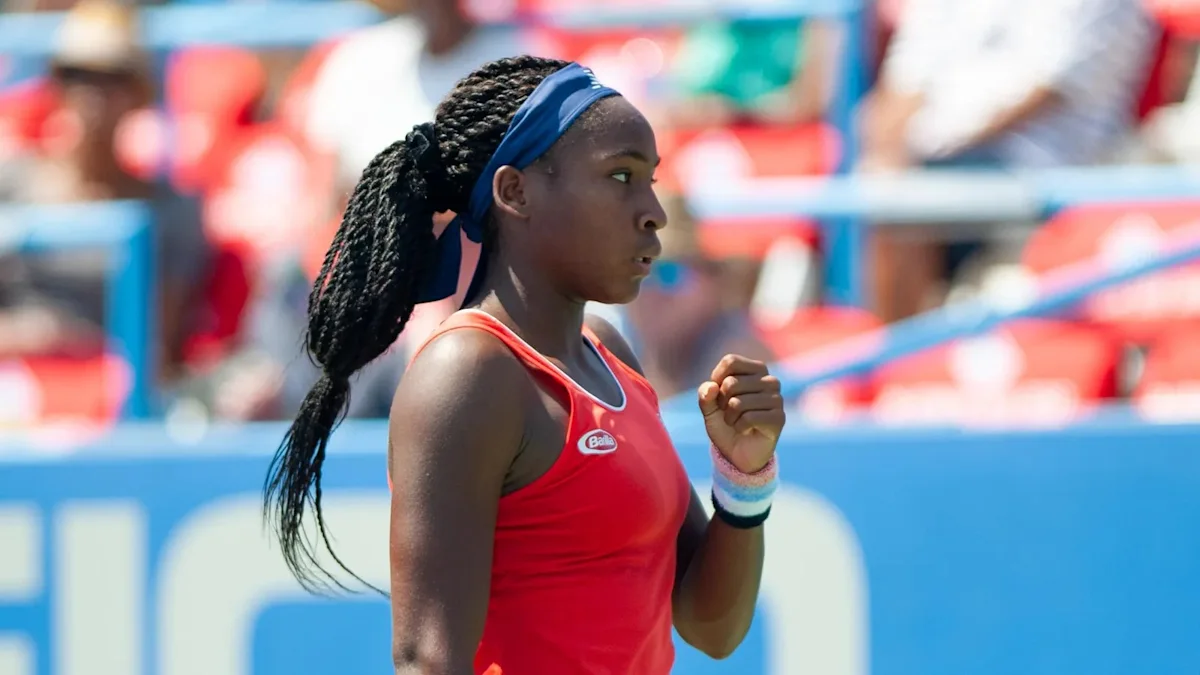
The United Nations' human rights office condemned racist online abuse targeting Coco Gauff on Oct. 10, calling for solidarity against racism and sexism in sports. The statement followed a controversial point during the American tennis star's China Open victory.
Gauff faced a wave of racist comments and direct messages after stopping play during a rally against Chinese teenager Sun Xinran on Oct. 5. The chair umpire reviewed the incident and ordered the point replayed.
The dispute quickly moved beyond the court. Gauff defended her actions and rejected accusations of cheating, while the United Nations and the Women's Tennis Association highlighted the abuse directed at her. The episode has renewed concerns about online harassment targeting athletes.
The United Nations responds to the abuse
The U.N. Human Rights Office issued its statement on Oct. 10 under High Commissioner Volker Türk. It described the messages targeting Gauff as appalling and highlighted the disproportionate abuse experienced by Black female athletes.
"There is no place in sport for racial or sexist slurs and abuse," the office said in its statement. It urged players, coaches and sports organizations to support those targeted and called on fans to challenge racism.
The response came days after Gauff publicly described the racist comments she had received. Rather than focusing solely on the disputed tennis point, the U.N. statement addressed the wider problem of racial and sexist harassment in sports.
The controversy began during Gauff's third-round match against Sun at the China Open in Beijing on Oct. 5. Gauff was serving late in the first set when electronic advertising boards around the court flickered.
Gauff raised her hand to stop play before Sun completed her shot. Sun appeared close to winning the point, making the interruption especially consequential. The chair umpire reviewed the incident and ruled that the distraction justified replaying the point.
Gauff won the replayed point and eventually defeated Sun 7-5, 6-1. The victory advanced her to the round of 16. However, the decision became a flashpoint online, where some fans criticized her response to the flickering displays.
The WTA's match report documented the match and the incident. It also noted Gauff's praise for Sun, whom she described as an impressive young player with a promising future.
After the match, Gauff addressed the online reaction on X. She wrote that people could disagree with her without resorting to racism, describing the volume of racist comments and direct messages as "insane."
"Lastly, I'm not a cheater or a thief," she added in her post. The statement directly answered accusations circulating online after the replayed point, while drawing a distinction between sporting criticism and racial abuse.
Gauff also explained her actions in a longer Instagram post. She said she noticed the advertising boards flicker and raised her hand when she was sure the distraction had occurred again. She maintained that the interruption was not an attempt to gain an unfair advantage.
Gauff showed respect for Sun after the match
Despite the controversy, Gauff spoke positively about Sun after their match. She praised the teenager's talent and said she had apologized for the awkward situation. According to Gauff, Sun understood the explanation.
Sun, 16, was making her WTA Tour debut at the Beijing tournament. She had earned attention after winning the U.S. Open junior title, and her performance against Gauff offered a chance to test herself against an established top player.
Gauff also expressed empathy for Sun's emotional response to the loss. She acknowledged how difficult such moments can be for young players and described sharing the court in front of Sun's home crowd as an honor. Her comments showed that the match's tension did not erase her respect for her opponent.
The WTA offers support and condemns racism
The Women's Tennis Association said it was appalled by the racist abuse directed at Gauff and was in contact with her to offer support. The organization's response reflected broader concern about online attacks that follow athletes beyond tournament grounds.
The WTA uses the Threat Matrix service to monitor public social media content. The system combines artificial intelligence, open-source data and human analysis to identify abusive posts, threats and potentially dangerous behavior.
The WTA and World Tennis reported in July 2026 that the service analyzed more than 1.2 million posts and comments during 2025. More than 12,000 were categorized as abusive, including 3,726 cases of serious abuse involving violent, sexual, racist or targeted threats.
The abuse affected Gauff during her next match
Gauff's China Open campaign ended on Oct. 7, when she lost 6-3, 6-3 to Belgium's Elise Mertens in the round of 16. Afterward, she said the online abuse had been emotionally draining, although she also acknowledged that her tennis had not been good enough.
Gauff recorded 8 double faults and 34 unforced errors in the match, according to reporting by The Guardian . She said she felt flat and lacked energy, but did not attribute every part of her performance to the online attacks.
The defeat came amid a demanding stretch of the season. Gauff had reached the U.S. Open semifinals before traveling to Beijing, and the China Open was another major event on the WTA calendar. The incident added a personal challenge to an already intense competitive schedule.
Online harassment remains a wider tennis problem
Gauff's experience is part of a documented pattern of abuse directed at professional tennis players. The WTA and International Tennis Federation have said that online harassment can include racist insults, threats, sexualized messages and attacks connected to betting losses.
The 2025 Threat Matrix report found that 35 accounts linked to 12 individuals were escalated to law enforcement. The service also reported that 66% of serious abusive posts were removed, showing that coordinated responses can lead to action even as the problem persists.
Sports organizations cannot address the issue alone. Social media platforms, law enforcement, tournament organizers and fans all influence how quickly abusive content is reported and handled. The U.N.'s statement called for collective action rather than leaving targeted athletes to manage the abuse themselves.
Gauff's career extends beyond the controversy
Gauff, 22, is one of the leading players in women's tennis. She won the 2023 U.S. Open singles title and the 2024 French Open doubles title, building a record that has made her a familiar figure at the sport's biggest tournaments.
She also won the China Open in 2024. Her success in Beijing has made the tournament a meaningful stop on her schedule, and her return in 2026 drew attention before the dispute involving Sun occurred.
The latest controversy should not overshadow the tennis itself. Gauff won the match in question under the chair umpire's ruling, then publicly condemned the racist response that followed. The U.N. statement broadened the discussion to athlete safety and the responsibility to reject abuse, regardless of disagreements over a sporting decision.
Fun fact: Gauff won the China Open singles title in 2024 , making her 2026 return to Beijing a return to a tournament where she had previously lifted the trophy.
The U.N. Human Rights Office condemned racist abuse targeting Coco Gauff on Oct. 10, 2026.
The backlash followed a replayed point during Gauff's 7-5, 6-1 China Open win over Sun Xinran.
Gauff rejected accusations of cheating and said criticism does not justify racism.
The WTA offered support and highlighted its efforts to identify and address online abuse.
Gauff's China Open run ended with a 6-3, 6-3 loss to Elise Mertens on Oct. 7.
Topics in this story
Gathered from external sources. Rights to this text belong to whoever originally published it.