The US Open did what Grand Slams Should: Showed us who’s best
Saturday’s US Open women’s singles final provided a clear and convincing answer to the question - “Who is the best woman on the planet?”
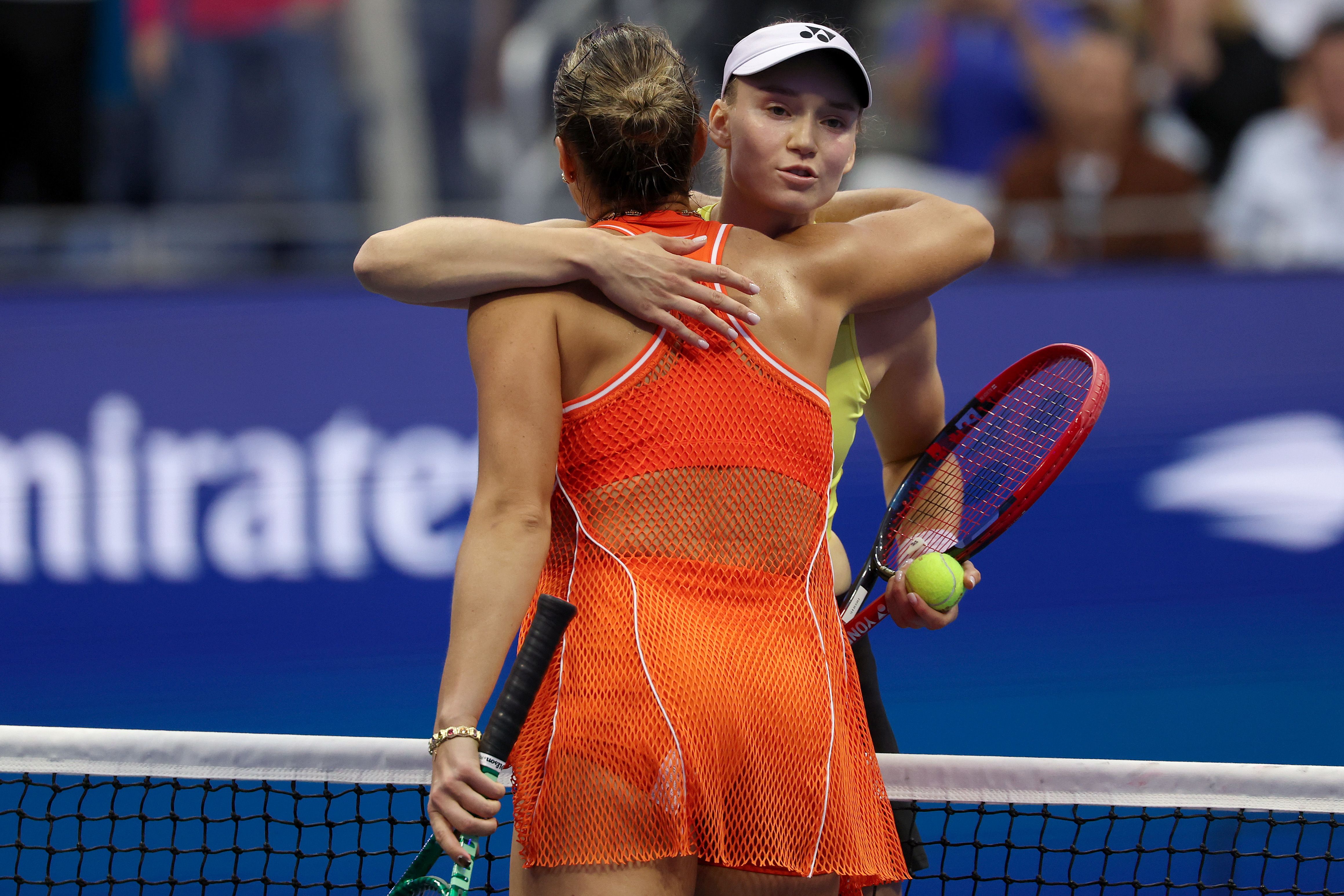
We say that sports are about everything and anything: community, identity, fitting in and standing out. Sports are political, cultural, artistic and often deeply personal. Those stories — narrative or allegorical — are in specifics or else in the context. They manifest through sports, but not without the prism of other factors. In truth, though, what sports are actually about — all of them, always, when stripped down to the essence — is figuring out who is better than whom. And, ultimately, who is the best. It would get boring if it was only ever that. But sometimes the straightforward pursuit of hierarchy is enough. No history at stake, no Americans for the hometown crowd to latch onto. When the players were introduced for the women’s final of the US Open, the crowd swelled as it was explained that first up was the woman who would assume the top ranking in the world come Monday. The emcee didn’t make this part explicit, but her opponent Saturday afternoon was the same woman she’ll replace in that spot. Aryna Sabalenka entered the tournament ranked No. 1 in the world. She entered Saturday the two-time reigning women’s singles US Open champion. Isn’t it just perfectly neat and tidy then that Elena Rybakina, who will replace her as the former — a fact already sealed by virtue of her performance prior to the final — also took her crown for the latter? In a clash of comparable strength and contrasting styles, Rybakina beat Sabalenka 6-4, 5-7, 6-2. “This game is very simple and very binary,” Martin Blackman, who spent a decade as the general manager of USTA Player Development, told CNN Sports this week. “If I’m ranked 19 and you’re ranked 18, you’re better than me, until I beat you.” Or, as it was on Saturday, No. 2 and No. 1. Out of four billion women alive on planet earth right now, someone is the singular best at the sport of tennis. You could credibly claim that on Saturday in Queens, New York, we found her. How’s that for the stakes to make a compelling story? No fluffy stuff, no soft focus. Just a cold-blooded clash of elite athletes with a clear winner and a clear loser. Especially early in the match, it was so quiet in the stadium that you could hear how quiet Rybakina was. Every volley created a consistent rhythm: a reverberating “Eeyugh!” from Sabalenka followed by a beat of silence. In the first set, Sabalenka seemed caught off guard by an opponent who could not only match her power but best it. At 6-foot, Sabalenka is tall; Rybakina is ever so slightly taller. Sabalenka serves hard and fast; but Rybakina serves faster. When Rybakina broke Sabalenka’s serve to take a 3-2 lead in the opening set, the outgoing No. 1 responded by earning a code violation from the umpire by smacking a ball into the stands. When she clinched the first set of the match that would make her a champion, Rybakina celebrated with a subdued fist pump. If she made a sound the entire match, it wasn’t louder than the squeak of her sneakers. See, there I go - extrapolating the simple into something bigger. Poise versus pugnacity. But Sabalenka didn’t lose because she competed in 127 carats of ostentatious custom jewelry worth $400,000. She has succeeded plenty while refusing to temper her, well, temper or anything else about her fierce and demonstrative personality. This was her fourth-straight US Open Finals appearance, and her first loss since she fell to Coco Gauff on the same stage in 2023. She lost because Rybakina was better. For the final point of the women’s tournament, Rybakina froze her rival with a perfect serve. Sabalenka barely budged from her defensive crouch. There was nothing she could do but watch her grip on the top spot in the sport bounce away blithely. In the immediate aftermath, she threw her racquet to the ground, retrieved it, and hugged her defeater mutely, before retreating to her bench where the racquet took a beating that bent it out of shape. Meanwhile, the woman who won did very little worth noting. “I wish I could perform a little bit better,” Sabalenka said as part of the on-court ceremony after the match. She seemed close to tears. “But I guess next year,” she concluded, her confidence overcoming the disappointment. By contrast, Rybakina – who, again, had already clinched the top rank in the world – seemed stunned by her own success: “I didn’t expect nothing like this coming to this tournament,” she said as pyrotechnics waited behind to erupt in fiery fanfare befitting her serve far more than her soft-spoken persona. “It’s so difficult to play against you,” Rybakina continued, addressing her opponent directly during the post-match ceremony. Difficult, but not impossible. After all, she started her rise to No. 1 by opening the season with a win at the Australian Open over Sabalenka. Later, in a press conference with media members, Rybakina offered an anodyne review of the rivalry. “I feel like we push each other to be better,” she said of Sabalenka. Probably she didn’t know then that her rival had already thrown down another gauntlet. Earlier, Sabalenka had said of her own run atop the rankings, “I think it’s an incredible achievement, and I don’t even know how many weeks I was able to be there.” Someone else in the room supplied the answer. “99 [weeks]? Well, that’s amazing,” Sabalenka said. “Let’s see if Elena can beat me in that.”
Topics in this story
Gathered from external sources. Rights to this text belong to whoever originally published it.