Ben Shelton isn’t the men’s American tennis hero – yet
Shelton’s megawatt smile and a made-for-social-media aura made him the darling of the NY crowd at the US Open, but the young American wasn’t ready for the moment… yet.
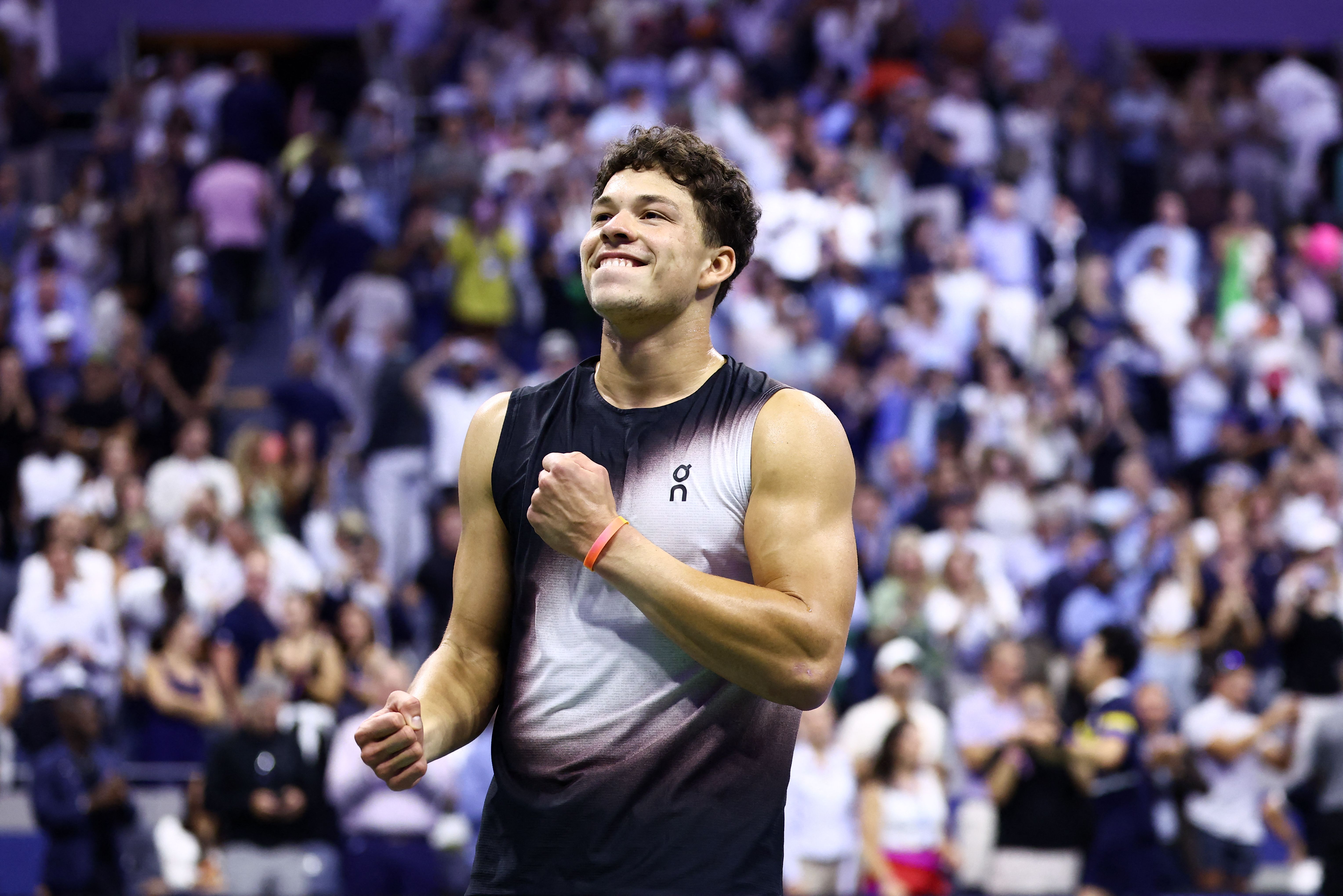
After Ben Shelton beat countryman Frances Tiafoe in a historic semifinal, he marveled at the star power that had come to Arthur Ashe to witness his win. “I keep looking up at the screen like oh shoot, Jalen Brunson is here,” he said in his post-match comments on the court to the audible delight of the crowd. Shelton has a baby face and a seemingly unshakable cockiness, the combination of which lent this compliment an added dose of aw shucks, awe-struck, game-recognizing-game. There was a bevy of, perhaps, bigger celebrities in attendance - Brunson was seated next to Ben Stiller, for instance. But Shelton’s comments reflected the post-NBA-Finals reality in New York (or, at least, a savvy awareness of how to pander to it). The Knicks are sports royalty in this city. Winning does that. On Sunday, the packed crowd for the US Open men’s final was eager, at times to the point of collective desperation, to elevate Shelton himself to a similar status. It would have made him the first American man to win the Open or, indeed, any Grand Slam championship since Andy Roddick in 2003. He would have been the first Black man to win a Grand Slam title since the stadium’s namesake did so 51 years ago at Wimbledon. He had enjoyed a storybook run through the tournament to get to this stage. The No. 9 ranked player had prevailed in a semis that was the first ever to feature two Black American men. Before that, he dispatched the seven-time Grand Slam winner Carlos Alcaraz in an epic match that ended after 3:30 a.m. This would be his first ever Grand Slam final. His dad is his coach. His girlfriend is a famous soccer star who traveled 250 miles from her own game in D.C. on Sunday to make it to his match. Of course the 23-year-old with a megawatt smile and a made-for-social-media aura was the darling of the Queens crowd. And as much as the many thousands of New Yorkers wanted to see Shelton prevail – This is your house! someone yelled at one point; I love you, Ben! another added – they also wanted to see the No. 2 ranked German, Alexander Zverev, lose. They booed his stumbles and egged on his faults, repeatedly calling for One more! in hopes of seeing a double fault. It’s impossible to know, of course, how much of that animosity was nonspecific patriotism and how much, if any, was a direct response to the allegations of domestic violence made against Zverev by two of his former partners. The 29-year-old was never convicted, but nor was he proven innocent. One former partner declined to bring any criminal or civil charges against Zverev; the other, the mother of his child, settled with him out of court. If that seems like an awkward or abrupt departure for a tennis story, that’s because it is. Zverev’s new level of success this season – he finally shed the official title of best player to never win a Slam title at the French Open a few months ago – has re-centered the uncomfortable, unfortunate, but un-ignorable and all-too-common complexity of personal misconduct in sports. Athletes are not always aspirational. On the one hand, that’s not their job. On the other hand, shouldn’t it be? Rootability isn’t ranked or quantified. It’s quaint, but it’s also what keeps the sport – any sport – viable. I don’t blame anyone who couldn’t bring themselves to root for Zverev. And a desire for collective rooting is what packed Arthur Ashe on Sunday. So they rooted for Shelton to author an upset. And it would have been one. In addition to occupying the higher seed, Zverev has prevailed in all five of their previous meetings. Shelton managed to win just one set in that span. He would win just one more on Sunday, falling 6-3, 7-6 (2), 5-7, 6-2 to his superior opponent. That third set, though, that animated the stadium. The DJ played Estelle’s ‘American Boy’ between games. The crowd chanted USA! When he clinched the set, Shelton cupped his ear to call for the standing ovation to revel even louder and they were happy to oblige. It felt like the momentum had shifted. Or maybe that’s just the storyteller in me talking. Shelton, though, is no author. And he’s not yet the best tennis player he can be. Maybe if there was a little more magic in the world, he would have won the US Open anyway, taking advantage of a field without Jannik Sinner and an injury-compromised Alcarez to end the drought of American male winners. In truth, Shelton isn’t ready. “Walking out on that court today, there’s nothing like it. I’ve never felt anything like that before,” he said appreciatively in his post-match press conference. That was about the energy, the atmosphere, a build-up to an obvious desire to return to such a heady state and an illustrious stage. A few minutes later, he inadvertently found a different angle on the newness of it all. This is the furthest he’s ever made it in a Grand Slam. The most high-level tennis he’s ever played in a two-week span. “I was tired before I took the court today,” Shelton said. Maybe Ben Shelton is the future of American men in tennis. Maybe that future is a bright one. If the magic had been there for the men’s final of the US Open, maybe he would have inspired a new generation of boys to take up a racquet and a renewed national interest in a sport currently dominated on the men’s side by Europeans. Instead, on the first NFL Sunday of the season, the kid who was his middle school quarterback came in second. In the media dining room, Zverev’s triumphant press conference was muted while the US Open staff watched football with the sound on. No new heroes in the Knicks’ New York.
Topics in this story
Gathered from external sources. Rights to this text belong to whoever originally published it.