The US Open — and Ben Shelton — is putting on a great show. But why is it happening at 3:33 a.m.?
Shelton took down 7-time major winner Carlos Alcaraz, but was anyone awake to watch?
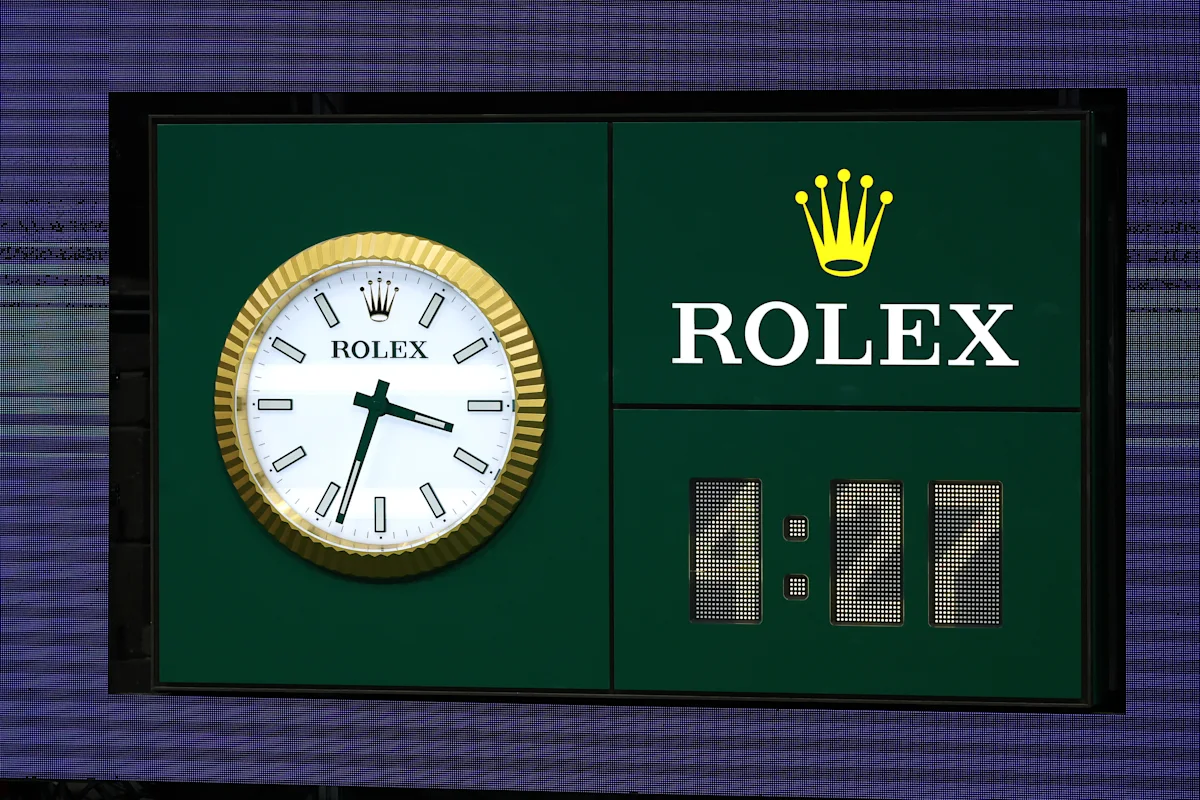
When Ben Shelton delivered the 146 mile per hour ace that f inally defeated Carlos Alcaraz to reach the US Open semifinals , it was arguably the most significant moment for American men's tennis in many years.
Though Shelton's stunning win over the seven-time major champion ensures the U.S. TV audience will be highly engaged for Sunday's final since either Shelton or fellow American Frances Tiafoe will be there, the quarterfinal classic that unfolded from late Tuesday night into Wednesday morning was a massive missed opportunity for tennis.
If the USTA's mission is to truly grow interest and participation in tennis across the country, you cannot just accept that it's "part of the sport" for the marquee match of the biggest American tournament, pitting two of the most charismatic and popular players against each other, to start just after 11 p.m. on a weeknight.
Alcaraz and Shelton put on a show — a breathtaking display of athleticism, skill and stage presence. It was the kind of match that makes the sport look fun and cool, that can inspire kids to ask their parents about starting tennis lessons or maybe help that elite young athlete decide he wants to be the next Shelton rather than the next Lamar Jackson.
That match has to be in prime time, in every living room in America that has sports on TV. It cannot happen when most of the country is asleep.
In fact, it ended so late that they didn't even bother bringing in Shelton for a traditional press conference, relegating him to discuss the biggest win of his life with reporters asking only a couple of questions outside the locker room.
"That was a war, epic match, so physical," Shelton said. "Carlos is one of the greatest champions in our sport already at 23 years old. It's always fun being on the court against him. It's ridiculous some of the stuff he comes up with sometimes. But, yeah, the most enjoyable match that I've had in my career, for sure."
It's hard to put your finger on it, but there's something culturally significant happening around tennis these days. Lots of new people started playing during the COVID-19 pandemic, influencers are popping up at big events, there's a huge market for tennis documentaries these days on Netflix and Amazon Prime and it's getting really hard ( and expensive ) to land a ticket to any of the Grand Slams. More and more star athletes in the big mainstream sports are showing up at matches and talking about tennis on social media because they appreciate how electric the sport is when you've got stars like Alcaraz and Shelton playing on the big stage.
Instead, tennis does a lot of shrugging its shoulders.
Each of the four Grand Slams has its own unique scheduling problems, but across the board, it's undeniable that things are getting worse.
The US Open has always had some really late matches, and in some ways, it has become part of the tournament's lore. It's almost a badge of honor to say "I was there" for the five-setter that finishes well after midnight.
But it's not supposed to be a nightly occurrence. And at this year's tournament, it's happening more often than not. A sporting event finishing after 1 a.m. needs to be an outlier, not the norm. And at some point, one of the big stakeholders in tennis needs to admit that it's bad for fans, it's bad for the tournament's TV partners, it's bad for tournament employees, and most of all, it's bad for the players because a match is not done when it ends. You're talking hours of rehab, refueling and cool-down before they even think about getting to bed.
This isn't what spectator sports are supposed to be.
That doesn't mean the solutions are easy. And the biggest impediment to finding one is that tennis is a sport without a clock.
The Arthur Ashe Stadium schedule Tuesday was normal, starting at 11:30 with women's No. 1 seed Aryna Sabalenka. But she took 2 hours, 22 minutes to beat Linda Noskova, which was followed by Tiafoe's epic 4-hour, 39-minute win over Alex Michelsen in a fifth-set tiebreaker.
As a result, the day session for those matches spilled into the 7 p.m. hour, which is when the night session was supposed to start. But because it's a different ticket, they had to clear the stadium after the Tiafoe match before even beginning the Jessica Pegula-Emma Navarro match at 8:20 p.m. And because that match went three sets and took 2 hours, 21 minutes, everything went haywire.
Even if the USTA decided that this isn't acceptable, what could they do about it? It's easy to say they should just move one of the matches to another court, but the second-biggest court at the Billie Jean King National Tennis Center holds roughly 10,000 fewer people than Ashe and doesn't have luxury suites. You'd literally be cutting the legs out from thousands of ticket-buyers, and even though the USTA has become a massively greedy organization, it's hard to say they should just punt on millions of dollars in revenue.
Perhaps they could reimagine the schedule and follow the French Open model, where there's just one night match starting at 8 p.m.
But at the French, they've decided that match nearly always needs to be a men's match because best-of-five theoretically gives ticket-buyers more tennis to watch than a best-of-three women's match. As a result, the French Open becomes the center of an annual media circus where they get accused of sexism. And, of course, having one standalone match always carries the risk of a blowout or someone getting injured, and it's an unsatisfying experience for everyone.
Something else the tournament should probably consider is whether they can do anything in the future to speed up the court. Tournaments can manipulate the court surface when it's being built for balls to bounce lower and shoot through the court, rewarding bigger shots and faster serves. Players these days are bigger and stronger and cover more court than ever, while the surfaces are getting slower and balls are bouncing higher. That's a natural recipe for long rallies and longer matches.
Ultimately, though, tennis may need to think about the best-of-five format. Yes, it's one of the sport's sacred cows and a true separator of good vs. great. But it also causes a ton of scheduling problems at the Slams. Maybe there's a middle ground where, if a match goes two sets each, you play a 10-point tiebreaker instead of a fifth.
Any decision like that, though, needs to be carefully considered because there is just so much history wrapped up in best-of-five.
"I think for the men's we should stick with three out of five," Tiafoe said. "I don't know where the conversation is going, what people are leaning to. Everyone is going to have an opinion. We've seen so many epics in five-setters. Do I love five-setters? Absolutely not. There's a lot of times where I'm up two sets to love, I would love to shake hands and go home. But it's tennis, man.
"I grew up watching so many incredible five-setters. Novak-Rafa, Federer-Rafa, epic five-setters that go on for hours and hours. That's the history of the game. (If) you do that, I feel like your Slam doesn't mean as much personally if you get it done in a two-out-of-three format."
A lot of people agree with Tiafoe. But it's also a valid question whether, in 2026, any sporting event should last five hours.
It's a real conundrum. We should all be able to agree, though, that an otherwise magnificent US Open is not getting the maximum benefit from all this great tennis because too many of us are asleep when it happens. Ending a sporting event continually after 2 a.m. is not the answer.
Topics in this story
Gathered from external sources. Rights to this text belong to whoever originally published it.