Mauricio Pochettino contract, salary with USMNT: What we know about coach's new deal through 2030 World Cup
While Mauricio Pochettino's initial two-year tenure in charge of the USMNT didn't quite translate to tangible growth at the World Cup, strides were made from...
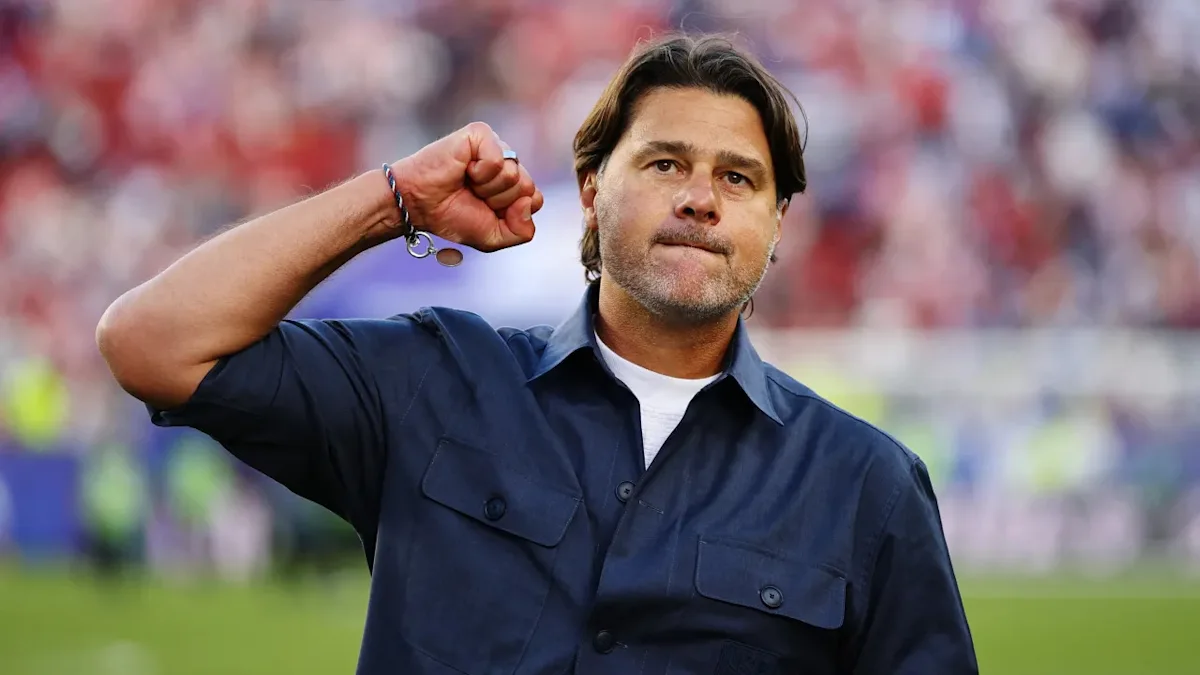
The United States men achieved a respectable but not exceptional result at the 2026 FIFA World Cup, eliminated in the Round of 16 at the hands of Belgium as they were pummeled 4-1 in Seattle.
At the tournament on home soil, the group was led by Mauricio Pochettino, whose coaching experience and leadership were expected to help elevate the profile of the USMNT throughout his time in charge, and he was paid handsomely for such talents.
While it didn't quite translate to tangible growth at the World Cup, the USMNT has still made strides under Pochettino from a federation standpoint.
Now, U.S. Soccer has convinced Pochettino to stay long-term, warding off interest from the club level and other national teams to keep him around as the focus turns to the next four-year cycle, finishing with the 2030 FIFA World Cup in Spain , Portugal , and Morocco .
Mauricio Pochettino contract, salary with USMNT
Pochettino initially signed on with U.S. Soccer in 2024, replacing Gregg Berhalter, who was dismissed in the aftermath of the terrible Copa America group-stage exit.
That two-year deal expired at the conclusion of the 2026 FIFA World Cup, at which point Pochettino had to make a decision on what to do with his future. Many expected him to return to coaching club soccer, or possibly return home to take charge of Argentina after the expected departure of Lionel Scaloni.
Instead, Pochettino has decided to stay. U.S. Soccer announced on Monday, August 3 , that the Argentine boss has inked a new four-year deal, keeping him with the national team through the 2030 World Cup.
"Mauricio and his staff believe in the future of soccer in the United States and our new project allows us to build on progress of the USMNT and the momentum of U.S. Soccer," U.S. Soccer CEO and Secretary General JT Batson said in a statement. "We know we have a lot of work to do to achieve our clear ambitions, including competing to win Men's World Cups and having soccer become the most played sport in every community. I couldn't be more excited that Mauricio and team are committed to partnering with all of us to do the hard work to bring those ambitions to life."
At this point, Pochettino's compensation or other details of his contract are not yet known, according to the reports.
"Working together with U.S. Soccer over the past two years, it has become clear to us that there is tremendous potential to make the Men's National Team program even stronger," Pochettino said. "The passion we experienced from the fans throughout the World Cup only strengthened our belief in what is possible here. We are excited by the opportunity to bring all our experience and knowledge to even more areas of U.S. Soccer while helping strengthen the pathways for players, coaches and teams across the Federation. We want to try to have a lasting impact on the sport in the country that has welcomed us so warmly and for that impact to extend beyond results on the field."
The Sporting News can report that the deal was partially funded by a philanthropic gift from Ken Griffin, CEO of Citadel LLC. Griffin's financial assistance was part of the deal to bring Pochettino to the United States in 2024, and he is once again the lead financier of the current deal. How much he had given is not yet known.
How much was Mauricio Pochettino paid in his first USMNT contract?
Because we don't know the details of the current deal quite yet, it is instead prudent to look back at Pochettino's first two-year contract for clues about how this one will be structured.
The former Chelsea boss was paid handsomely for his services to the United States, reportedly earning around $6 million per year.
Tax filings in 2024 showed that Pochettino earned around $5m for the first seven months of his tenure. It showed a one-time signing bonus of $2.5m, as well as base compensation of $2.52m. If prorated over the full year, that would bring his base compensation to $4.32m per year. The Athletic reported that triggering certain incentives could bring that compensation upwards above $5m and closer to $6m in the end.
Will he earn a similar salary now? Will it increase in order for the federation to convince him to stay? Will it decrease after falling short of improving the USMNT's expectations after a Round of 16 exit at the 2026 World Cup? It's hard to say, but it's more likely to be the former than the latter.
A report by Adam Crafton of The Athletic on June 26, 2026 stated that U.S. Soccer had already tabled an offer to Pochettino for a contract extension that would "place his overall compensation in line with the highest-paid international coaches in the world" as well as be "competitive with what he could expect to command on the open market at the top end of European club soccer" although not quite what the richest clubs in the world could offer.
Is there a buyout in Mauricio Pochettino's USMNT contract?
Many fans will be wondering if there is a buyout to prevent Pochettino from jumping back into club football, or being lured by a more prominent national team, before the next four-year cycle is up.
These particular details of Pochettino's new contract with the United States have not been made public, but we can look to his previous contract for guidance on how this one might be structured.
Pochettino's first USMNT deal reportedly included an extremely high buyout clause, which a source told the BBC was "one of the biggest financial compensation fees in football history" should he wish to leave before the terms expired. Thus, it's reasonable to conclude that U.S. Soccer would include a similar clause in his current offer to extend, hoping to prevent him from leaving in the middle of the four-year World Cup cycle.
There is also some small hint of a buyout in the early reporting on his new deal. According to ESPN, a source is quoted saying there is "a mutual protection" if the contract is not fulfilled through the conclusion of the term. Likely, this means that there remains a significant buyout, but the federation has also been forced to up its ante and agree to a sizable compensation package if it were to terminate Pochettino's employment early.
However, it does not seem as though the buyout on this four-year contract is quite as unattainable as the previous deal. Pochettino himself admitted to The Athletic in mid-September that both sides have an easier time breaking the contract if they wish to do so.
"Now it's a four-year contract, it's different," Pochettino said. "We can next season lose the Copa America, or the Gold Cup, and they're not happy with us, they can sack us. Or, we can say 'Ok it's not the way we think.' Four years is different. Maybe now if someone calls in the future, it's a different type [of situation]."
Essentially, Pochettino suggests that both U.S. Soccer and the coaching staff have the ability to break the deal if they want to move in a different direction.
The U.S. Soccer federation is responsible for paying the USMNT head coach, but given Pochettino is by far the highest-paid manager in U.S. history, they sought some financial assistance to make his initial deal happen.
"Pochettino's appointment is supported in significant part by a philanthropic leadership gift from Kenneth C. Griffin, Founder and CEO of Citadel and Founder of Griffin Catalyst," a statement from U.S. Soccer read at the time of his hire in 2024. "Additional support has been provided by Scott Goodwin, Co-Founder and Managing Partner of Diameter, and several commercial partners."
That suggests U.S. Soccer received boosts to its funding in order to offer the kind of terms required to sign a coach of Pochettino's caliber. The most notable individual in that mention is billionaire hedge fund manager Ken Griffin, who has also donated to soccer field projects in Miami and Chicago in the past.
It's unclear if this will continue with his new deal, but feels likely that some additional fundraising would be required.
Topics in this story
Gathered from external sources. Rights to this text belong to whoever originally published it.