Lionel Messi breaks own Guinness World Record with six species named in his honour: All the insects, animals, fossils, fungi, and plants
Lionel Messi has broken his own Guinness World Record with the naming of a sixth species, the Salvia messii, a sage plant discovered in the Peruvian Andes. This article explores the significance of the plant, its characteristics, and Messi's enduring legacy in football and science.
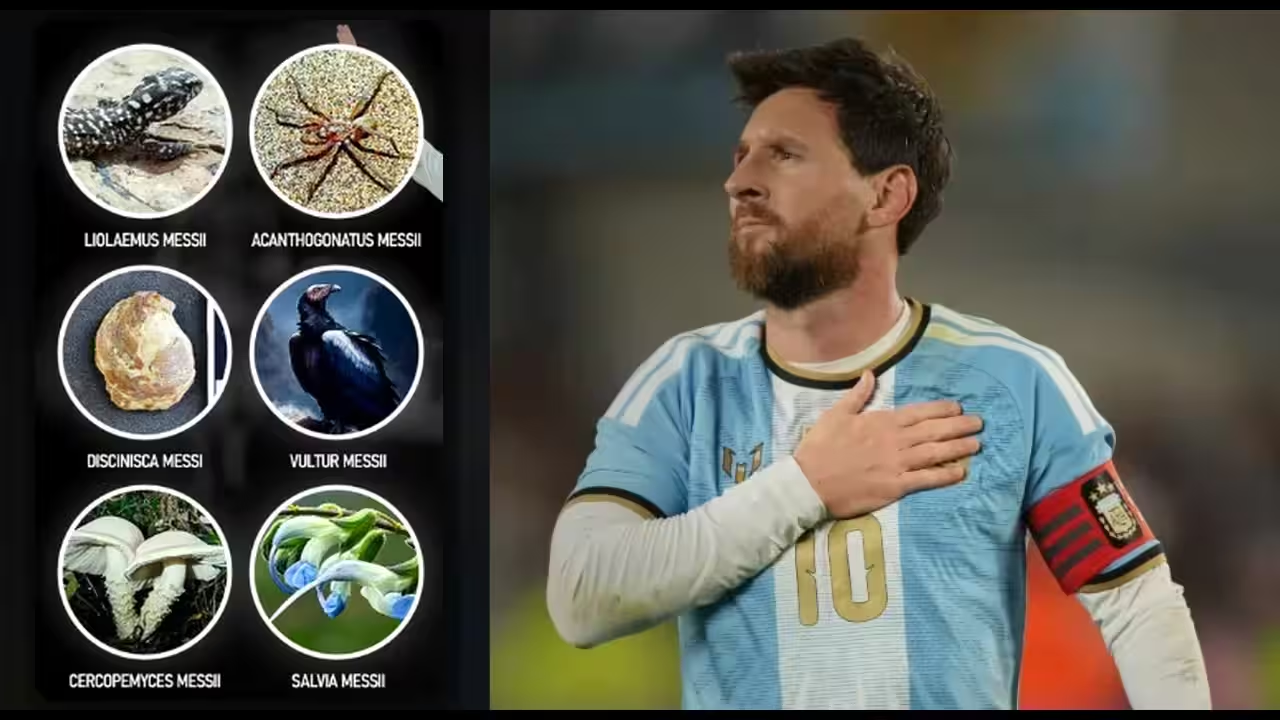
A sage plant discovered in the Peruvian Andes has become the sixth species named after Lionel Messi, extending a record already shared by a lizard, spider, fossil brachiopod, condor and fungus. The newly described Salvia messii carries Argentina’s familiar blue and white colours in its flowers, but the tribute comes with a troubling detail: researchers have classified the plant as endangered.A new plant carries Messi’s name into the AndesSalvia messii is a sage species endemic to the Andes of central and southern Peru, where it grows on rocky, arid slopes between 2,000 and 2,400 metres above sea level. It belongs to the mint family, Lamiaceae, which includes plants associated with antioxidant, anti-inflammatory and antiseptic properties.The plant can grow to approximately 1.5 metres tall, with pale blue and white flowers that resemble Argentina’s national colours. Those colours make the choice of namesake especially fitting for a footballer who represented his country across a career spanning more than two decades.The name follows botanical naming conventions, which often adapt a person’s surname into Latin. The ending “i” indicates possession, so Salvia messii can be understood as “Messi’s sage”.The species was described by researchers led by Paul Gonzales of the Natural History Museum at the National University of San Marcos, alongside Argentine researcher Rolando Uria and biologist Jean Capcha-Ramos of Huarango Nature. Their study appeared in the October edition of the botanical journal Phytotaxa.The plant’s restricted range and endangered classification give the discovery significance beyond its unusual celebrity namesake. Its name may draw attention to the species, but its survival depends on protecting the mountain habitat where it grows.The sixth species added to Messi’s recordIn May 2024, Guinness World Records recognised Messi as the footballer with the most species named after him, recording five at the time. Salvia messii now brings that total to six.Scientific nameSpeciesLocation or originYearLiolaemus messiiIguanian lizardRosario de Lerma, Argentina2021Acanthogonatus messiiBurrowing spiderArgentine Patagonia2023Discinisca messiFossil brachiopodMiocene-era Argentina2023Vultur messiiFossil condorPliocene-era Argentina2023Cercopemyces messiiFungusAndean cloud forest, Salta Province, Argentina2024Salvia messiiSage plantPeruvian Andes2026The names span living animals, prehistoric fossils, fungi and now a flowering plant. The fossil condor and brachiopod also show that the honour is not limited to species alive today.Messi’s record is unusual, although he is not the only footballer whose name has entered scientific classification. Diego Maradona has been associated with four named organisms, but one, the fairy wasp Anaphes maradonae, was later found to be the same species as an earlier-named wasp and is therefore no longer considered valid.What the names say about Messi’s legacyMessi’s name has reached science through a series of researchers choosing to recognise his influence, rather than through any single award or official campaign. The latest example connects his sporting identity directly with Argentina’s colours, even though the plant itself grows across the border in Peru.The tribute also arrives after a remarkable international career. Messi made his senior Argentina debut against Hungary on 17 August 2005, briefly retired from international football in 2016, then returned to lead the team through its major successes.He captained Argentina to Copa América titles in 2021 and 2024 and the 2022 World Cup triumph in Qatar. Messi has made 208 appearances and scored 126 goals for Argentina, winning the Ballon d’Or eight times. He scored in Argentina’s 3-0 victory over Benin in his final international match earlier this month. Now 39, he continues his club career with Inter Miami and has also been nominated among the 30 contenders for the 2026 Ballon d’Or.Messi is not the first footballer honoured by scienceThe practice of naming newly described organisms after footballers goes back further than Messi’s record. In December 2009, researchers named 12 newly described microcaddisfly species after members of Brazil’s 1958 World Cup-winning team, including Pelé, whose name was given to Neotrichia pelei.Maradona’s scientific namesakes include a fossil damselfly, a parasitic fluke and a sea snail, alongside the wasp later found not to be a distinct species.For Messi, the new sage adds another entry to a record already recognised by Guinness, while also drawing attention to a plant whose future is less secure than the footballer’s place in the sport’s history. The sixth namesake may be a small botanical discovery, but it carries both a tribute and a reminder of the biodiversity researchers are still identifying.Stay updated with the latest Asian Games 2026 news, check the Asian Games medal tally and complete Asian Games schedule.Get the latest Sports News and Live updates. Download the TOI app.
Topics in this story
Gathered from external sources. Rights to this text belong to whoever originally published it.