Independent regulator report says English football finances are 'dangerously exposed'
English football's finances are "dangerously exposed, with the majority of clubs living on the edge of financial disaster", a new report says.
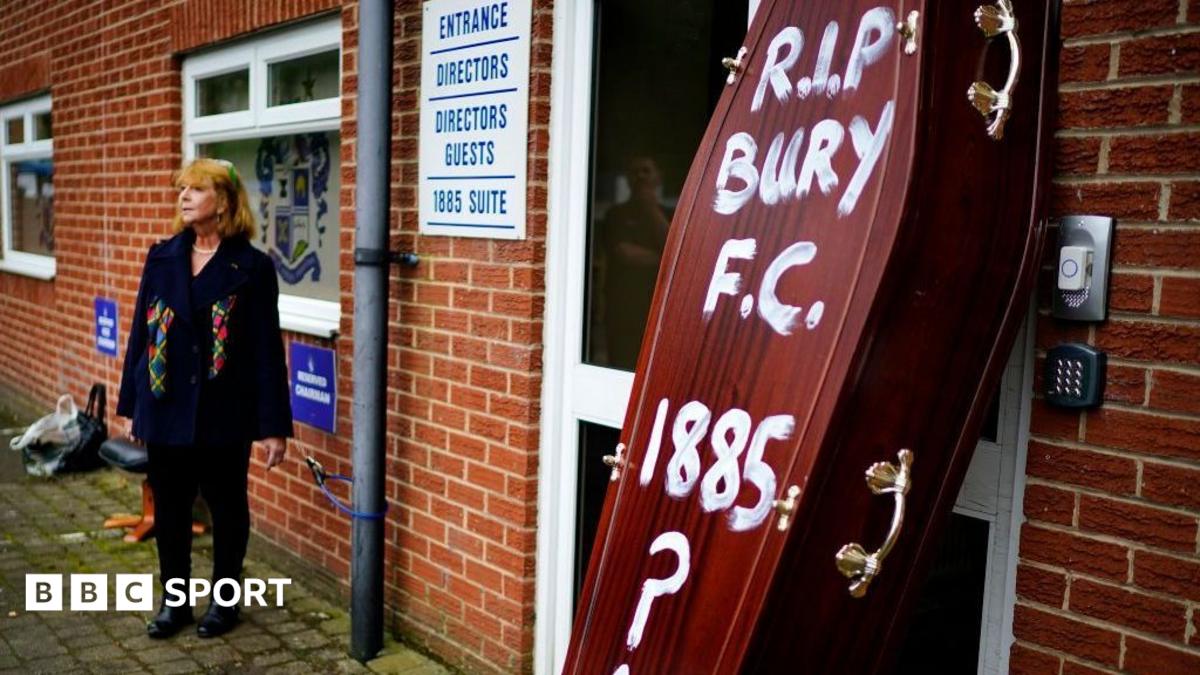
English football's finances are "dangerously exposed, with the majority of clubs living on the edge of financial disaster", according to a landmark report by the independent football regulator.
Research by the watchdog found 94% of clubs are loss-making, and more than 60% of EFL and National League clubs are technically insolvent.
The regulator (IFR) warns of "a dangerous cocktail of rising debt and an over-reliance on owner funding, leaving clubs and their fans at risk".
The 'State of the Game' report also suggests that despite the economic success of the Premier League, the financial 'cliff-edges' between and within leagues have grown significantly.
94% of clubs in the top five English leagues made losses in 2025-26
17 clubs across the EFL and National League would be loss-making even if their players played for free
66% of clubs could not survive for more than 90 days without new owner funding
29% of clubs reported they could not survive more than 30 days without such funding
68% of clubs have no contingency plan if their owner walks away
The IFR claims "the underlying foundations of the pyramid are under intense strain and require urgent reform", and its report "should serve as a wake-up call" for English football.
"Seventeen clubs are now trading in such a way that if their players played for free, their non-playing costs would mean they would go bust," IFR chair David Kogan told BBC Sport.
"Thirty-two clubs are operating on only 30 days' cash. If the owner chooses not to pay cash at the end of the month, those clubs go bust.
"That is a very, very risky scenario. This is the moment of addressing these problems before money starts to dry up.
"We can actually fix the house while the sun is still shining and that's essentially what our role is going to be in this."
Regulator would quit over Man City interference
Tasked with improving teams' financial sustainability, the IFR outlined six areas of concern around financial risk, and urged clubs to put robust contingency plans in place in case owner funding is withdrawn.
Despite years of talks, the Premier League and EFL are yet to agree a new funding settlement that would see the top flight share more money with the rest of the pyramid.
The IFR has the power to impose a deal and warns that "if football can't find a solution we will consider our next steps and will not hesitate to use all the powers at our disposal to bring about lasting change".
It also urges action on rising losses and calls on clubs to show how they take fans' views into account, and the steps they are taking to improve boardroom diversity and governance.
The average Premier League club now earns more than eight times the average Championship side
The existing system of parachute payments paid by the Premier League to Championship clubs who have been relegated "contributes to the incentives for Championship clubs to overspend which drives up player wage inflation"
Net transfer debt is going up and deferred transfer payments and transfer financing create links between clubs, owners and lenders which increases "the potential for financial stress to spread across the game".
"Nobody in football for 100 years has believed that football was trading in a solvent and effective state," Kogan said.
"It's not how football has ever really operated.
"But I think now where there's so much more money involved, the extremes get more extreme.
"We knew the problems were there, I don't think anybody realised that the data was going to show quite how dramatic they are."
The Premier League, the EFL, the Football Association and the Football Supporters' Association have all issued statements welcoming the findings.
BBC Sport outlines some of the key points in the report.
Clubs increasingly mortgaging off future transfer cash
Over the past five years there has been a growing trend to effectively mortgage off instalments a club is due to receive in transfer payments in return for an immediate injection of cash.
Called 'transfer financing', it has become "an increasingly important source of liquidity".
In 2020-21, transfer financing stood at £55m. By 2024-25 it had reached £779m - a more than 14-fold increase.
Now about £1.2bn of future transfer income has already been monetised through financing arrangements - an almost 22-fold rise on 2020-21.
Across English football, payments for transfer outgoings are about 3.3 times transfer incomings.
In 2025-26, English clubs reported approximately £4.8bn in transfer payables but only £1.5bn in transfer receivables - a net transfer debt of about £3.3bn.
The EFL's deteriorating financial outlook
The report says the financial situation is worsening for clubs across the EFL and National League.
Most Championship, League One and League Two clubs hold less than 30 days of cash.
More than 60% of EFL and National League clubs have liabilities exceeding the book value of their assets.
Twenty clubs - primarily in the Championship, League One and National League -spent more than 80% of revenue on player wages.
The majority of League One clubs spend more than 40% of revenue on player wages, including two spending more than 100%.
Wage costs have increased across all leagues between 2021-22 and 2025-26:
Seventeen of 18 (94%) EFL club owners surveyed were in favour of more robust cost controls - as one investor told the report: "the single biggest issue is player wages".
Average League One losses increased from 6% of revenue in 1992-93 to almost 50% in 2024-25. In League Two, it stands at 40%.
Many clubs rely on owner funding on a just-in-time basis, receiving frequent injections throughout the year.
The majority of EFL and National League clubs do not have a contingency plan if their owner becomes unable or unwilling to continue financing operations.
This leaves them particularly exposed given their limited access to alternative sources of finance.
"League One and the League Two clubs will receive significantly more funding [through a new deal with the Premier League]," Kogan said.
"That funding will be used along with a development fund and a liquidity fund potentially to help them get over the humps they're all currently facing."
In respect of both liquidity and solvency, the report says many football clubs "would not currently meet the requirement under the Football Governance Act to hold 'appropriate financial resources'."
Clubs are required to meet this standard by May 2030.
"Owners are very well aware of the need now for some sort of coherent structure in which costs are being managed," Kogan said.
Kogan added that the new financial distribution deal between the Premier League and the EFL is close.
Gap between the Premier League and the rest
It will not be news that the gap between the Premier League and the Championship has grown.
In 1992-93, the average Premier League club earned £10.5m, which was 2.7 times the £3.9m earned by the average Championship club.
By 2024-25 it was £341m, or 8.7 times the £38.9m in the second tier.
The revenue gap within the Championship has also grown, partly because of the increase in the size of parachute payments.
From 2007-08 to 2025-26, the amount a non-parachute Championship club received in solidarity payments from the Premier League increased from £0.9m to £5.3m.
But a year-one parachute club saw payments increase from £12m to £48.7m.
The absolute revenue gap between the big six and the rest of the Premier League has widened significantly, too.
In 1992-93, the six biggest clubs in terms of revenue earned £9.4m more on average. By 2024-25, this average revenue gap had grown to £421m.
The big six account for 56% Premier League revenues, with 44% split between the remaining 14 teams.
Topics in this story
Gathered from external sources. Rights to this text belong to whoever originally published it.