WNBA Analyst Slams FIBA World Cup Officials Over Missed Foul On Caitlin Clark
Caitlin Clark went scoreless while refs missed calls in a near-disaster for Team USA.
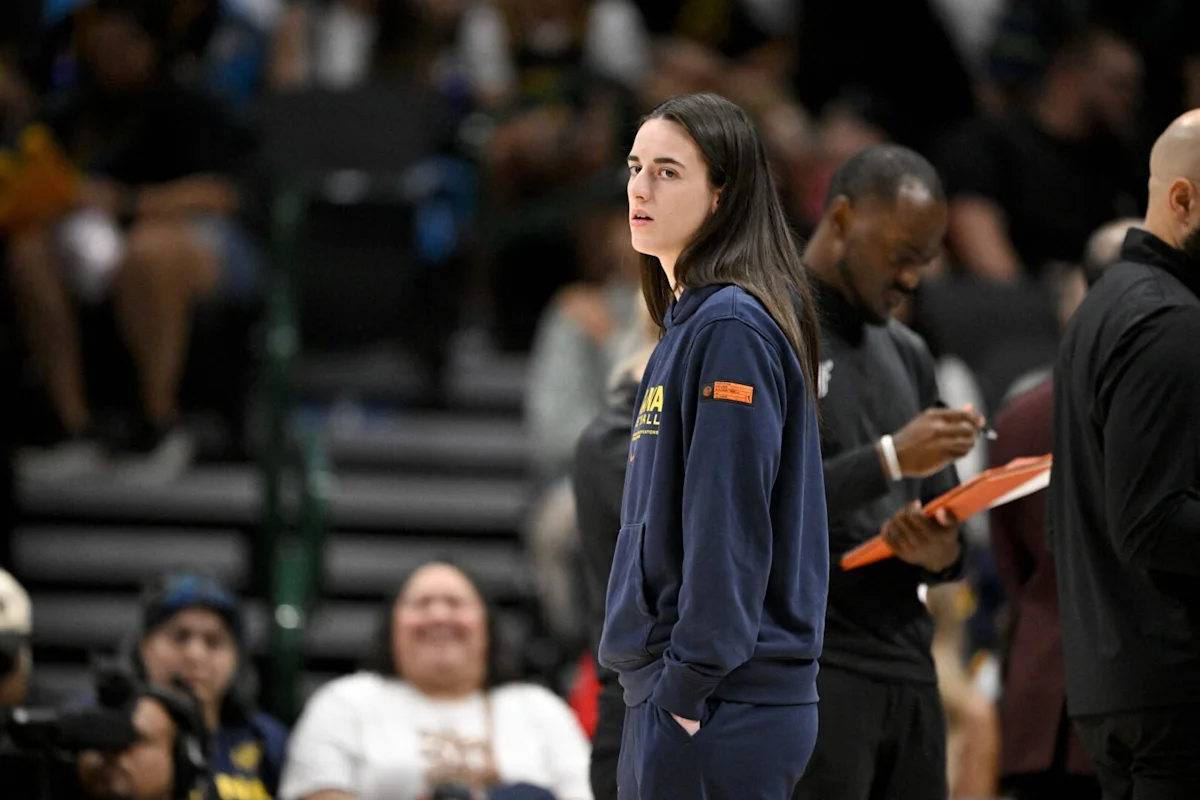
Caitlin Clark and officiating concerns go hand-in-hand. But things took a heavy turn when the same debate returned over the weekend in Berlin, when Team USA edged Italy 55-52 at the 2026 FIBA Women's World Cup.
On September 6, 2026, Team USA's 31-game winning run in the FIBA Women's World Cup came dangerously close to ending. Before Sunday, the United States' closest game during its winning run was a 2010 victory over Australia, 83-75.
On Sunday, Italy led 50-49 with 3:21 left when the United States rallied in the fourth quarter, making Team USA's 55-52 escape the closest FIBA World Cup match for the Americans since their last loss in 2006.
The Sunday game did get physical eventually, with Clark struggling to find her flow. Sports Illustrated writer and WNBA analyst Robin Lundberg voiced his frustration with the bad officiating involving the Indiana Fever star guard by pointing to a specific play. In particular, Lundberg cited prior uncalled contact from Olbis Andre of Italy in the paint and a missed foul on Clark's arm on a late first-half drive to the basket as proof of subpar refereeing.
Speaking on his YouTube channel about the missed foul call on Clark during the Sunday game, Lundberg said, "There were some other questionable plays in the game, like Caitlin, you know, drove to the basket late at the end of the first half. This is a clear foul across the arm that wasn't called. It's the off arm there on that play. Wasn't called a foul. Didn't get to the free-throw line, obviously."
In the first quarter, there was another incident that heightened the suspense. With 2:03 left in the first quarter, play stopped while officials deliberated over a foul call involving Clark.
Clark approached to give her opinion, provoking a sideline reaction from Italy's head coach, Andrea Capobianco.
Later, Capobianco was seen yelling across the court, to which Clark responded, according to professional lip readers, "Stop complaining."
After falling behind 23-8, Italy shifted to a 2-3 zone halfway through the first quarter, and the outcome was instant. By halftime, they had trimmed the lead to 30-24 after going on a 16-7 run. In the third quarter, they maintained their momentum and briefly seized the lead.
Team USA was only able to shoot 29 percent from the field and 1-for-12 from three-point range because of Italy's defense. Furthermore, Team USA's 55-point total was its lowest World Cup score since defeating Australia 42-38 in 1967.
Nevertheless, Lundberg wasn't the only one who had concerns about the officiating. On X (formerly Twitter), sports commentator Jason Whitlock voiced a similar grievance.
Addressing the physicality of the Sunday game, Whitlock wrote, "That was a brutal game of basketball. If the refs are going to allow that level of physicality, there's a good chance we won't win."
Attributing Team USA's struggle to A'ja Wilson's absence and Italy's physicality, Whitlock added in the same post on X, "We missed A'ja Wilson today. The physicality eliminated CC and bothered (Breanna) Stewart throughout and slowed (Aliyah) Boston late. Ugly hoops."
Just days before the World Cup, Wilson was sidelined due to lingering back and health issues.
Although it's unlikely that they could play a worse game than that, Team USA has to improve overall and get more from Napheesa Collier, Breanna Stewart, and Clark.
Just like the final score, the individual stats for Team USA were equally rough. Clark had her first scoreless game from the field at any level of basketball, finishing 0-for-6 with one free throw. Before making her ninth shot, Stewart missed her first eight.
According to ESPN Insights , Stewart, Cooper, and Clark, who were all among the top seven scorers in the WNBA this season, shot 1-for-19 together with Kahleah Copper.
For the first time since the 2006 defeat to Russia, Team USA scored fewer than 70 points in a World Cup match on Sunday.
Topics in this story
Gathered from external sources. Rights to this text belong to whoever originally published it.