Headline here...
Headline here...
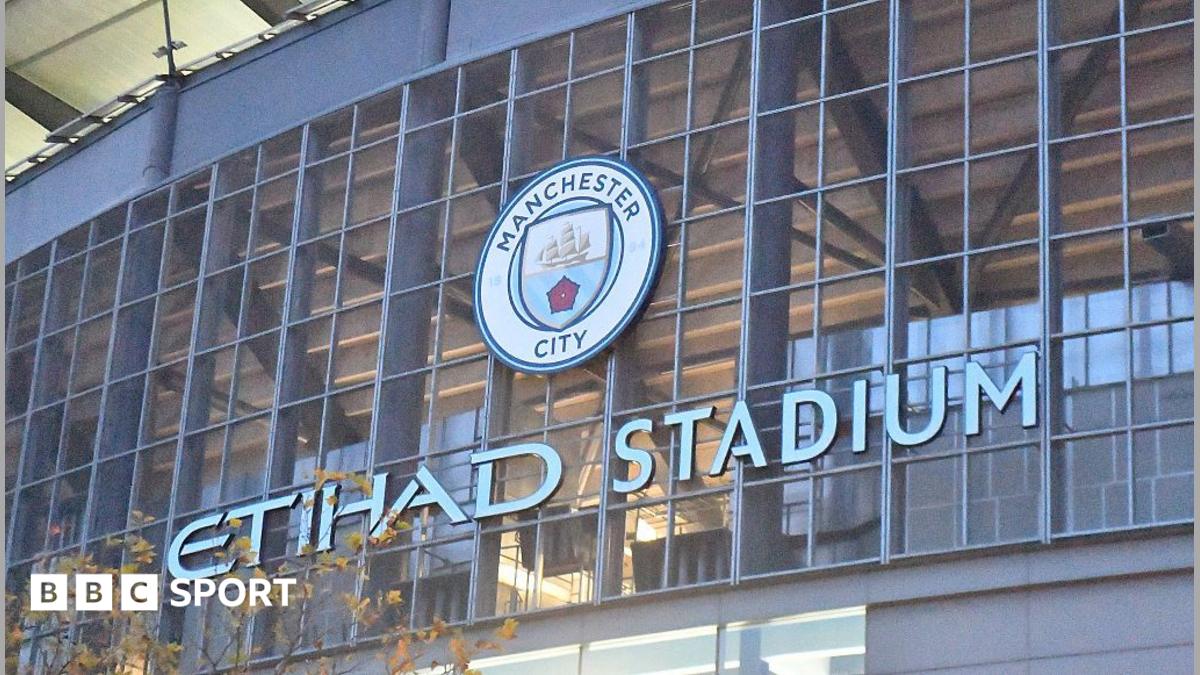
They are the five individuals at the Premier League set to play a key role in the fate of Manchester City .
The competition's board has the responsibility of recommending a punishment after the seismic news in September of the club being found guilty of breaching financial rules by an independent commission.
While that three-person commission panel will ultimately decide on a sanction, the Premier League's submission will be considered, along with the view of City of course, who maintain their innocence and have appealed.
It is not known when a sanction hearing will take place, nor what sanction the Premier League will want, with a fine, points deduction, expulsion or the stripping of past titles all possible.
But who makes up the Premier League's board, and how have their recommendations over punishments been received in past disciplinary cases?
Among various roles and responsibilities, the board is the entity responsible for prosecuting breaches of Premier League rules.
It comprises the league's chair, chief executive, and three independent non-executive directors, with no club representatives included - in order to provide independence and neutrality.
Do Manchester City have any grounds to win their appeal?
How much did Man City's rule breaking cost your team?
Alison Brittain has kept a low profile since becoming the league's first female chair almost four years ago. Formerly a senior executive in the hospitality and financial services sectors, she is also chair and trustee of The King's Trust Group.
Described as "sensible" by one acquaintance, in September she spoke at a university alumni event, revealing that she was initially sceptical about joining the Premier League because she had never worked in sport.
Two senior club executives - the former Arsenal CEO Vinai Venkatesham (now at Spurs ), and ex- Aston Villa CEO Christian Purslow - told her that her skillset was what the league needed, helping to persuade her to apply.
She said: "They actually spent some time talking to me and saying 'we aren't looking for a super fan. In fact we're looking for the exact opposite - somebody who will bring a different mindset. A business mindset, governance standards, be able to reset us a little bit into a different way'…and so I then went through the process and ended up in the job."
Describing herself as a "lifelong Manchester United fan [who] stood in the Stretford End before it had seats, as a kid" because of her family's allegiance, Brittain is now also a Brentford supporter. In 2025, she received unanimous backing from the 20 clubs to continue for a second three-year stint.
Speaking in 2024, Brittain acknowledged the league was "not without its challenges". But she has hailed what she describes as "the most exciting competition in the world", and its global appeal, calling it an "enormous soft power asset" for the country.
She also recently said that "the whole point of running the league... is to make sure the competitive balance stays really good. Because what makes us successful is this virtuous circle of anyone could win any match any day… there has to be jeopardy."
She added: "Someone has to care about keeping that balance, because if you ask the clubs they'd rather not have that balance because they'd like to win all the time."
When asked if that was her job, she replied: "Absolutely. That's my job."
According to Purslow, Brittain has "extremely good people skills and diplomacy in a role where keeping 20 owners more or less happy is not an easy job. She is a very down to earth, straightforward person, and that plays well."
The league's chief executive since 2019, Richard Masters is a much more familiar face to football fans.
When the independent commission's 'core decision' on City was announced in September, he said it "vindicates the Premier League's decision to pursue this case", and that the league has "a key responsibility… to ensure that the rules, approved by the clubs themselves, are upheld to protect the integrity of the competition".
He added that it was "paramount that the league remains competitive and fair for all clubs and for the fans. We take that role extremely seriously."
Masters said: "There are elements of the case that remain to be decided, including, importantly, what sanction must follow for these breaches. Now we have the commission's decision, we are committed to moving swiftly through the remainder of the process, to provide certainty for the league, our clubs and fans."
The board is completed with three other directors:
Mai Fyfield - a former Sky executive who during her 20-year career at the company led its bidding for three Premier League TV cycles, and currently sits on the board of BBC Commercial.
Dharmash Mistry - a technology venture capitalist and entrepreneur who also has experience of working with the BBC as a former non-executive director at the corporation. Describing himself as a "passionate football supporter", he is "smart and theoretical" according to one colleague. He chairs the Premier League's audit and finance committee and is the Premier League's representative on the FA's board.
Matthew Ryder - a senior barrister, part-time judge and a former deputy mayor of London when he had responsibility for social mobility and social engagement. He is also a board member of the Scott Trust, which owns the Guardian newspaper, alongside other non-executive roles. Describing himself as "a longstanding and passionate football fan", he also chairs the league's legal advisory group. He told a conference last year that his membership of the Premier League board had been "deeply rewarding... it's a fascinating time to be in football."
BBC Sport has approached the board members via the Premier League, but it declined to comment.
The Manchester City case is unique in its scale, and so it is uncertain how relevant previous cases are when looking at the kind of sanctions the Premier League has recommended. But it is clear that independent commissions do not necessarily agree with the Premier League's board when it comes to clubs' potential punishments.
In 2023, the league argued for a 12-point sanction for Everton after the club breached financial rules, with a commission then settling on a 10-point punishment instead, which was reduced to six points on appeal.
In 2024, the Premier League suggested that Nottingham Forest should be docked eight points over a larger PSR overspend, but the commission again disagreed, settling on a four-point punishment.
This year the Premier League argued that an appropriate sanction for Leicester City - for an overspend in 2023-24 - was a 12-point deduction to be applied in the Championship. The independent commission instead recommended that a six-point deduction be imposed by the EFL.
There is also an alternative to contested proceedings.
Earlier this year the Premier League board reached a 'sanctions agreement' with Chelsea which resulted in a £10m fine and suspended transfer ban after admitting making £47m in secret payments to unregistered agents and third parties over transfers between 2011 and 2018.
The league said: "When considering the appropriate sanction, the board noted that the club's proactive self-reporting, admissions of breach and exceptional co-operation throughout the investigation acted as significant mitigating factors."
Who is Rui Pinto? Is he a whistleblower or hacker? The BBC finds out more about the man responsible for bringing chaos to the world of football over the last decade.
Topics in this story
Gathered from external sources. Rights to this text belong to whoever originally published it.