US money has disrupted European soccer. But will the investment party last or fizzle out?
Few markets have attracted more attention than English soccer in recent years, with US investors the most enthusiastic suitors in a scene that has also played out to varying degrees across Europe.
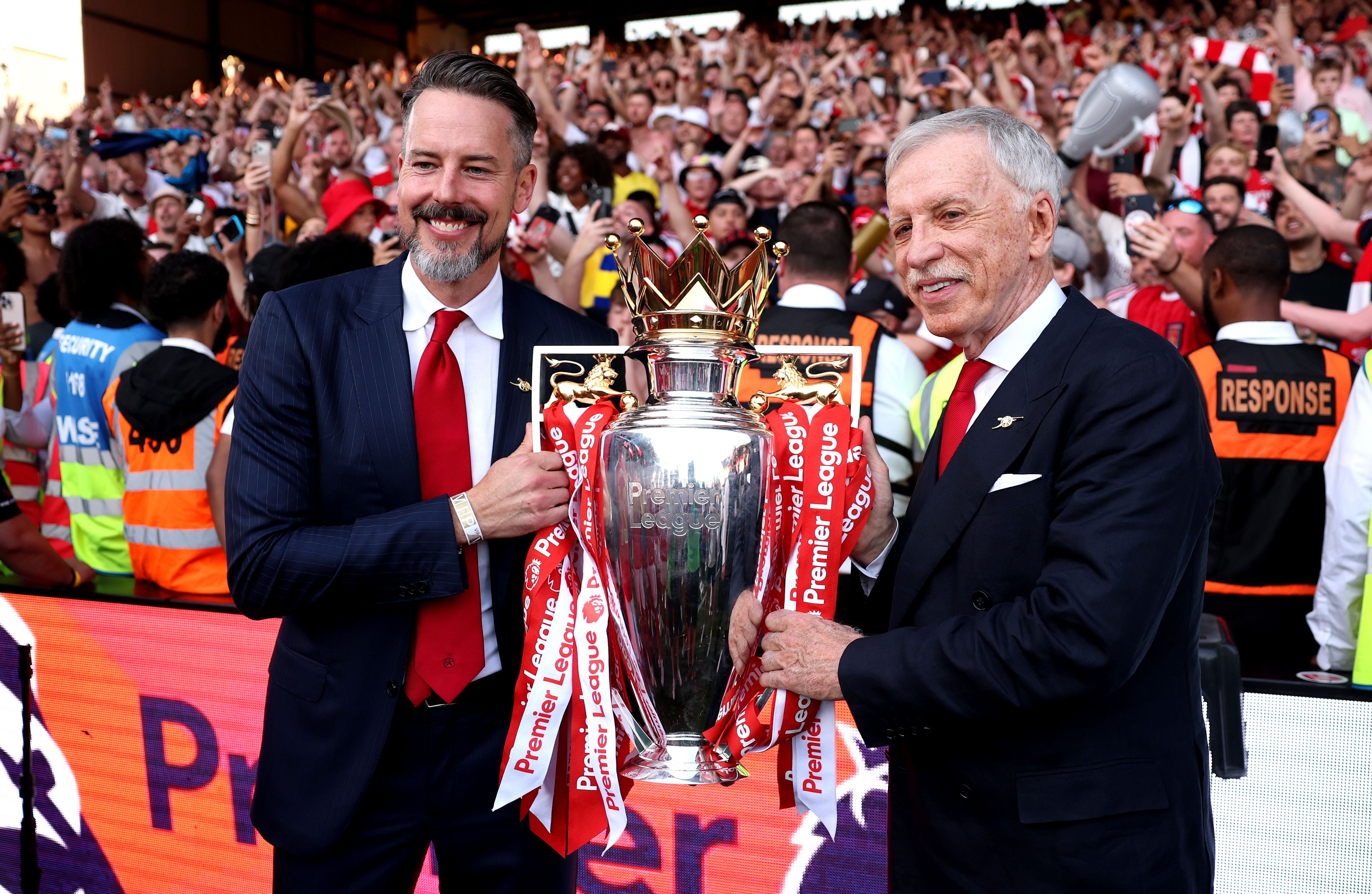
Few markets have attracted more attention than English soccer in recent years, with US investors the most enthusiastic suitors in a scene that has also played out to varying degrees across Europe. Of the 92 clubs that make up England’s top four divisions, 40 have American ownership or investment – a far cry from May 2005 when Malcolm Glazer completed a £790m ($1.06 billion) takeover of Manchester United to become the first American owner in the Premier League. Today, US investors have stakes in some of England’s and Europe’s most recognizable clubs including Liverpool, Arsenal, Chelsea, AC Milan and Olympique Lyon. But what makes European soccer so attractive to American investors? And, with investors increasingly looking beyond the biggest names, where might the next wave of investment go? How did we get here? The Glazers’ leveraged takeover was a watershed moment in English soccer ownership. The family acquired the club using borrowed money, taking United off the London Stock Exchange and leaving it with significant debt – a move which continues to rankle with supporters to this day. Then came Randy Lerner’s takeover at Aston Villa, Stan Kroenke at Arsenal and Fenway Sports Group’s acquisition of Liverpool. The tap had been turned on, and American investors were streaming into England and Europe at large to invest in the game’s biggest clubs. David Stubley – author of The Disruptors: Has Sport Lost the Plot? – believes the Glazers’ commercial strategy has been an extraordinary success. “Manchester United were generating $40 million in sponsorship when the Glazers bought the club. This year, it will be $220 million, so they’ve grown six-fold,” Stubley, who extensively researched the topic for his book, told CNN Sports. The Glazers did so using business strategies like splitting the Red Devils’ sponsorship opportunities into regions. “They now have over 40 sponsors and the way they’ve done it is just really cleverly slicing up the globe,” Stubley explains. “They brought in successful playbooks from selling US marketing rights to US franchises.” The rapidly evolving American soccer market What has occurred in England has also been seen across top-flight soccer in Europe. But why? Despite there being 3.5 billion soccer fans worldwide, the Beautiful Game has struggled to crack the US market with basketball, baseball, and American football capturing the attention of American sports fans instead. But following the success of the men’s 2026 FIFA World Cup, the sport’s position in public consciousness is growing rapidly in North America with 62.8 million viewers across the US watching Spain defeat Argentina in the final at MetLife Stadium. In a poll conducted by Gallup in August, 9% of Americans said they now view soccer as their favorite sport, sitting just behind basketball (11%) and baseball (10%). For investors, that interest represents an opportunity to develop new sponsorships, broadcasting partnerships and commercial relationships. In 2020, the Covid-19 pandemic exposed the financial vulnerabilities of clubs across Europe as they battled with the loss of matchday revenue while operating costs and player wages continued. Then US investors entered the picture. RedBird Capital, for example, acquired AC Milan in 2022, a year after purchasing a 10% stake in Fenway Sports Group (owners of Liverpool and the Boston Red Sox), triggering a domino effect where American investors really began to pull out their check books. According to Stubley, $50 billion of private equity investment has been pumped globally into sports-related activity over the past four years, with around 70% attributable to the United States. He identifies key reasons why investors are drawn to sports – and European soccer, in particular. Not all of them are financial, however. Many investors were sports fans before they became business tycoons and owning a team brings a prestige that money can’t buy – though, in this case, it certainly can. Loyal fans, guaranteed revenue First, sports are an entertainment business that rarely disappoint their audience. Take Leicester City’s historic English Premier League triumph in 2016. Starting the season as 5,000-to-1 outsiders, the Foxes defied all expectations to not only avoid relegation, but to win the title: the sort of drama Steven Spielberg and Christopher Nolan would be proud of. Moments like these help create the passionate, loyal fanbases that underpin the Premier League’s most valuable revenue stream: media rights. As the world’s most-watched soccer league, it sells broadcast contracts that typically run for four years or more, giving investors long-term cash flow security. In 2023, the league agreed a record £6.7 billion (roughly $8.8 billion) domestic TV deal covering 2025-26 to 2028-29 and the financial rewards for clubs are considerable. Even Southampton, which finished last and was relegated as a result in the 2024-25 season, received £109.2 million (about $143.1 million) in broadcast and central commercial revenue, compared with £174.9 million ($229.2 million) for champion Liverpool. Then, there is the relative scarcity of opportunities to invest in the US. The NFL has 32 teams and is a tougher and more expensive market to enter – as are the MLB and NBA. In England, the Premier League is limited to 20 clubs. However, the pyramid system – present across Europe – allows for promotion and relegation of teams, presenting an opportunity to invest in lower league clubs for a smaller amount of money, in the hope that they will one day reach the Premier League, à la Ryan Reynolds and Rob Mac’s Wrexham. Multi-club ownership US investors have also shaped the way ownership looks. In recent years, multi-club ownership (MCO) has emerged as another attractive strategy for those who are looking to expand their influence across the global game. The MCO model offers potential advantages for investors: Clubs within the same network can share knowledge, resources, and scouting expertise, often using smaller clubs to develop promising talent for more influential clubs. It’s such an attractive strategy that 345 clubs worldwide and 16% of top-division teams in Europe are involved in multi-club investment structures when there were fewer than 60 just a decade ago, according to UEFA. Europe’s governing body of soccer also reported that 50 multi-club investment groups originate in the United States. But the model is not without controversy. When clubs under the same ownership structure compete in the same competitions, questions arise over sporting integrity and conflicts of interest. In 2023, Chelsea’s US owners Clearlake Capital purchased a majority stake in RC Strasbourg Alsace and is a high-profile example of the inner workings of a multi-club ownership structure. Within such a hierarchical structure, clubs at the bottom can become “feeder” clubs to the flagship clubs, though. Much to the dismay of Strasbourg fans, they found out the hard way in January, as their young and successful manager Liam Rosenior took up the head coach role at Chelsea, taking three members of his backroom staff with him. In another example from 2025, Crystal Palace was demoted from the Europa League – UEFA’s second-tier competition – to the third-tier Conference League because of its then co-owner John Textor’s ownership links with Lyon, highlighting the potential conflict of interest when clubs within a multi-club ownership structure qualify for the same competition. Women’s soccer: A market on the rise? The women’s game has also become an emerging investment opportunity that has surged in popularity in recent years, thanks in part to the success of the National Women’s Soccer League (NWSL) in the US and England’s Women’s Super League (WSL). South-Korean born American businesswoman Michele Kang – owner of the Washington Spirit and Lyon – was quick to identify the potential, adding the London City Lionesses to her portfolio in 2023. The club secured promotion to the WSL in 2025 and has since demonstrated its ambition by recruiting 27 players, including three-time Ballon d’Or Féminin winner Alèxia Putellas. With title ambitions and European qualification firmly in the club’s sights, Kang is seeking to build a squad capable of challenging the established forces of the women’s game. For investors, the potential lies in buying an affordable club in a market on the rise. “Paying premiums for top clubs has gone, perhaps,” Stubley tells CNN Sports. “So, you should really be looking at women’s sport because they are high growth, whole new audiences coming in and they are cheap.” Are we in a sports bubble? But the growing influence of US investors has raised questions as to the future of European soccer and its direction of travel. During the World Cup this summer, some supporters and commentators accused FIFA of prioritizing commercial interests over the matchday experience. As Stubley facetiously put it, “You can’t have water breaks. This isn’t the marathon.” With all this change over the past two decades, Stubley has seen enough to harbor concerns as to the outlook of English and European soccer as a whole and their relationship with fans. “Is this a sports bubble that’s about to burst? I think it is,” he tells CNN Sports. “I think the valuations and the amount of money that’s in play – the growth isn’t there to justify 10 times revenue multiples for some of these assets. “The first wave of American investors were quite experienced at sports. The new wave is not. They’re much more into financial engineering.” The risks of attracting the wrong kind of investment were brought into sharp focus in October when Josh Wander, co-founder of Miami-based investment group 777 Partners, pleaded guilty to charges of defrauding lenders and investors of more than $500 million, even using Microsoft Paint to falsify documents. In its pomp, 777 Partners held stakes in prominent European clubs including Hertha Berlin, Genoa and Standard Liège. The firm also attempted to buy Everton in 2024, but the proposed takeover collapsed as concerns grew about its financial integrity. The case was a timely warning for clubs seeking new ownership that the arrival of wealthy US investors is not a guarantee of financial security. UEFA’s figures suggest that the post-pandemic takeover boom might be cooling; the governing body recorded 29 takeovers in 2025, compared with 48 takeovers of European top-division clubs in 2022. Yet American interest remains significant. Nine new US investors entered European top-division clubs in 2025, reinforcing the idea that American capital continues to play a prominent role in the market. Perhaps, though, the biggest threat to American investment in the European game isn’t financial, but the alienation of the very people who make the sport so commercially attractive in the first place. As more US investors enter the European game, there is an increasingly delicate balance to strike between commercial ambition and preserving the traditions that make soccer so compelling. Because, if there is one thing that European soccer fans are certainly good at, it’s rejecting the forced Americanization of their beloved soccer clubs. It took little over a month for dissenting Manchester United fans to form FC United of Manchester, after the Glazers’ landmark takeover in 2005. In April, Chelsea and Strasbourg fans united in protest against BlueCo, the US investment group which holds controlling stakes in both clubs, chanting, “We want our Chelsea back.” Therefore, Stubley believes investors would be wise to remember why supporters fell in love with the Beautiful Game in the first place. “As far as the sporting product is concerned, don’t mess with it,” he warned. “Understand it. Understand why we love it and tweak around the edges if you must but leave it alone because you will get battered otherwise.” After all, as legendary Scottish manager Jock Stein once said: “Football without fans is nothing.”
Topics in this story
Gathered from external sources. Rights to this text belong to whoever originally published it.