LSU's 'test of the system' just the latest byproduct of a broken college sports world — 'It's embarrassing'
There is no clear, easy route to stability in college sports. There is no single leader to move the industry forward. It's lost in a quagmire of its own maki...
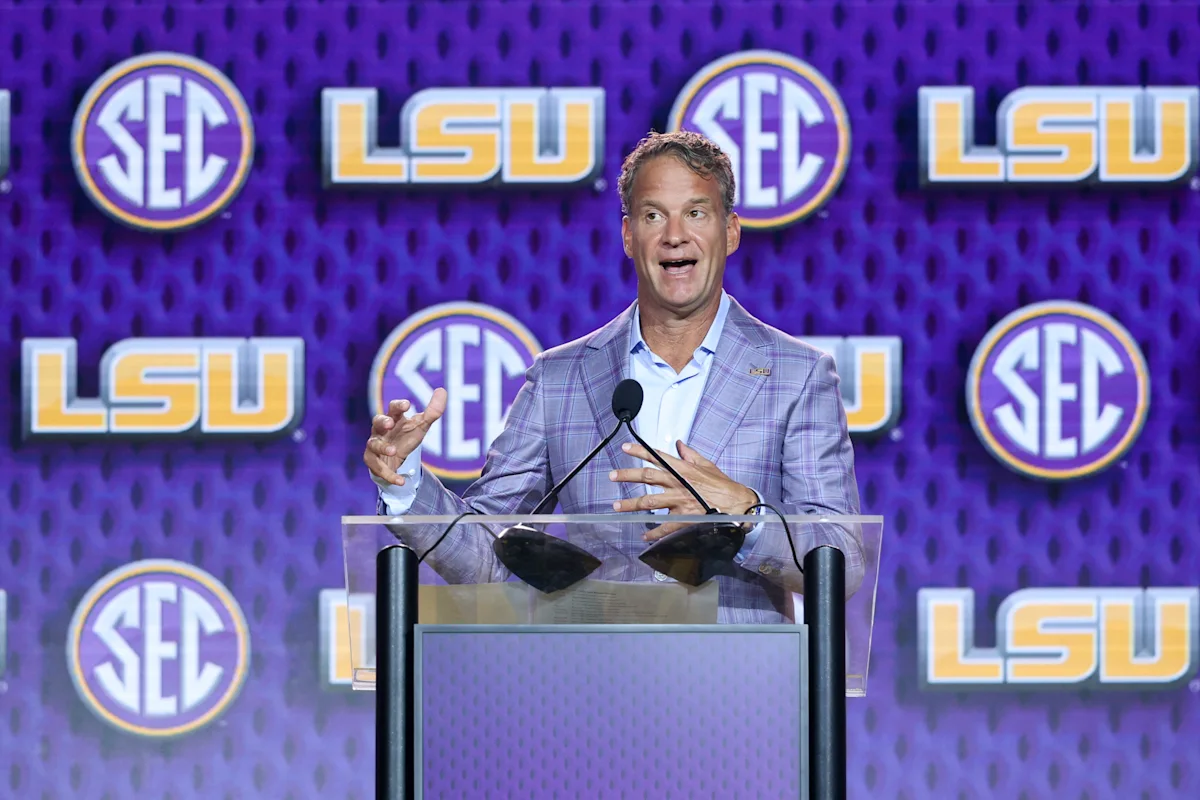
As a plaintiff attorney cross-examined SEC commissioner Greg Sankey on the witness stand in a Louisiana courtroom Thursday afternoon, news broke that his conference had filed a lawsuit against one of his own members.
If you're keeping tabs, this is the second time that a league filed a legal challenge against its own school in the last couple of months (the SEC's suit, in fact, is similar to the one the Big 12 filed against Texas Tech to prevent the school from playing QB Brendan Sorsby ). The SEC's lawsuit happened a few weeks after a group of players, some recruited by LSU and who already signed pro contracts, sued the SEC over an additional year of eligibility in a Louisiana court .
In an era of college athletics boiling over in legal jambalaya, this is only the tip of the proverbial iceberg. Let's take inventory of the insanity.
Just in the last three years, four schools have filed lawsuits against another school or their own player (for buyouts and tortious interference); a group of players or an individual player has twice sued their coach (broken NIL promises); and a conference has sued another conference or one of their member schools at least nine different times (mostly over realignment).
One power league athletic director summed it up quite nicely on Thursday.
"At this point, you got to wonder what people are thinking about our industry," he said. "It's embarrassing."
College sports remains mired in the worst kind of purgatory. The industry wobbles erratically, caught between the old amateurism model and full-blown professionalism. Its stakeholders disagree on a way forward. Do you push back against mounting legal challenges with conference-wide restrictions? Or lunge forward into a more pro scheme through collective bargaining?
There is a group, too, still stacking their eggs in the congressional basket, hoping for a federal bill to regulate the industry — something that took a hit on Thursday morning, when House leaders announced they would end their September session two weeks earlier than expected (even if the Senate passes the Protect College Sports Act when it returns to session on Sept. 15, the House would not consider it until mid-November).
All three paths forward seem murky and rife with obstacles.
There is no clear, easy route to stability. There is no single leader to move the industry forward.
However, the power conferences took a large step last week down the road toward conference-wide governance by creating/reaffirming policies on banning pro players returning to college (a response to players' legal pursuit in the Louisiana case). In theory, individual leagues would create and enforce rules among a smaller cohort to avoid the antitrust litigation that's crippled the NCAA and its rules.
Will it work? The SEC's aggressive approach to the LSU situation is a clear sign that the league believes it must vigorously defend its conference rules or else risk the collapse of any league-wide governance concept before it's even established.
Sankey himself took it seriously enough to appear in court.
In an act indicative of the current state of the industry, the SEC commissioner spent more than three hours of the first week of the football season on the stand testifying during a preliminary injunction hearing over the eligibility of several professional football players wanting to return to college.
What's going down in Baton Rouge is a product of a broken system.
Blame the longtime executives of the industry who, for years, ignored the obvious economic inequity in player compensation. Blame the school administrators and coaches who are intentionally breaking the very rules that they create. Blame plaintiff attorneys who rake in big bucks while preaching colleges' mistreatment of athletes.
Blame the media, which mostly stood by idly for decades while power conference universities used the profits of football to overspend on money-losing Olympic sports, coaching and administrator salaries, and gaudy facilities.
"I'm indicting everyone, including myself," said Kevin White, an athletic director at six different NCAA schools over 40 years, at a Knight Commission meeting in 2023. "We should have been far more progressive and forward thinking over the past 20 years or more."
The current situation is dire enough that White believes the industry is approaching an "irreconcilable position between the academy and college athletics" — a nod toward the thinning tether that connects a university with a major football program.
That tether feels strained more than ever, stretched to the point of tearing.
While what's unfolding in Louisiana is the byproduct of an unhealthy system — half-amateur and half-professional — you'd be silly to believe that LSU doesn't deserve some fault for planning to break the very rules that its university president voted on just last week (professional players should be prohibited from returning to college).
According to the SEC's federal lawsuit against the school, LSU and coach Lane Kiffin "orchestrated a campaign to recruit professional athletes" to join the roster this year. The suit takes aim at university president Wade Rousse, his school board and athletic director, Verge Ausberry, for permitting Kiffin to pursue ineligible players.
"Someone has to test the system," said one high-ranking LSU administrator earlier this week.
LSU's antics sparked public condemnation from a slew of southern state attorneys general. Georgia's AG, Chris Carr, encouraged Sankey to expel the school from the league if it rosters pro players — a move that, while extreme, has been discussed among the 15 SEC university presidents, as reported Monday at Yahoo . South Carolina's attorney general, Alan Wilson, believes that the league should be able to enforce its rules as a private association.
Louisiana's attorney general clapped back, as did the state's governor, Jeff Landry, who many believe to be in support of LSU's pursuit of these players.
College sports stands at an impasse. Kickoff can't get here soon enough.
Topics in this story
Gathered from external sources. Rights to this text belong to whoever originally published it.