FAW sets out ambition 10-year plan but says it needs more money
The Football Association of Wales has called for greater funding for Welsh football after setting out ambitious targets for the next decade.
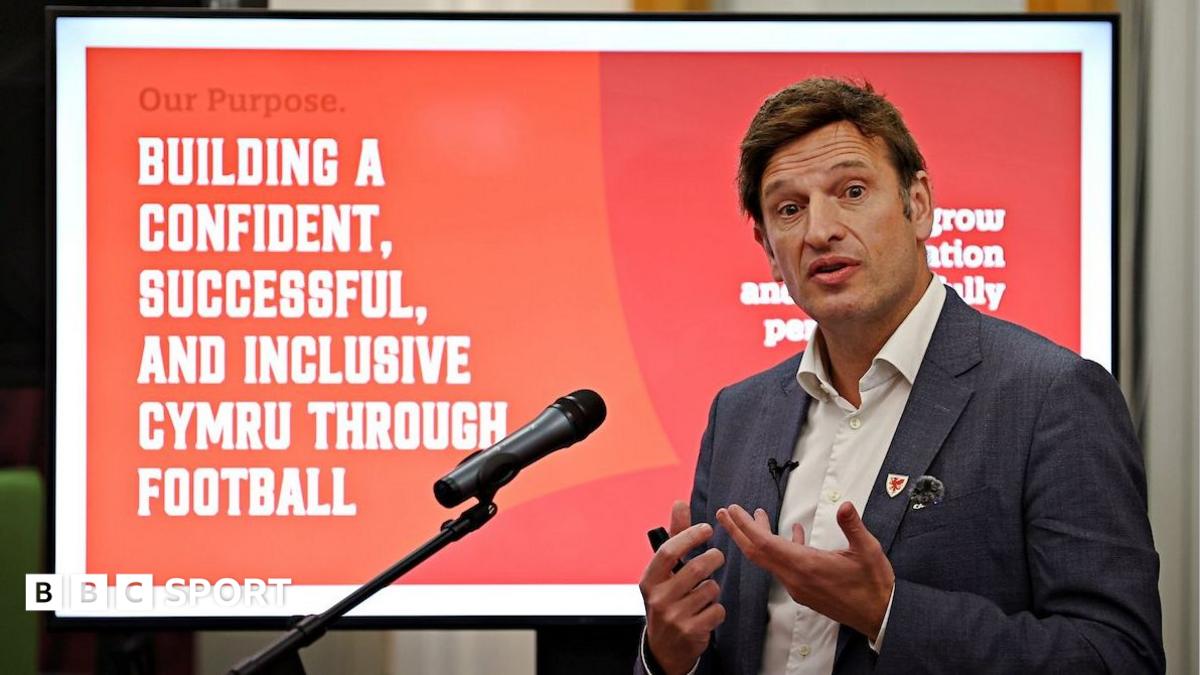
The Football Association of Wales (FAW) has called for greater funding for Welsh football after setting out ambitious targets for the next decade.
Wales' governing body says it wants more players, more pitches and more qualifications for major tournaments over the next ten years.
The FAW's aims have been outlined in a new strategic plan that includes seeing the men's national side return to the top 20 of Fifa's world rankings.
Their plan – Llunio Cymru – sets out a number of measures of success between now and 2036, all based on growing participation and helping the national sides "perform on the world stage".
A key goal includes ensuring "quality" facilities are in place "within 15 minutes of every community" with a target of 100 new or upgraded pitches by 2030.
But chief executive Noel Mooney admits the association will seek greater Welsh government support to develop new facilities, as it aims to increase the number of registered players in Wales by 30%.
"We need a lot more support," said Mooney.
"We're very clear on the growth of the female game that we need facilities for that. We've spent more than £30m over the last four years building pitches all across the country but we've a long, long way to go.
"Thankfully, our resources are increasing - which is good - but we really need more support from Welsh government and from the 22 local authorities to deliver this."
FAW posts loss for 2025 despite record revenue
Welsh football bosses reveal cost to improve facilities
FAW CEO Noel Mooney on Bellamy, FIFA and the grassroots game
Club academies key to world ranking plans
Key targets for the elite game include qualifying for every other major tournament and reaching the knockout stages of the co-hosted Euro 2028 and 2035 Women's World Cup.
The FAW wants 80% of men's and women's national team players to be regular starters in the world's top five leagues, with the men's squad currently at 65%.
One plan to achieve that is the introduction of two elite category club academies in the country, having admitted there has been a drop-off in talent produced for the men's national side following Swansea City's loss of category one status.
Now the FAW said it will work with clubs to lend resources and staff and boost chances of new talent emerging – with an aim of producing two players per team every year.
In the meantime, the FAW said it has developed data tracking of dual-qualified players and continue work on the national academies for the women's game.
But the aims are underpinned by a long-term focus to grow the number of people playing the game.
The FAW last set out targets in 2021. Qualification for the 2022 men's World Cup and the 2025 women's Euros were two key goals ticked.
They also hit goals for increasing the number of people playing the sport, with the registered players count rising from 80,0000 to 120,0000.
The FAW now want that number to grow to 160,000, including doubling the number of registered women and girls to 40,0000.
They believe increasing playing numbers will help the top level while also boosting the nation's health – with the need for more facilities key.
Projects in the 100 most deprived and diverse communities will be a priority, as well as a 50% increase in priority pitch access for women and girls.
A specific strategy for the women and girls' game will be launched next month, and it will include doubling the money invested.
Delivering the facilities needed by local authority areas would cost an estimated £150m, according to a recent review .
Mooney says increased revenues from Fifa after the 2026 World Cup, and the planned windfall from staging Euro 2028, has helped the FAW nudge towards revenues of £50m.
But he hopes the forthcoming Welsh government budget – the first since Plaid Cymru's election success earlier this year – will bring increased investment in capital projects.
The FAW has secured UK government funding for some of its plans, but Mooney believes the Welsh government must now do more, describing the current £13m in capital expenditure as "a scratch on the surface of what we need to get to".
"We've got confidence. We've had a lot of discussions with the new government and they've given us all of the signals that we're going in the right direction," he added.
Mooney says football's place in preventative health was key, and noted that allocating greater resources was "a no-brainer".
Other key aims include ensuring every match above under-12 level has a qualified, neutral referee, halving teenage drop-out rates, increasing the number of qualified coaches by a third and lifting average Cymru Premier attendances above 1,000.
Topics in this story
Gathered from external sources. Rights to this text belong to whoever originally published it.