LSU poised to sign former NFL players after SEC says it will comply with court order
Dae'Quan Wright and Zxavian Harris are expected to sign with the Tigers.
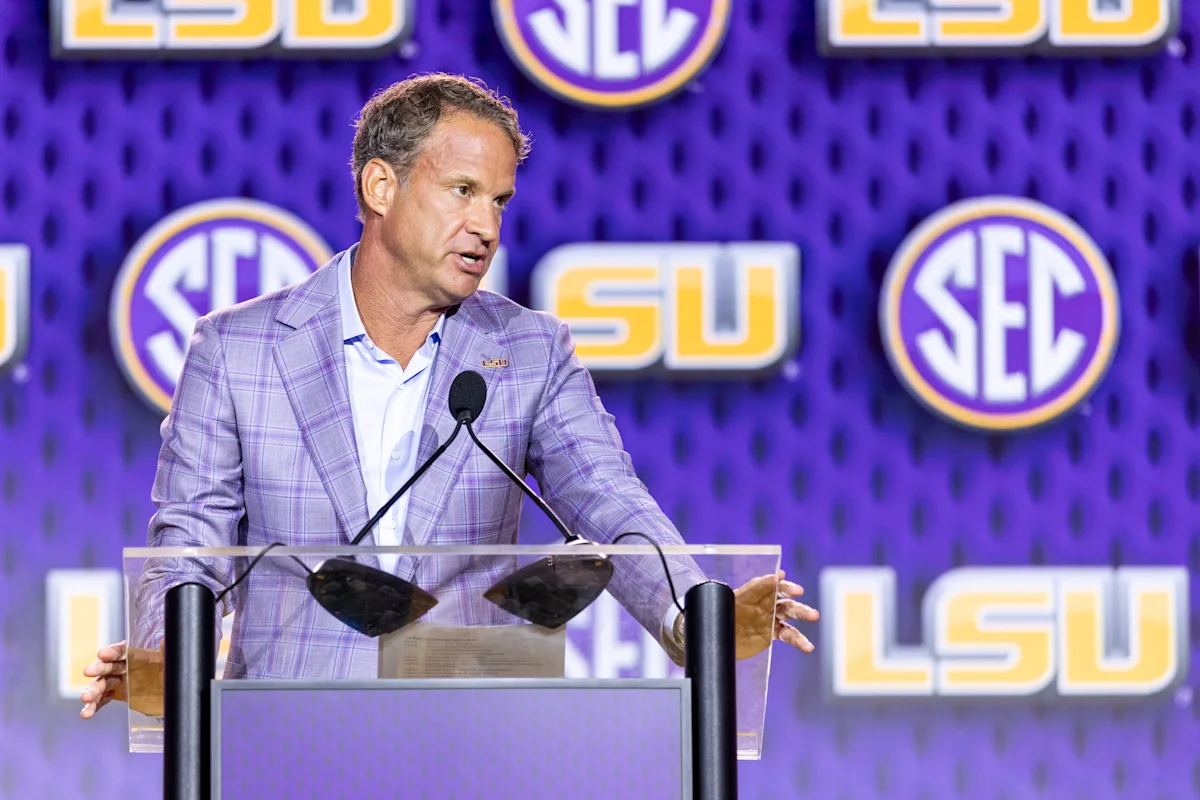
LSU may soon fire the loudest shot yet in a battle with its own conference.
The SEC has communicated to plaintiff attorneys that the league will comply with a Louisiana state court order permitting their clients — former professional football players — from a return to college. Yahoo Sports obtained a message from the conference legal counsel to attorneys signaling the news.
The message paves the way for a host of players to join SEC programs, most notably at LSU , where two players who signed pro contracts this summer are poised to now be on coach Lane Kiffin's roster.
Dae'Quan Wright, the former Ole Miss tight end who signed an undrafted free agent contract with the Cleveland Browns, and Ole Miss defensive tackle Zxavian Harris, who signed with the Saints before being waived, plan to sign with the university. While the signing does not immediately constitute a violation of the SEC's new policy banning former professional players, their inclusion on LSU's final roster would. Rosters are not set until a day before the first game.
The impending signings continues to put at odds the SEC and LSU in an unprecedented legal collision over athlete eligibilit y that's been brewing for days. A Louisiana judge earlier this month granted Wright and other players an additional year of eligibility through a temporary restraining order by prohibiting the NCAA from enforcing its eligibility standards.
The move created a whirlwind of a week where all the power conferences adopted their own eligibility policy banning pro athletes from returning to college. And then, on Friday, a Baton Rouge judge granted a request from players' attorneys to also enjoin the SEC's new rule, amending the complaint to add the league and commissioner Greg Sankey as defendants.
It's not only football. RJ Luis, a basketball standout who played three games in the NBA and was part of two franchises, is a commitment to Will Wade's hoops team .
The addition of all three players violated two SEC policies: the ban on pro players and the prohibition on players moving from one conference member to another outside of the transfer portal window. Each violation comes with stiff sanctions, including a half-season suspension of the head coach, a 50% fine of a school's athletic budget and the forfeiture of voting privileges.
However, the Louisiana judge's order prohibits the league from enforcing sanctions against a school, coach or athlete. A preliminary injunction hearing — where the judge determines if the restraining order will be more permanent until a trial — is scheduled for Thursday in Baton Rouge.
Two days later, LSU hosts Clemson in a top-25 game in Tiger Stadium in coach Lane Kiffin's debut.
LSU isn't necessarily alone in intentionally leaving open roster spots for pro players and/or those transferring within the league outside of the portal window. Texas has a player, Cole Hutson, who participated in minicamp with two NFL teams, received a state injunction and is practicing with the Longhorns. Kentucky is expected to sign former Missouri players Mark Mitchell, who played games in the NBA summer league.
But LSU has been the most aggressive, with its brash coach and even the Louisiana governor leading the way.
In a news conference on Monday, Kiffin said the players suing the NCA were "wronged" because of the association's timing of the new eligibility policy, suggested that other programs are also recruiting the same athletes and said he's only trying to improve his roster through a "relentless pursuit of excellence."
"That's how I live," he said. "It's how I run the team. And that we're always going to look at every avenue to give you the best team, to give you the best players, so that you have the best chance to win."
The state's governor, Jeff Landry, released a statement to Front Office Sports earlier this week on the issue, blaming the system and not his state school: "Don't hate the player; hate the game."
More players are available outside of the Louisiana suit.
A Dallas judge on Thursday granted additional eligibility to more than two-dozen athletes playing multiple sports — a complaint filed, like the Louisiana one, by attorney Ryan Downton and the Texas Trial Lawyers. Downton represented former Vanderbilt quarterback Diego Pavia in a case in 2024 that opened the floodgates for many eligibility lawsuits against the association.
But the latest wave of cases stems from the NCAA's new eligibility policy enacted this summer. The new rule grants athletes five seasons of eligibility, up from four under the previous bylaw. The association chose not to make an exception for players graduating this spring who exhausted their eligibility under the former policy.
That decision, made by the member schools themselves, sparked the current landscape: more than 300 athletes filing 60-plus lawsuits for an additional year, including those who this spring signed pro contracts without knowledge of the NCAA's rule change. Athletes have won a wide portion of those rulings, but inconsistent judicial decisions — the NCAA has, for now, won cases in Ohio, New York, Nevada and a federal suit in Colorado — has created an uneven competitive playing field.
"The 'chaos' of NFL players going back to college is a one-time occurrence specifically resulting from the NCAA arbitrarily denying Class of 2022 athletes from having a fifth year under its new rule, which the NCAA forecasted was coming for a long time," Florida-based sports lawyer Darren Heitner, who's assisting with the lawsuit and represents some of the players involved, posted online earlier this week.
"They wouldn't have been NFL players at all if the NCAA would have rightfully given them an extra year. Alternatively, had the NCAA provided the option of a fifth year and the athlete still went to the NFL, the player wouldn't be allowed to go back to college. But that's not what happened."
Judges are not only granting athletes eligibility but creating temporary windows for them to transfer and permitting pro players to return to college — a long-honored college policy that is now under attack, in part because of the monetary incentive. Pro athletes cut from rosters are expected to receive big paydays at their colleges through NIL and revenue-share agreements.
The act of schools accepting professional players is emerging as a seminal moment in the industry, as college executives rally to halt the action. Within a matter of 48 hours, leaders of the Big Ten, SEC, Big 12 and ACC adopted their own pro-player bans in an effort to evade legal challenges by governing a smaller group of schools than the hundreds under the NCAA umbrella. But despite unanimous votes from school presidents to pass such rules, universities are leaving open roster spots and are, privately, supporting players in legal battles — most notably LSU, which played a role in the Louisiana filing.
The situation has sprung to life the industry and its legion of fans, many of whom do not publicly support the return of pro athletes.
College Football Playoff leaders may soon follow the power leagues, in fact. They plan next week to seriously discuss and possibly adopt a participation policy that disqualifies several categories of athletes, including those who have previously signed pro contracts, sources with knowledge of the talks told Yahoo Sports.
But plaintiff attorneys believe that these athletes belonging to the 2022 high school class should have been granted an additional year of eligibility. On the other side, NCAA and conference officials believe they are taking spots from other players on the eve of the start of the fall sports season.
"Courts across the country granting relief to ineligible athletes who already had every opportunity to compete in college — sometimes without even having a hearing — are failing to appreciate the destabilizing effect their rulings are having on college sports," the NCAA released in a statement earlier this month. "The lawyers bringing these cases seemingly won't be satisfied until every professional athlete can treat college sports as a fallback option, regardless of the opportunities it strips from both those who will never have a chance to begin their collegiate sports experience and those who are currently on campus working out with the team and attending classes."
Topics in this story
Gathered from external sources. Rights to this text belong to whoever originally published it.