College Athletes Earned $1.77B from Schools in 2025-26, Additional $500M+ in NIL Contracts
The first year of revenue sharing in college sports resulted in massive payouts for athletes.
The first year of revenue sharing in college sports resulted in massive payouts for athletes.
According to The Athletic's Ralph D. Russo , the NCAA and College Sports Commission announced Thursday that athletes receive more than $1.77 billion in revenue-sharing payments.
That number doesn't account for third-party NIL deals, and the CSC reported that 46,478 deals had been approved since last June, totaling more than $582 million. All deals with third parties worth more than $600 must be reported to the CSC through the online platform NIL Go.
According to Russo, schools also reported out over $42 million in Alston academic benefits as well as $163 million in "new and incremental scholarship spending." Out of the 319 Division I schools that opted into revenue sharing, 307 schools in 33 conferences reported payments to 34,915 athletes across 45 sports.
While the CSC's data does not say how the money was spent, the majority went to football and basketball players.
Last June, schools were approved through the House v. NCAA settlement to pay athletes directly through revenue sharing, starting with the 2025-26 season. Schools were capped at $20.5 million in direct payments but could use the money in any way that administrators approved.
Additionally, the settlement approved a total of $2.8 billion in compensation over a span of 10 years to past NCAA athletes who were unable to receive compensation for NIL.
Earlier this week, the Senate passed the "Protect College Sports Act" that would double the revenue-sharing cap to about $48 million per year. The bill still must pass the House of Representatives, though.
Obviously, not all programs spend as much as others.
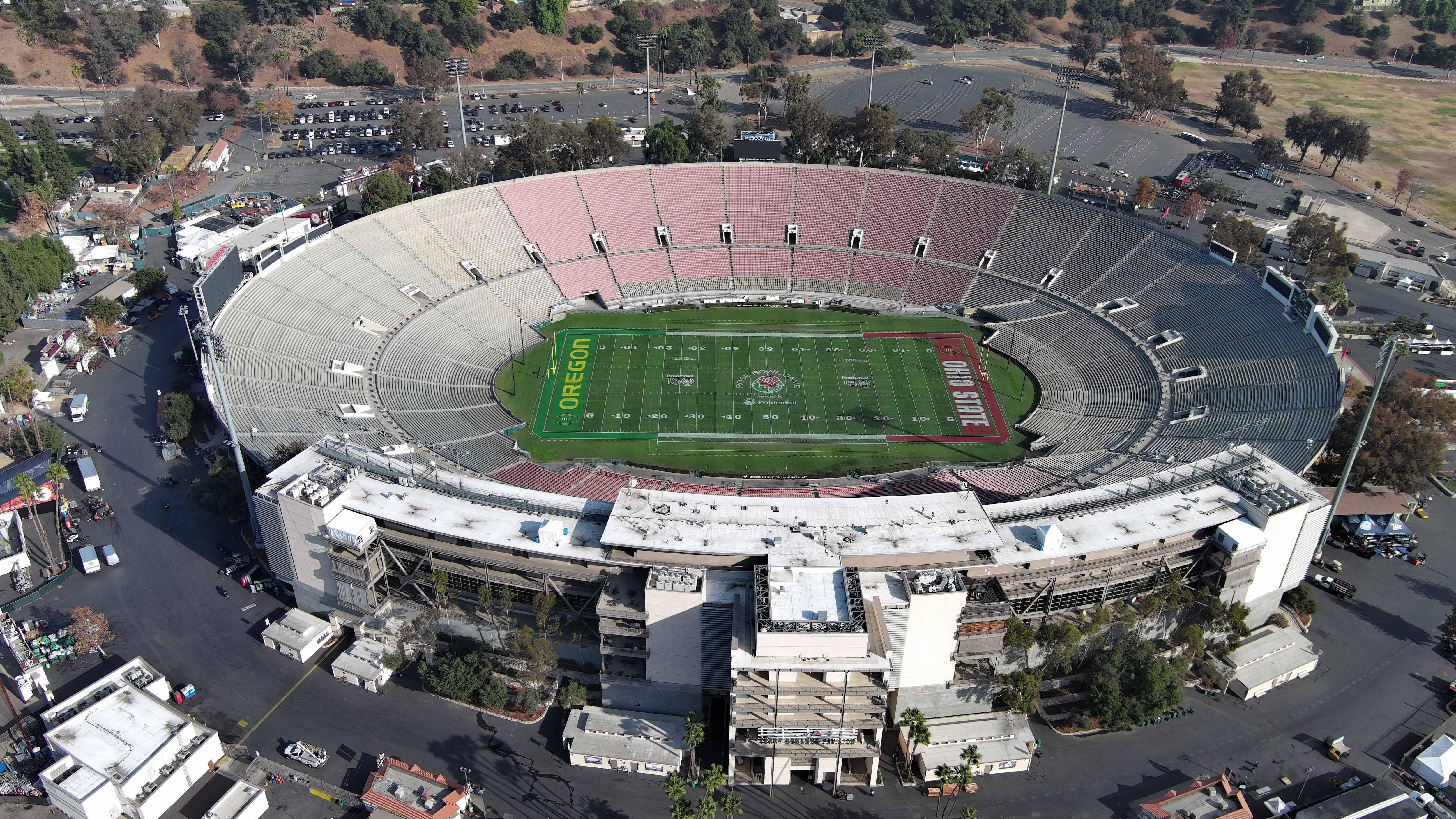
According to The Athletic's Bruce Feldman , Ohio State football leads the way with the most expensive roster at an estimated budget of $49-54 million. Other top-spending schools include Oregon, Texas, LSU and Texas A&M.
But it's clear through the early part of the season that spending big doesn't always lead to success. Ohio State, Oregon and LSU already have losses, while Texas A&M has dropped two games.
Topics in this story
Gathered from external sources. Rights to this text belong to whoever originally published it.