OTD: (3/10/1931) A Sunderland Debut For Charlie Thomson
A league and FA Cup winner, Glasgow native Thomson was a red and white mainstay during the 1930s, writes John Wilson.
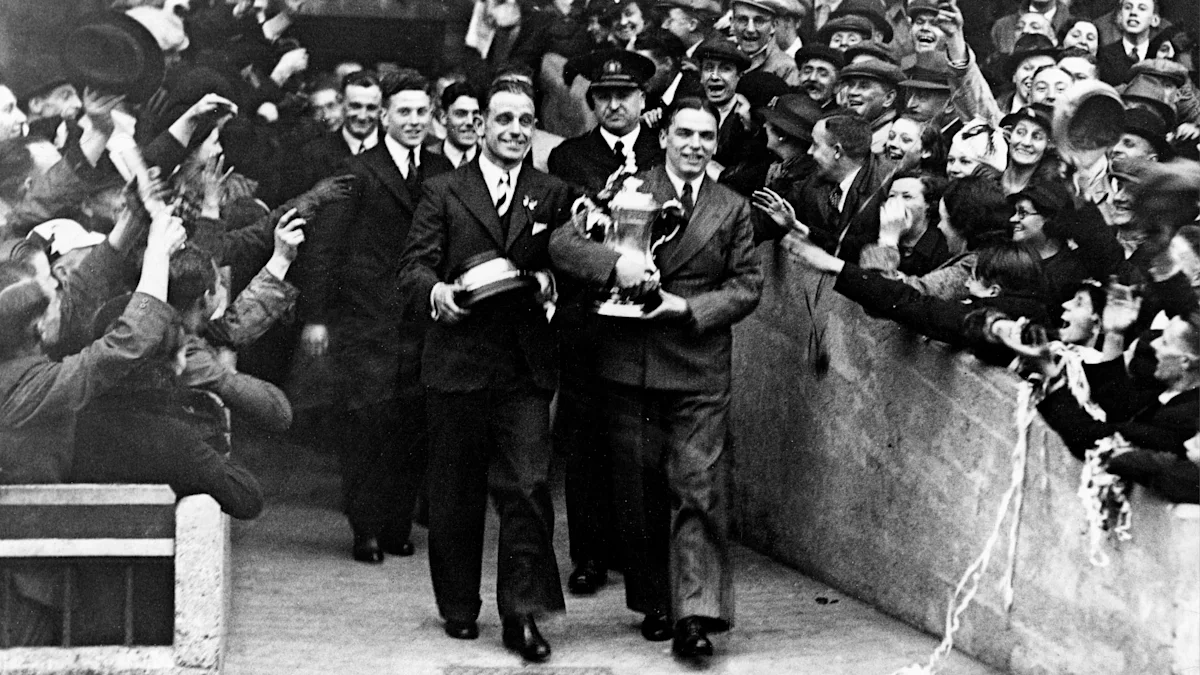
There have been two players names 'Charles Thomson' that've played for this club.
Both were greats in their own right. Both won a league championship medal, played in an FA Cup final and made over 260 appearances for the Black Cats, and both were Scottish half backs that represented their country.
There are amazing similarities between the two C. Thomsons, but this piece is about Charles Morgan Thomson, who played over twenty years after his namesake.
Born in Pollokshields, Glasgow, on 11 December 1910, Thomson was the son of a local painter and decorator. And in terms of football, it also began there, as he played for his local Pollokshields football team, from where he was scouted and joined the Roker Park squad in 1931, at the age of twenty.
Thomson was mainly an attacking right half, slight and fast, at 5 feet 8 inches and weighing 10st 6 lbs in old money. He made his debut for the club on this day in 1931, during a 2-2 draw against Blackburn Rovers at Roker Park in front of over 20,000 people, although he wouldn't become a regular in the side until the following season.
His playing style was once described by a commentator thus…
Here is a master craftsman who plays with his head as well as his feet. He sees an opening, and generally puts the ball where it is most wanted, is dainty, but surprises by the strength of his tackle.
From the turn of the year in 1934 until the outbreak of the Second World War, he hardly missed a single game for Sunderland, racking up 264 appearances in all competitions and scoring eight goals. But his two standout glories were winning the Division One championship in the 1935/1936 season and winning the FA Cup the following season in 1937.
When I look through the history books, it never ceases to amaze me just how much more inviting and attractive cup games were in those days compared to the league.
During the first cup-winning season, the league average was just under 30,000. For the cup run, it was over 50,000 and the year Charlie won his league title medal in 1936, the average gate was still only around 30,000.
Two weeks after winning the FA Cup with The Lads, he was awarded his one and only Scottish cap, when he represented his country in a 3-1 home win against Czechoslovakia.
Charlie was around during some of the most successful periods in our history, amongst some of the giants of our famous past. His team mates included Raich Carter, Sandy McNab, Bobby Gurney, Jimmy Thorpe, Johnny Mapson and Alec Hastings.
We've experienced success recently, reaching the Premier League and getting into the Europa League, but can you imagine the fan reaction at the time after winning the league and then the FA Cup the following year?
Like many around that time, the war affected their careers in more ways than one and Thomson played his last match at Anfield in 1939, before the fixture list was abandoned, and he retired far too early in 1940, aged only 29.
After the football, you could say things went full circle for Charlie, as he returned to the family business by becoming a painter, but in his case, in the shipyards on the Wear.
That was his life until his retirement, when he settled with his wife Frances, in Sherburn, County Durham. They had no children and he died aged 73 in 1984. Frances survived him by over two decades, eventually passing away in County Durham at the age of 93 in 2005.
When you see a timeline like that, starting in 1910, and ultimately ending with his wife in 2005, it shrinks time somewhat. It also helps us to better grasp the fact that these heroes don't belong to ancient history — their time flows into the club we have today.
Topics in this story
Gathered from external sources. Rights to this text belong to whoever originally published it.