‘Messi’s plant’: Scientists name newly discovered endangered Andean species after Argentina’s World Cup-winning icon
Scientists have named a newly discovered endangered plant species, Salvia messii, after Argentine football icon Lionel Messi. The plant, endemic to the Peruvian Andes, is a tribute to Messi's legacy with pale blue and white flowers reflecting Argentina's national colors. The species is classified as endangered due to its restricted distribution and environmental threats.
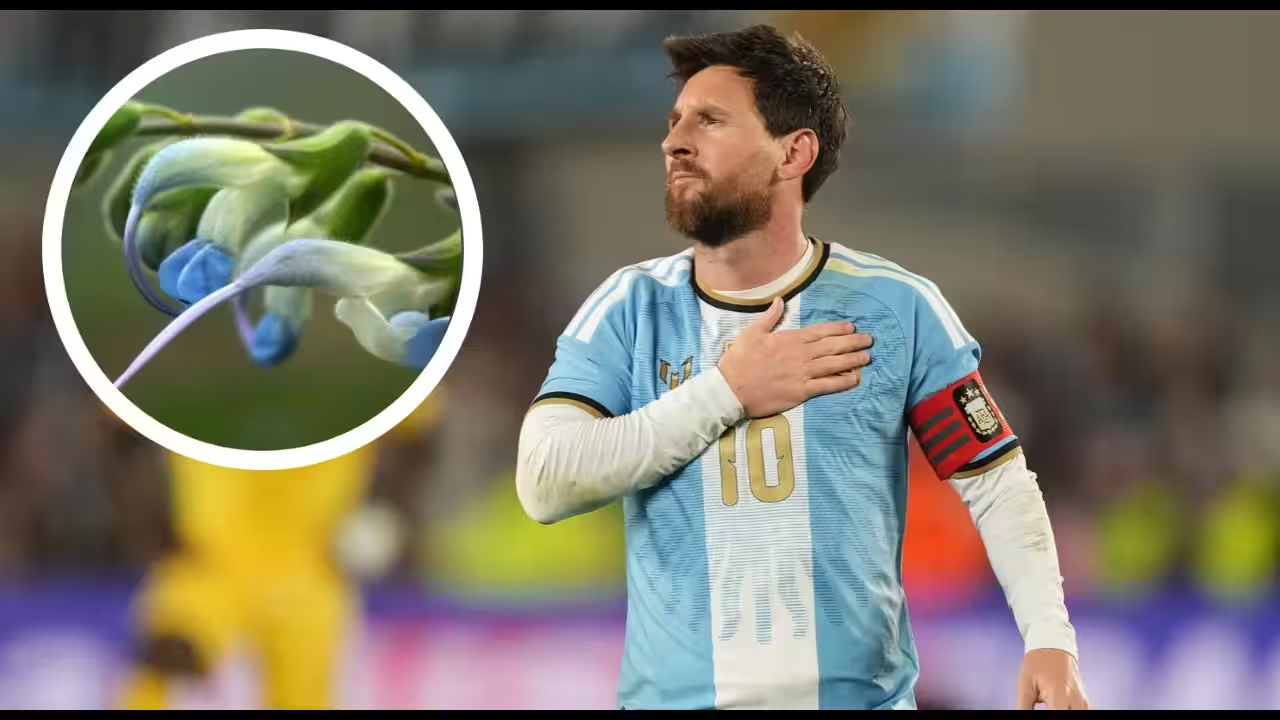
Lionel Messi has spent much of his career collecting football’s biggest honours, but his name has now been attached to something rather different: a newly identified plant growing high in the Peruvian Andes. Named Salvia messii, the species has pale blue and white flowers resembling Argentina’s national colours, a fitting tribute to the player who represented his country 208 times. The botanical honour also comes with a warning, because researchers have classified the plant as endangered.A plant named after one of Argentina’s greatest footballersThe newly described species, Salvia messii, is endemic to the Andes of central and southern Peru, where it grows on rocky, arid slopes at elevations of between 2,000 and 2,400 metres. It belongs to the mint family, Lamiaceae, whose members include plants known for antioxidant, anti-inflammatory and antiseptic properties.The plant can reach approximately 1.5 metres in height, and researchers say it has adapted to survive in the demanding conditions of its mountain habitat. Its flowers are light blue and white, colours that closely resemble Argentina’s national shirt, which Messi wore throughout his international career.The name follows the rules of botanical nomenclature, which use Latin forms to identify newly described species. Adding the letter “i” to the honouree’s surname indicates possession, making Salvia messii literally “Messi’s plant”.The research and naming were led by Paul Gonzales of the Natural History Museum at the National University of San Marcos, alongside Argentine researcher Rolando Uria and biologist Jean Capcha-Ramos of Huarango Nature. The study was published in the October edition of the botanical journal Phytotaxa.Why the species has been classified as endangeredThe recognition is accompanied by concern for the plant’s survival, because Salvia messii has a restrictive distribution and faces threats from climate change and forest fires. Its limited range in the Peruvian Andes leaves it vulnerable to environmental changes affecting the habitat where it grows.The plant’s adaptability to rocky and dry mountain slopes has helped it persist in a challenging environment, but that does not remove the risks posed by changing conditions and fires. Its name may now be familiar to football supporters, while its continued existence depends on the protection of its natural habitat.Messi’s international career gives the tribute its meaningMessi began representing Argentina in 2005, making his senior debut against Hungary on 17 August. He briefly retired from international football in 2016 before returning, and the later years of his career brought the achievements that made his national-team legacy especially significant.He helped Argentina win the Copa América in 2021 and 2024, then captained the country to the 2022 FIFA World Cup title in Qatar. He appeared at six World Cups and scored 18 goals in the tournament, while Argentina reached three finals during his international career.Messi played his final international match earlier this month, scoring in Argentina’s 3-0 victory over Benin. Across 208 appearances for his country, he scored 126 goals. He also won the Ballon d’Or eight times, and his international scoring total trailing Cristiano Ronaldo’s 146 goals in 234 appearances.Messi, now 39 and playing for Inter Miami, is widely regarded as one of football’s greatest players. Naming a plant after him offers a lasting recognition beyond the stadium, connecting his sporting identity with the colours of Argentina and a distinctive species from South America.Messi is not the first footballer honoured through a new speciesScientists have previously named newly identified organisms after footballers, making Messi’s botanical recognition part of a wider tradition. Earlier this year, a newly discovered marine mollusc was named after Cape Verde goalkeeper Vozinha, who also featured at the World Cup.Spanish researcher Jesús Ortea, a professor of animal biology and zoology at the University of Oviedo, has also named species after footballers. In 2019, he named a tiny marine sea snail after Keylor Navas, the former Real Madrid and Costa Rica goalkeeper.Stay updated with the latest Asian Games 2026 news, check the Asian Games medal tally and complete Asian Games schedule.Get the latest Sports News and Live updates. Download the TOI app.
Topics in this story
Gathered from external sources. Rights to this text belong to whoever originally published it.