An insurance policy with no guarantee - the complex issue of egg-freezing in sport
BBC Sport examines the potential benefits, risks and unanswered questions facing female athletes about egg-freezing.
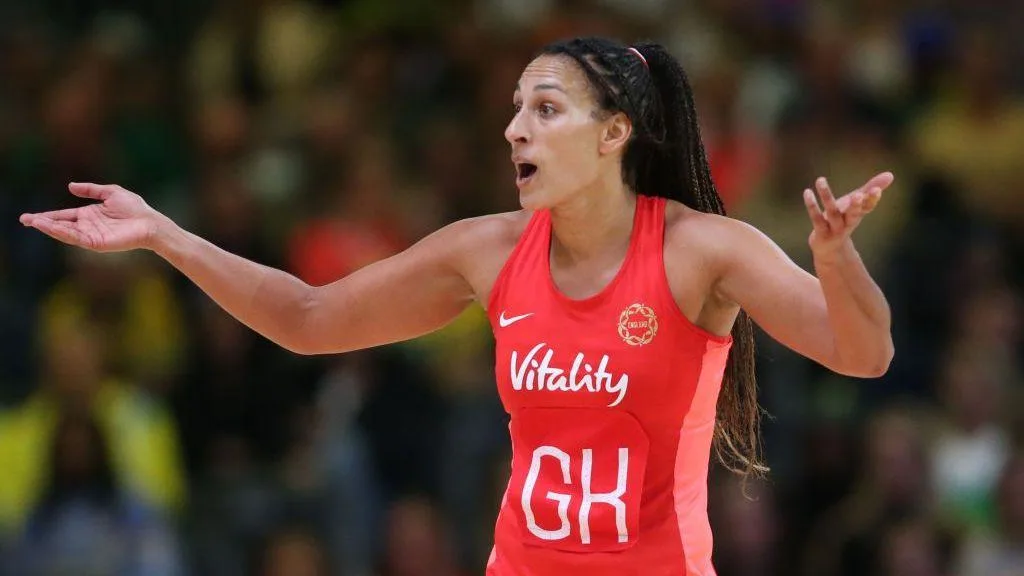
"I remember waking up in the morning and I couldn't stand. I was bent over in two. I could barely walk."
For Geva Mentor - England netball's most decorated player - this was the reality of going through the process of having her eggs frozen in 2019.
"I had just played in my fourth World Cup and I was at a bit of a loss in terms of where my life was going personally, as I always wanted a family," Mentor tells BBC Sport.
Egg-freezing is a process in which a woman's eggs are collected, frozen and stored for potential use later in life.
While Mentor's decision was a deeply personal one, the issue is becoming increasingly visible in elite sport, with both Chelsea and the Spanish Football Federation recently announcing support for players wanting to freeze their eggs.
It is often presented as a way for women to help preserve their fertility and, in some cases, delay motherhood. For female athletes, whose careers often peak in the years they are most fertile, the appeal can be particularly powerful.
"I wanted to go through a check-up and make sure things weren't drying up down there, so to speak, because I didn't know what impact elite sport might have had on my fertility," says Mentor.
"Freezing my eggs seemed like the right thing to do at the time because [I thought] whatever happens with my journey, I'd rather use my early 30-year-old eggs than my late-30s or 40s."
Mentor is one of a growing number of athletes to consider fertility preservation during their careers, but the practice remains the subject of debate and experts stress it offers no guarantee of a future pregnancy.
Mentor is widely regarded as netball's greatest ever goal keeper, winning 175 international caps. She represented England at six World Cups, winning a silver and three bronze medals, and was part of the Roses side that won Commonwealth gold in 2018.
For 20 years, being an elite athlete was her every focus. However, she always knew she wanted to be a mother and worried about when that would come.
At the age of 35 she decided to freeze her eggs in the hope it may help her conceive in the future.
Mentor was not in a relationship at the time, and living in Melbourne.
"I decided that I wanted to do it in off-season, going into pre-season, and not during the season," she says.
"I thought that if anything untoward happened, I'd have that time and space to let my body recover before I'd have to sort of throw it into elite training."
Mentor had regular monitoring appointments throughout the treatment.
"I still trained, did pre-season," she adds. "It didn't affect me at all until I took the last reactive injection, which basically releases the eggs into position for extraction the next day."
Egg retrieval is performed under sedation or general anaesthetic and typically takes 15-30 minutes.
Mentor says it felt like she had "43 golf balls shoved in my lower region" as the fertility drugs she had taken had stimulated a large number of eggs, which were then retrieved.
"They pierced my vaginal wall 43 times, which meant that I was probably on a bit of a risk for bleeding and blood clots," she said.
"One of the things that really stood out for me was when I came around and I immediately just started crying... like bawling. It was quite emotional. What you're going through, that whole process, there's a lot of a hormone change and imbalance. I guess it really just shook me.
"But then I knew at the end of the day, it was an insurance policy for me."
Mentor was released from hospital the same day but was unable to return to full training for two weeks as she recovered from experiencing heavy bleeding.
She has since had a daughter after conceiving naturally but says she has no regrets about freezing her eggs, which remain available for her to use in the future.
While many have hailed fertility support for female athletes as a major step forward, one world-leading expert in women's health says important questions still remain.
Professor Kirsty Elliott-Sale, who heads the Centre for Excellence for Women in Sport at Manchester Metropolitan University, says she is "delighted for any player who will benefit" from fertility support.
But she believes egg-freezing should be seen as one option among a wider package of support for female athletes, and urges those considering it to look beyond the headlines - and ask plenty of questions.
"Egg-freezing is an opportunity which allows them to invest in their fertility journey - at this moment - for the future," she tells BBC Sport.
"But we need to make sure that if they want to have children during their careers, that is an opportunity for them."
Elliott-Sale says fertility, pregnancy and maternity provision must be as well funded as egg-freezing, so there is never a conversation that starts with: "Oh, but you froze your eggs..."
She also warns that egg-freezing should not be seen as a guarantee of future motherhood.
The number and quality of eggs collected can vary, some may not survive thawing, and those that do may fail to fertilise. Even when embryos develop, implantation and pregnancy are not assured.
There are also unanswered questions about how treatment fits around the demands of elite sport.
"One of the things that none of us know right now is how long you should take away from sport, if indeed you need to take any time away from sport to do this procedure," she says.
Elliott-Sale also wants clarity about what happens after eggs have been stored.
"It's one thing to fund the freezing," she says, questioning whether clubs will also pay for their storage then the treatment needed to use them.
And there's an anti-doping consideration, too.
Fertility drugs that are used to stimulate egg production for retrieval and freezing are banned by the World Anti-Doping Agency.
Athletes must therefore declare them and seek a Therapeutic Use Exemption (TUE), which gives them permission to take a prohibited substance for a specified time.
'You can't simply pause your career to become a mother'
Chelsea say their support extends beyond egg-freezing alone.
BBC Sport understands the club's fertility fund is worth £189,000, shared between 27 players - equivalent to £7,000 each.
A cycle of egg-freezing typically costs about £3,350, plus medication and ongoing storage fees. The full process, including thawing and embryo transfer, can cost £7,000-£8,000, according to UK regulator the Human Fertilisation and Embryology Authority.
Former Chelsea goalkeeper Carly Telford, now a commercial manager at the club, says players can access a range of services - from fertility testing and egg-freezing to IVF treatment.
"The players will have their own pot of money that's for them to use and dip into whenever they like," Telford said in an interview with CBS.
Players also have direct access to doctors and the clinic.
"I really hope that more clubs are looking at it," she added. "It's important for us to make sure we can be there and catch them when they need something else from us other than the football."
Spain international Alexia Putellas, meanwhile, welcomed her federation's fertility initiative as a "huge step forward".
Speaking to El Pais last month, she said: "The federation understands that you're serving your country at the expense of your biological clock… that you can't simply pause your career to become a mother because you need your body to do your job."
But Spanish Olympic triple jumper Ana Peleteiro-Compaore Brion questioned the motivation for the support.
"Is this measure intended to make it easier for women to be mothers or is it intended to make it easier for them not to be while they're playing?" she wrote on Instagram.
Elliott-Sale says the offer must be voluntary, properly explained and part of broader maternity support.
"I think for sure it's a great offer, it's a great choice and opportunity, but it needs to go alongside other considerations," she says.
Topics in this story
Gathered from external sources. Rights to this text belong to whoever originally published it.