Metrics, Big Cats & Sunday Lunch: What’s Next For Le Bris?
Regis Le Bris has been given the vote of confidence by Sunderland’s hierarchy. But why has it gone so wrong, and can he change it?
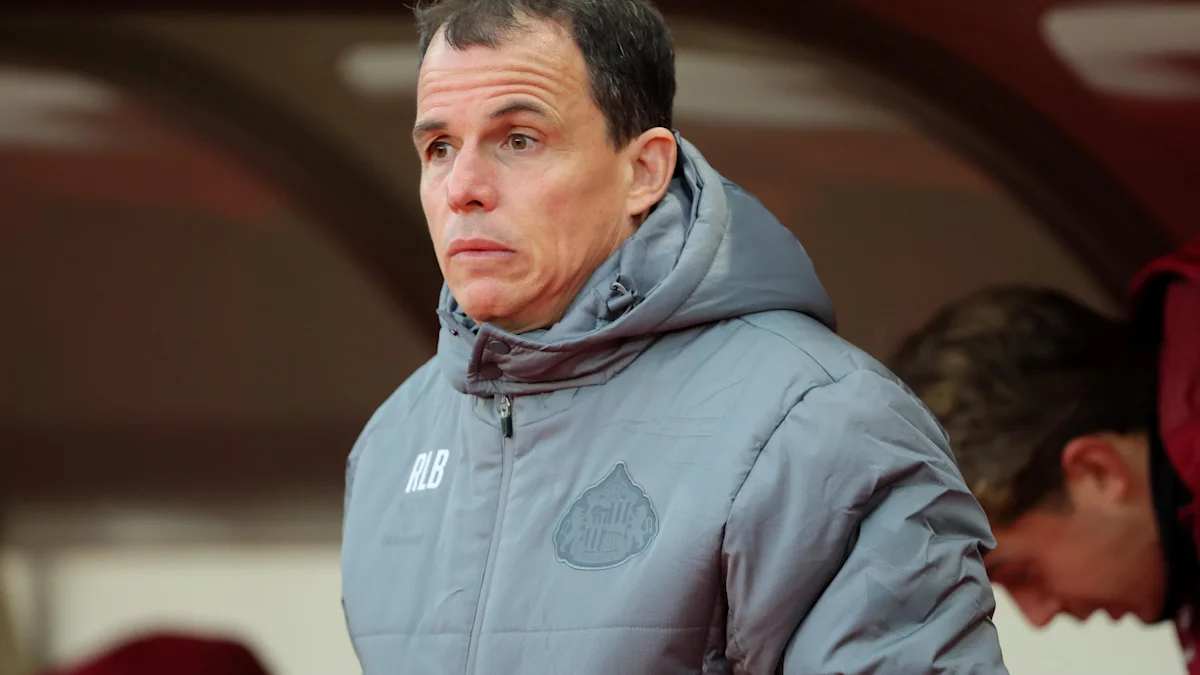
Football clubs only let the media know something when they want to.
So when several journalists and aggregator accounts on Twitter spoke of the ownership's plan to back Regis Le Bris, it was a clear statement. Kyril Louis Dreyfus & Co. will reportedly give the Frenchmen time to resolve the club's poor run of form, and potentially provide financial backing in January.
I think there's little value in discussing whether that is the right decision or not, because it's clear the call has been made. Fan sentiment can certainly carry weight with these decisions; just ask Michael Beale, but given the moments and success Le Bris has brought fans on Wearside, there was never going to be a consensus on the Frenchman's future.
What is worth discussing is why Sunderland have struggled so much this season, what Le Bris can do to rectify this, and the wider implications of this call from the ownership.
As I tend to do, I'll try to make sense of on-field matters using numbers, but before that I think there's value in speaking in a less objective manner.
It's clear something doesn't feel right, and I stress the term feel here. For years, lazy pundits, who have shown poor form on both the left and right flanks as well as for England, have used terms like passion or desire when sides are propping up the league table, but to me this doesn't feel apt.
So many of the goals we have seemed to concede have felt like they have been from our own undoing, either from defensive errors or just basic organisational skills. For me, this doesn't ring true with the image of how a Le Bris side operates.
Of course we weren't winning any beauty contests last year, but there was a clear structural foundation that underpinned the way we performed.
If you were to ask me now what has changed, I would use the word assumption. Second-season syndrome is often linked with the idea that a team has been "found out", but in this case I think we have almost found ourselves out.
It feels like it was assumed that when Awoniyi waltzed into the box, a block would come from Alderete or Reinildo. It feels assumed that when we move the ball forward, Brobbey will hold the ball up long enough for the supporting cast to join in. Sadiki can cover a lot of ground, but it feels like his teammates expect him to do the work of ten.
For me, I almost want them to pretend they're strangers and trust in the manager's guidance, but that's just how I feel.
The wider footballing community pretty much had a consensus that Sunderland massively over-performed last season. Whilst I feel this is somewhat reductive, it is worth delving into why this conclusion was made.
What the above graph shows is really interesting. From an xG perspective, Sunderland only came out on top in that battle in 13 of their 38 matches, with only 28.6% of our wins coming with an xG difference of 0.5 or more. We actually won 4 games from games where we would expect to lose more often than not.
Now I don't want to stress the stats too much here; there are several reasons why looking at xG in isolation can be deceptive. We know that a large part of our game last year revolved around being able to absorb pressure, interchanging between a 5-man defense out of possession and a 4-man backline in possession.
Regardless of the discrepancy between where numbers and reality said the Black Cats should've been, one thing is clear. We operated on fine margins last season, I'd argue deliberately so, but fine margins nonetheless.
In its nature, football is a high-variability, low-scoring game. If Trai Hume and O'Nien communicate properly, then the ball never falls to Coventry for their first goal. A slip in wet conditions, the wind in the Leeds game, they ultimately all add up.
There are also a number of immeasurable elements that go into a squad's performance. Let's say we don't get the desired results from Brentford or West Ham early last season. Does the Stadium of Light develop into the fortress it turned to be? Has a larger World Cup taken a slither off of our players' fuel tanks? It certainly looks like Granit Xhaka could've done with his Covid issue being revealed earlier.
Now, in no way am I suggesting that the present downturn in form is down to wind or momentum, but when you operate on a fine margin, then you run the risk of the noise these elements generate on the game having a greater impact on determining which way a result can turn.
There's a reason why the best teams all wish to play with the ball, retaining control of a game. Take a look at Arsenal, my god, they're dull to watch, but they're as much controlling the pitch as they're mitigating the opposition's ability with the ball. It is as much about risk-reduction as it is about attacking dominance.
If Le Bris wants to give his side the best chance of coming out on top in matches, he needs to seek to find a way to reduce the effect "noise" has on our results. That can be done with or without the majority of possession, but the margin for error needs to be mitigated.
What does this mean for Le Bris? Clearly a P45 is not being filled out, but it feels like he has to adapt before it's too late for him. I personally have some concerns as to whether this adaptation could be pushed on him in the guise of a vote of confidence.
When Tony Mowbray left the club, there was a lot of murmuring; he certainly wasn't happy with the level of experience his squad contained, or the sway he had to increase that. There were also rumours going round about the sway and persuasion non-coaching members of staff were giving him regarding squad selection.
Now whilst those rumours were never confirmed, for the sake of a decent article let's assume there was fire along with the smoke.
Le Bris is a conservative and pragmatic manager. What I cannot stress enough is that this is not a criticism; he has got an unbelievable output from our squad and, amongst incredible upheaval, gave me the best Sunderland season I can remember in my 27 years on this earth.
Now if you'll bear with me, I'll tell you about something that is something I'm particular about.
Let's say it's 5pm on a Sunday, I've polished off a roast chicken and a pint of gravy, and I'm ready for a sweet treat. Out comes the apple crumble.
Now, if the crumble is hot, I will require a cold topping (custard, cream, ice cream in order of preference). If the crumble has been sat out and is colder, I'll require a hot topping (most likely custard).
That's just the way I'm wired; I can't change it, and I don't want to change it. Now let's say a man called Glorent Fhisolfi comes out and tells me the custard has to be hot; I'm not sure I'm going to be able to deal with that.
Ultimately, I fear this could be the downfall of Le Bris. You can't ask George Russell to plant a field of barley, and you can't ask Caleb from Clarkson's Farm to take pole at Silverstone. They're both good drivers, but as always, context is key.
Le Bris has had three pre-seasons, countless tactical meetings and daily training sessions to coach his team into the methodology he deems fit for Sunderland. Like it, question it or dislike it, it is a machine of his creation and one which he holds the instruction manual for.
Yes, I want him to play two wingers. Asking our fullbacks to cross the halfway line would massively increase our attacking threat. I'd love Brian Brobbey's hold-up play to be praised far less because I want forwards near him.
But if these changes are to be made under Le Bris, I want them done on his terms.
Why I mentioned Tony Mowbray is because I'm concerned about the precedent any potential pressure on the manager to change his methods may lead to. I hope the confidence they have provided Le Bris with is unconditional, and that any evolution the side undergoes is through his vision.
I have no evidence or reasoning to believe there is pressure from higher up for him to do so, but let's take a look at some facts.
A deadline-day battle for Malick Fofana provided an additional member to an already incredibly deep roster on the left wing at a high price point. Only really in the league cup or the Europa League have we seen two wingers grace the pitch thus far.
Dayann Methalie, a young attacking full-back, was brought in and is yet to see consistent starting minutes in the league. Reinildo hasn't done too much wrong, but it'd be difficult to imagine either man would be given the freedom which would bring out the best of the young French defender.
Clubs like Brentford and Brighton are praised for the structures they put in place. Structures Sunderland have been looking to replicate since KLD took control of the club.
Everyone looks at the transfer turnaround of these clubs, as they rightly should; it's incredible. But what they have done is put structures in place to allow numerous coaches to come in and succeed. Frank to Andrews, Potter to De Zerbi to Hürzeler. Different philosophies, tactics, and methods, but the squad planning was agnostic of this.
Compare this to Manchester United, where Ten Hag brought in his mates from Ajax; Amorim vanquished their wingers, for which he had no need. Carrick is now trying to solve a jigsaw for which he has pieces from Disney's Frozen and English Heritage's Fountains Abbey.
Ghisolfi and Speakman have made finding a replacement for Le Bris simple. The squad has the resources to play a number of different systems, with a number of different options in each position. A significant financial outlay has been made for players which Le Bris is underutilising and potentially could be added to in January.
This is not a criticism of Le Bris, nor is it a criticism of the executive and recruitment teams. It is, however, a concern.
When people want to see a return on their investment in the playing squad, whilst backing the manager, which is mitigating that return, I worry that Le Bris may come under the same pressures that Mowbray reportedly did. Especially when you consider the returns on Ghisolfi's first transfer window are yet to bear fruit, something I'm sure will not be sitting easy with him.
If he succumbs to that pressure, is he capable of that transition? That's something I cannot determine. They say a leopard can't change its spots, but they never say if it has to. Le Bris would be foolish to abandon what has got him this far in his career, but you only have to look at the best managers in recent Premier League history to understand the value of an adaptation to your methods.
Guardiola's centurions often played with a false 9 and a fluid front line. Take a look at the squad he left to Maresca, and physicality appeared to be the primary focus of that side as opposed to technical fluidity. Klopp came in with his "heavy metal football", and departed with a squad that understood the value of control in the Premier League, with physically limited players like Thiago Alcantara shining.
One manager who shouldn't be considered with the two previous is Eddie Howe. I will ask forgiveness for mentioning him, but following his time at Bournemouth, he was conscious enough to know his defensive coaching required work. What did he do? He took time to study under Diego Simeone at Atlético Madrid.
For Le Bris, change is not an admission of defeat or guilt, and has been shown by numerous managers to be beneficial to their success. For better or worse, I only hope he is the driving force behind that change; it is what the man deserves.
Topics in this story
Gathered from external sources. Rights to this text belong to whoever originally published it.