Would Texas have made CFP last year if it was expanded to 24 teams?
With rumors swirling the College Football Playoff will expand to 24 teams, its interesting to look back at 2025 to see if Texas would have made it.
It appears the College Football Playoff will be doubling next year . The current 12-team format is in its third season after expanding from the four-team CFP in 2024. The playoff system was first adopted in 2014. Now the CFP will reportedly include 24 teams in 2027. The ramifications, both good and bad, reach far and wide.
As of right now, the Longhorns are in a good position to make this year's college football playoff. But the margin for error is slim after Texas' 2nd half collapse to rival Oklahoma in the Red River Shootout. Texas would most likely enter as the No. 7 seed.
Last season, Texas missed the CFP by two spots in the final ranking . The Longhorns had three losses, to Ohio State, Florida and Georgia. Ohio State was a non-conference game. UT's exclusion from the CFP caused a lot of discussions at all levels of college football to look at non-conference scheduling. If Texas had played weaker teams, there's a good chance they would have made the bracket.
The 2025 Longhorns would have certainly benefitted from the expanded field. Texas would have made the CFP easily and would have probably been the No. 13 seed. A projection by On3 shows Texas would have most-likely played Tulane in the first round, with the winner advancing to take on Texas Tech in Lubbock.
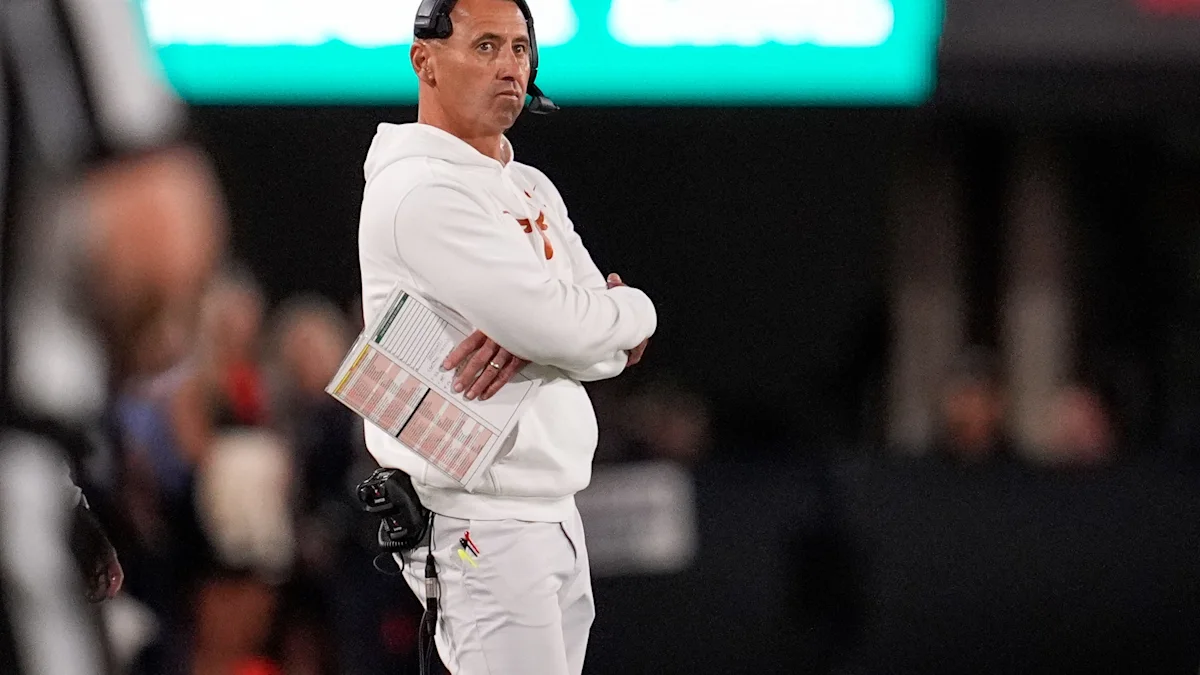
The new format gives eight teams a bye in the first round. It would have been interesting if Texas had played the Red Raiders, considering Texas coach Steve Sarkisian used Tech to make his point that the CFP committee should look more closely at strength of schedule.
Best photos: Texas Longhorns win over Michigan in Cheez-It Citrus Bowl
Contact/Follow us @LonghornsWire on X (formerly Twitter) and like our page on Facebook to follow ongoing coverage of Texas news, notes and opinions. Follow Trey on X: @TreyLuerssen .
Topics in this story
Gathered from external sources. Rights to this text belong to whoever originally published it.