Um… maybe Ohio State’s ‘brutal’ schedule isn’t so tough after all
I spent the offseason worried that Ohio State's second-half schedule was absolutely brutal. Then USC, Oregon, Michigan, and Indiana decided to be not very go...
I would like to take this opportunity to offer a sincere and heartfelt apology to everyone who read any of my Ohio State football columns over the past eight months. You see, I spent much of the offseason gleefully preparing Buckeye fans for what I believed would be one of the most difficult schedules in program history. I wrote about how Ohio State could lose three or four games, and I would be thrilled , and even penned an entire column explaining why I was excited to be nervous about Ohio State games for the first time in Woody knows how long.
Well, friends, I am beginning to suspect that I might have slightly overestimated the competition.
Don't get me wrong, I'm still plenty nervous, but these days, that has considerably more to do with Ohio State's quarterback situation than the supposedly fearsome opponents remaining on the schedule.
Coming into the season, the Buckeyes' second-half slate looked like a murderer's row of Big Ten powerhouses. Defending national champion Indiana, traditional powers on the upswing USC and Oregon, upstart Nebraska, and, of course, the always-annoyingly competent Michigan Wolverines. How could any team possibly survive such a gauntlet, especially when we started to realize that Northwestern might actually be good this season as well?
As it turns out, all of the teams we came into the season somewhat fearing aren't particularly good at football, and Northwestern and Nebraska might be the most difficult challenges left on the slate.
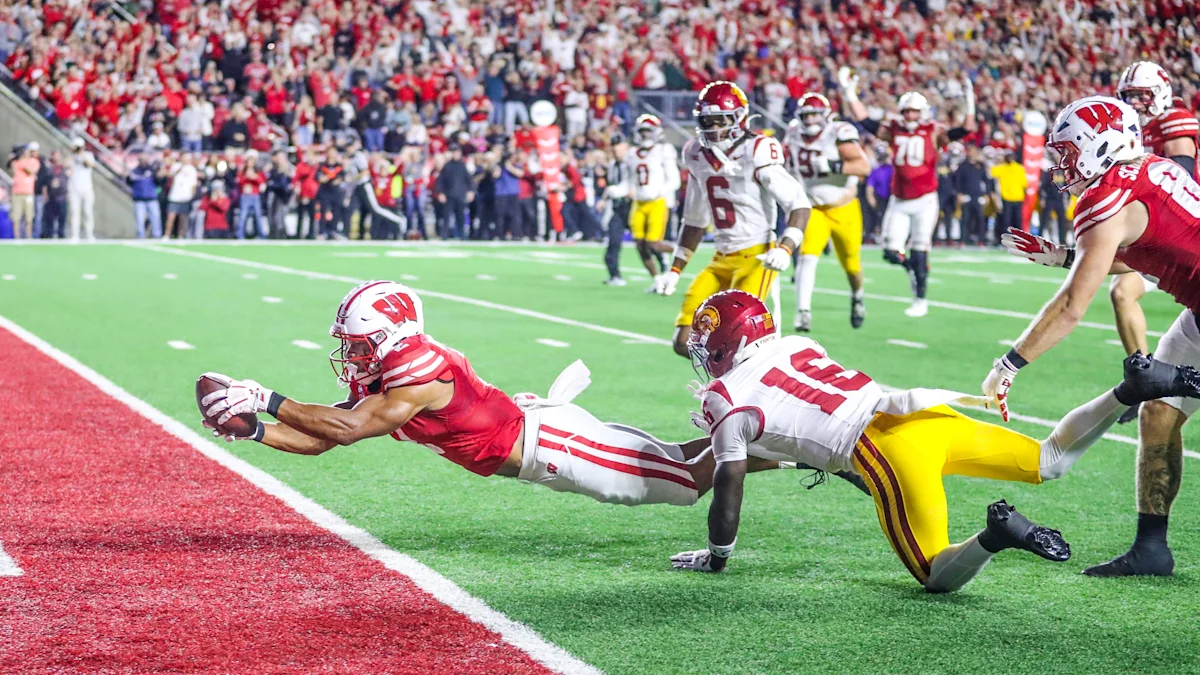
Let's start with USC, Ohio State's Halloween opponent. The Trojans are 6-2, which certainly isn't terrible, but they just managed to lose 24-7 to Wisconsin. Yes, Luke Fickell's Wisconsin. The same program that has spent much of the past few seasons jealous of Iowa's offensive production (no offense, Coach Fick).
Then there's Oregon, which entered the season with legitimate national championship expectations. With the way Dan Lanning was recruiting (both from high school and the portal) and the way Phil Knight was spending, it looked like the Donalds were ready to take the next step to true national title contention. The Ducks are now 4-3 following Saturday's 21-10 loss to Illinois, a team Ohio State beat by 23 points. And, lest we forget, Oregon needed everything it had to squeak past Nebraska 17-14 a week ago.
At this point, Lanning's squad looks considerably less like a national championship contender and considerably more like a team whose preseason ranking was based primarily on the hopes of everyone around the country who were tired of Ohio State being the most hyped-up team in the Big Ten.
The Wolverines are 3-4 (despite what their official 4-3 record might suggest), just 1-3 in Big Ten play, benched their $12 million quarterback bust Bryce Underwood in favor of the former coach's grandson, and somehow managed to set offensive football back a century with a 13-6 overtime loss to Indiana.
Speaking of the defending national champs, remember how impressive Ohio State's 19-15 victory over the Hoosiers felt just over a week ago? Sure, it was ugly, but the Buckeyes went into Bloomington and snapped IU's 22-game winning streak.
Well, after watching Curt Cignetti's offense produce six points in regulation against Michigan, perhaps we should reconsider just how much that victory told us about Ohio State's championship credentials.
Of course, the most deliciously absurd part of this entire situation is that Northwestern and Nebraska might legitimately be the two best teams remaining on the Buckeyes' regular-season schedule.
Northwestern is 6-1 and just demolished Rutgers 42-14, while Nebraska sits at 5-2 and has given both Indiana and Oregon legitimate scares. If you'd told me in August that those would be the two teams I'd be most concerned about in November, I probably would have assumed that TKTKTKTKT
However, before we start booking hotel rooms for the Big Ten Championship Game, let alone the College Football Playoff, there is the rather inconvenient matter of Ohio State potentially having to navigate this presumably easier schedule with an unproven starting quarterback.
With Julian Sayin sidelined by a significant throwing-arm injury, Ryan Day must decide whether Luke Fahey or Tavien St. Clair gives the Buckeyes their best chance to win. As I've already argued , I believe the situation calls for giving the more athletic, but less polished St. Clair a shot at the job, and it sounds like Day and company at least gave him a cursory look last week. However, it does seem like Luke Fahey — a generously 5-foot-11 true freshman — will be the starter when the Bucks head west this weekend.
And Ohio State has enough issues along the offensive line, in the running game, and with its occasionally maddeningly conservative coaching philosophy that even a mediocre opponent could cause considerable problems.
So, am I guaranteeing that the Buckeyes will win out? Absolutely not. Given everything we've seen during this excessively chaotic season, Ohio State could very easily become the next supposedly elite Big Ten program to embarrass itself against an opponent it has no business losing to.
But sitting here at 4-0 in conference play, with five regular-season games remaining and a quarterback controversy that would have seemed catastrophic just a few weeks ago, I can't help but notice that the road ahead looks remarkably less intimidating than I ever would have thought it would be back in August.
I said before the season that I was excited to be nervous about Ohio State football again; I just assumed that nervousness would be caused by the opponents, rather than the Buckeyes themselves.
Topics in this story
Gathered from external sources. Rights to this text belong to whoever originally published it.