College football is going overseas, but that means leaving the best parts behind
What makes college football great is everything around it, none of which travels overseas.
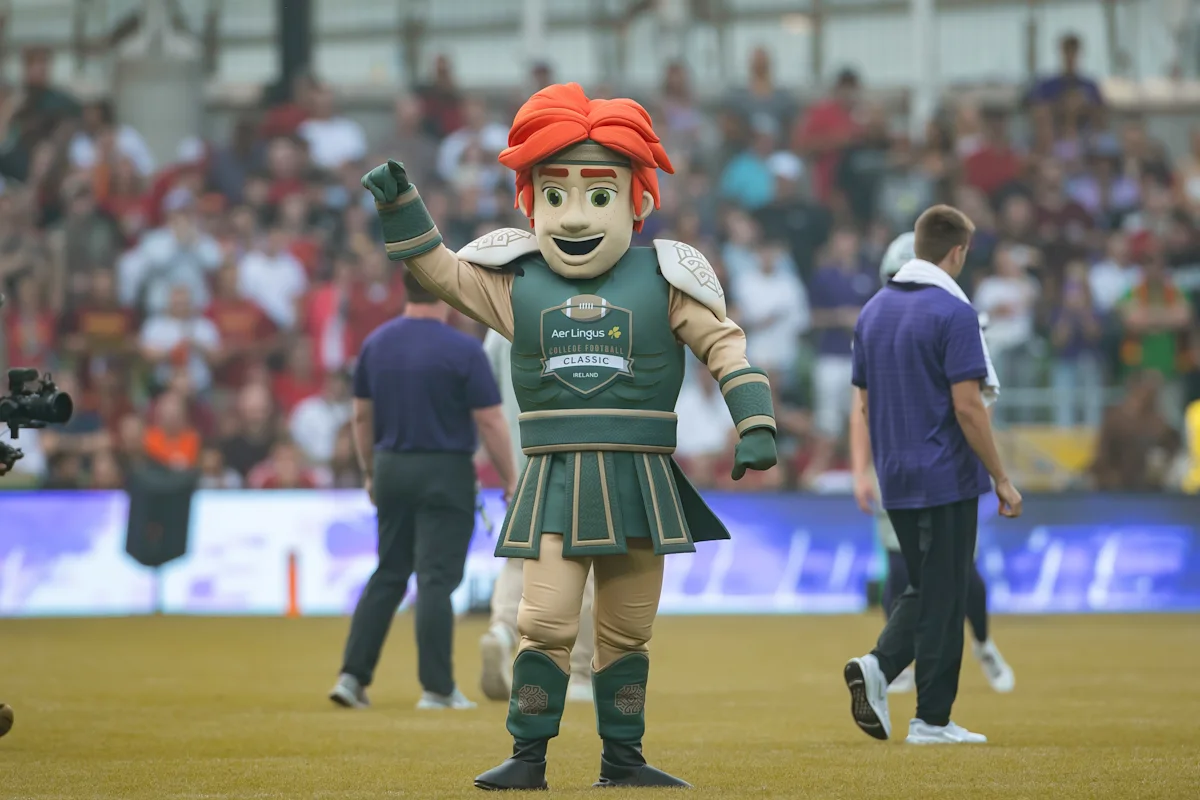
College students spend four years planning for what to do once they leave campus, and spend the next 40 years trying to figure how to get back. It's a truism that college administrators and broadcasters would do well to remember as they continue to separate college football from college campuses.
On Saturday, North Carolina will kick off its season against TCU in Dublin, the fifth straight year that Ireland has hosted a Week 0 game. A few weeks later, Arizona State will face Kansas in London's Wembley Stadium.
If you're wondering what the Tarheels and Horned Frogs have to do with the Emerald Isle, or why the Sun Devils will travel halfway around the planet to play football, well, you're asking the right questions. As with everything else in college football right now, there are multiple vectors at play here, and absolutely none of them points in the direction of the average fan.
American universities have played football in international stadiums for as long as the game has existed, sometimes for bowl games, sometimes as part of barnstorming or goodwill tours. (Bo Jackson's final snaps as a college player technically came in a Japanese all-star game in 1986.)
But as with everything else in this strange, pinwheeling sport, everything got strange in the 2020s. Universities and broadcasters realized they possess a unique, highly marketable product — a college football team — and understood that they needed to summon ever-larger sums of revenue to keep that product humming at its highest efficiency.
Thus, they severed the product from its traditional home — the on-campus stadium — and began shopping it around to highly motivated buyers. That's how you end up with more regular-season games in NFL stadiums and, now, in international destinations.
In one sense, college football is just following the lead of the NFL, which is exporting American football in ever-increasing numbers. Nine NFL games will be played in international stadiums this season, and the possibility of NFL teams based overseas grows more likely every year . European fans, German ones in particular, have embraced NFL football, so surely the people making decisions are thinking they'll embrace the college game too, right?
But that's based on a flawed understanding of a bizarre, prickly, chaotic sport. What makes college football great isn't the football. You can watch more accomplished football every Thursday night, Sunday and Monday night during the season.
What makes college football great is everything around it — the anticipation of Friday night, setting up the tents and chairs on Saturday morning, Bloody Marys giving way to beers and cocktails, the school band marching across campus, the satellite tailgate TVs tracking the early games, the reunions out on the quad and in the stands, the chants and cheers all game long, the party continuing afterward in the streets and the dorms, regardless of the score.
And guess how much of that translates to a game overseas? Zero-point-zero.
Oh sure, the international games carry benefits for some parties. The universities will spread their brand — Arizona State is opening a London branch of its campus , conveniently enough — and make boatloads of broadcast money. Alumni wealthy enough to travel with the team will enjoy a lovely European boondoggle. Americans and college football fans overseas get a taste of home.
Thing is, every regular-season game abroad means there's one fewer game — and one fewer game's revenue for everyone outside the university itself — at home. One fewer opportunity for reuniting, for tailgating, for recruiting. College Saturdays are precious things, and sending one overseas is a tough and frustrating ask to make of a university's roster and fan base.
As with every other element of college football, appeals to intangibles like "tradition" and "the good of the average fan" blow away like empty Solo cups when there's money to be made. As long as the Europe games continue to be profitable, they'll continue to happen. (Or maybe not. A Virginia-N.C. State game planned for Brazil this week fell apart over the summer, and will now kick off in Charlottesville. Maybe the market has its limits.)
Taking college football pageantry overseas might seem like a good idea in a conference room, but it's like trying to bring your favorite bottle of wine from a Paris cafe home to America. You can do it, sure. You can show off your continental aura, and you can even convince yourself that the wine at home tastes the same as it did along the Seine.
But deep down, you'll know the truth: something essential is always lost in the journey.
Topics in this story
Gathered from external sources. Rights to this text belong to whoever originally published it.