Worcestershire woman fought to get menopause diagnosis for years
Sally Williams says she wants other women to be aware of the "danger zone" of perimenopause.
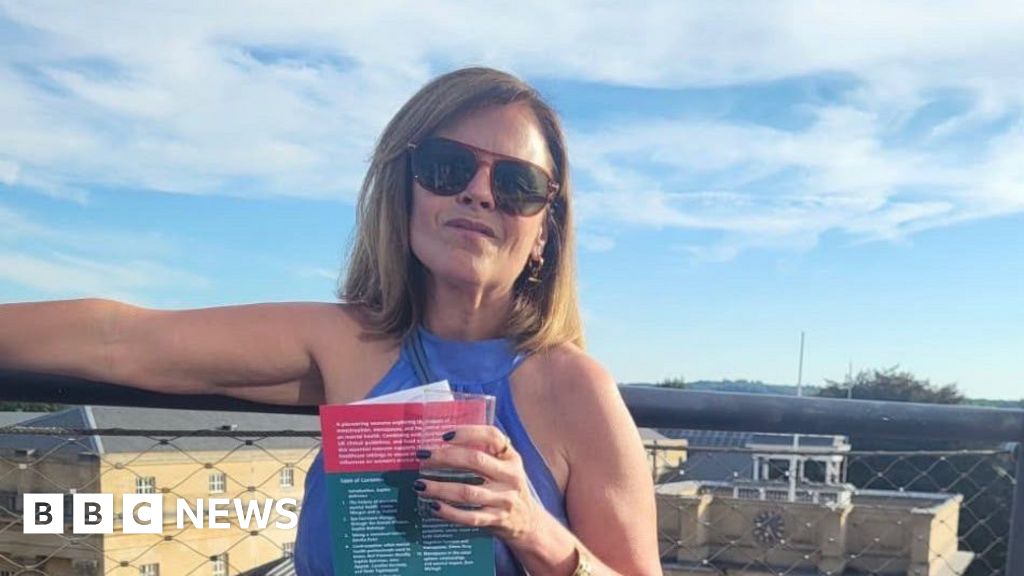
For three years, Sally Williams struggled to understand what was happening to her as her mental health deteriorated and her life fell apart, spending almost 11 months in hospital across eight admissions.
She left her finance job, was separated from her teenage son and found herself fighting for her life, unaware her symptoms could be linked to perimenopause.
"No one joined the dots," Williams said. "It was only me... I joined the dots and it was transformational to start hormone replacement therapy and literally come back to life."
Williams, who initially self-diagnosed, wants other women to be aware of perimenopause, the years leading up to menopause, which she described as the "danger zone".
Perimenopause , which commonly begins around the age of 46, is when women experience menopause symptoms while still having periods.
Symptoms can include anxiety, mood swings, brain fog, hot flushes and irregular periods, with some women taking hormone replacement therapy (HRT) to help alleviate the symptoms.
What is the menopause and what are the main signs?
How does Hormone replacement therapy (HRT) work?
When her symptoms began in her late 40s, Williams, from the Wychavon area, said doctors she saw initially thought she had depression.
"I had multiple attempts on my life, two significant ones, one where I was in a wheelchair for three months for polytrauma, and this was in Covid, so there were no visitors. I had no contact with anyone," she explained.
"I had to leave my job. This was at perimenopause time. My message to women is that, menopause is not the danger zone, it's the run up, it's the 45 to 54."
For Williams, who said she was "unrecognisable" before her eventual diagnosis, it was HRT which eventually helped her, but she said it may not be for everyone.
The drug , which isn't suitable for some women, tops up and stabilises oestrogen levels, sometimes in combination with a synthetic or bioidentical version of progesterone.
Williams is set to speak about her hard fought menopause diagnosis at Meno Fest at Worcester Rugby Club on 7 October , as part of Menopause Awareness Month.
The free event is being held with the aim of helping people to gain greater understanding of how perimenopause and menopause can affect every aspect of life from physical and mental health to relationships, work and family life.
Williams told the BBC of how isolated she became during the "run-up" to menopause.
"I lost my job. I didn't see my friends, my family for three years and I was a recluse. I was self neglecting. And my son, who was in his teens, I probably saw him three times," she explained.
"He had leave his school and his friends and he had to go and live with his dad because he couldn't see me. I couldn't care for him."
It was also important that men recognised what was happening to women during perimenopause, she added.
"I think men need to come into the conversation as well, and I'm not just talking husbands and partners, I'm talking sons," she said.
"It was devastating and there's relationships that have been broken that will never be put back together. I'm very sad about that."
If you have been affected by the issues in this story, help and support is available via the BBC Action Line .
Follow BBC Hereford & Worcester on BBC Sounds , Facebook , X and Instagram .
Perimenopause at 38? I felt robbed, says Emma Barnett
Alternative to HRT for menopausal hot flushes now on NHS
Women with endometriosis 'finally being believed'
Topics in this story
Gathered from external sources. Rights to this text belong to whoever originally published it.