5 momentous plays in Week 5: Another Sirianni mistake, plus Giants and Commanders both blowing a win
The Eagles blew the game prior to the final kickoff, and somehow both the Giants and Commanders blew overtime.
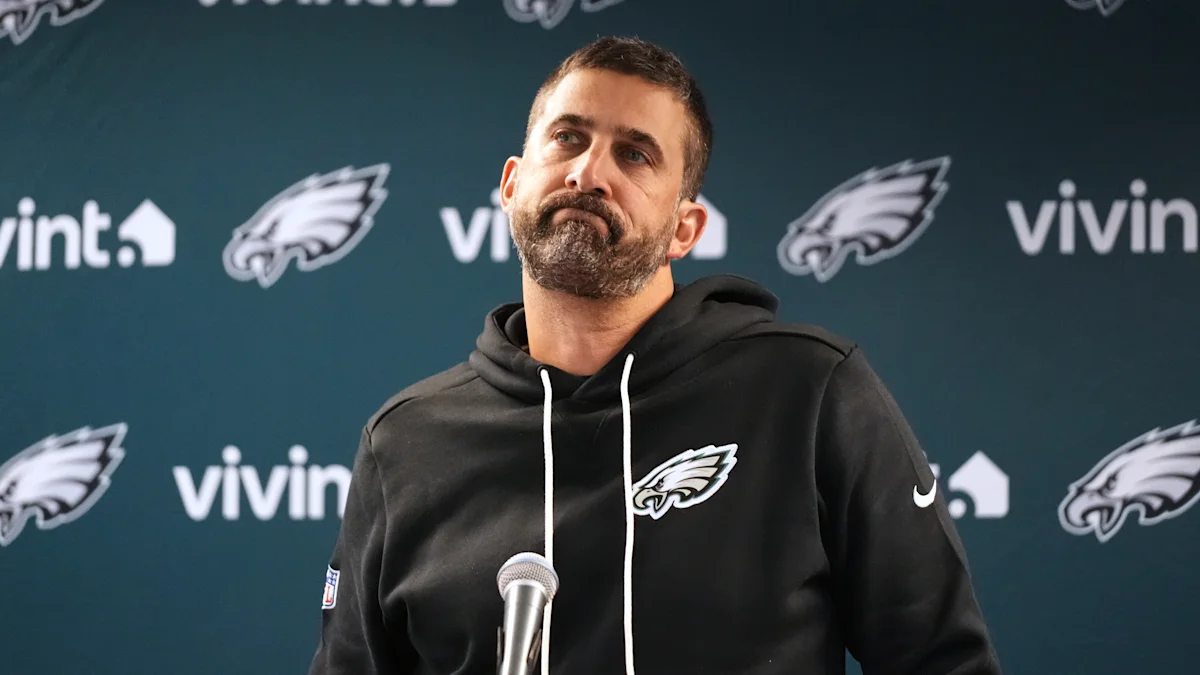
Bad news, Eagles fans: Your coach is back in the "momentous plays" list, and not in a good way.
For a second straight week, Nick Sirianni and the Eagles found themselves on the wrong end of a game they absolutely should have won.
In Week 4, it was coughing up a 10-point lead at home to the Rams. On Sunday, it was kicking off with a lead and eight seconds remaining … and somehow losing to the Jaguars in London.
Keeping it in the NFC East, we also had a game where both teams arguably coughed up a "sure" win in overtime . It's perhaps only fitting that there were zero NFC East victories in Week 5, even with two division teams going head to head.
We also scoured well beyond the NFC East to find Week 5's most momentous plays that shifted the tide in games dramatically.
1. The Eagles actually lost prior to kicking off inbounds
Yes, you absolutely can question why Nick Sirianni kicked inbounds to a team with no timeouts after taking the lead with just eight seconds left . It's fair criticism, and it cost the Eagles the game in the end.
But the way they mismanaged the clock prior to that point can't be dismissed. They had a chance to end it before the ensuing kickoff.
On second-and-10 from the Jacksonville 34-yard line with 21 seconds remaining and the Jaguars leading, 16-14, the Eagles threw a quick out to rookie Makai Lemon. It was a good play-call, netting 7 yards and improving the field position for the go-ahead field goal Jake Elliott would eventually make.
But there was too much time on the clock, and Lemon ran out of bounds after his catch, stopping the clock with 17 seconds left. Had Lemon just caught the ball and fallen down inbounds, the Jaguars would have been forced to call their final timeout around that same time, or perhaps a second or two fewer.
On third down, the Eagles could have run the ball and called timeout with just a few seconds left. That would have made Elliott's kick the final play of the game, win or lose. Then there's no kickoff to worry about.
The worst part is that the Jaguars called timeout before first down after the Eagles hit a big play to enter field-goal territory. (And they even did a favor to Philly, letting 20 seconds tick off the clock before burning it.) That should have been ample time for Siranni to instruct his players how to handle a catch and that they should not go out of bounds.
Instead, with the clock stopped after Lemon's catch, the Jaguars used their final timeout after Dameon Pierce's third-down carry. There were only eight seconds left when Elliott kicked off to the Jaguars, but those took a virtual eternity to tick off while Ameer Abdullah was running back the kickoff that set up Cam Little's miracle game-winner.
Every call Jaguars head coach Liam Coen made Sunday seemed to backfire, and yet one simple play — well, two really — came back to bite Sirianni. That's two straight weeks now where the Eagles were in a dominant position to win each game and ended up losing both.
2. Commanders blew OT, but so did the Giants
The Commanders botched the end of overtime about as badly as possible. They had the ball, ample time and downs to win the game and Jayden Daniels seemed to have no clue what was going on .
Blame Daniels, blame Dan Quinn — both are fair game.
This was also the rare game where you reasonably could experience equal rancor for how both teams handled their chances to win. The Giants also should have won, despite the Commanders being up 14 with eight minutes left.
Never mind Washington's self-inflicted mistakes, missing an extra point and committing some critical penalties, including one that wiped out a Jameis Winston interception. The Giants had the ball and needed only to set up a game-winning kick attempt.
They were in business with first-and-10 at the Washington 24-yard line in overtime, under the two-minute stoppage and with the Commanders out of timeouts. All they needed to do was run it three times, center the ball where Dominic Zvada wanted it and go home a winner. An ugly winner, no doubt, but better than a loss or tie.
Instead, Cam Skattebo fumbled it — the one thing he couldn't do. The Commanders recovered, moved the ball 53 yards in six plays and should have won, had it not been for Daniels' clock-killing exploits .
When the clock ran out with the game still tied, Skattebo breathed a sigh of relief . He was lucky his fumble didn't end in a Giants loss. It should have been a win.
3. 49ers rookie provides massive play in huge win
The 49ers' 32-29 win over the Seahawks featured 12 scoring drives, but it really was a defensive grinder for most of it. There was no bigger play in that regard than right before halftime.
The 49ers took an early edge, but the Seahawks started shifting things back in their favor, perhaps inspired by the ejection of the 49ers' Dre Greenlaw . After cutting the 49ers' lead to 14-13, the Seahawks forced a punt, which was downed at the Seattle 1-yard line.
That backed the Seahawks up in the final 20 seconds of the half, and they couldn't simply bleed out the clock because the 49ers had all three timeouts left. On the first play, disaster struck for the home team: 49ers defensive tackle Gracen Halton stripped Seahawks running back George Holani in the end zone and recovered the fumble for a touchdown.
That made it 21-13, San Francisco, at the half. The Seahawks were getting the ball back to start the third quarter, but instead of being able to take the lead, the best they could have done was tie the game.
Granted, there were three second-half lead changes after that point. But the 49ers needed every score they could get on the road, and that one possession was a massive swing at a critical time when the winds had been shifting Seattle's direction.
The rookie Halton had a massive game, also adding a sack, two big run stuffs and a pressure on Sam Darnold's fourth-down pass to Cooper Kupp that came up inches short of a first down, handing the game over to the 49ers.
4. Browns miss multiple chances to beat Jets
The Cleveland Browns had been one of the league's better stories, hitting a 3-1 mark through the first month of the season, but they gave away Sunday's game at the Jets . Even though momentum had shifted in the Browns' favor in the fourth quarter, they could never take advantage of the chances they had.
It all started in the fourth quarter. On the first play of the fourth, Browns rookie Emmanuel McNeil-Warren intercepted Geno Smith on third down, but Maliek Collins jumped offsides, negating the interception and moving the Jets into field-goal range. Jason Sanders made the 54-yarder to push Cleveland's deficit to 10-6.
Just over 30 game seconds later, the Browns were back in business in Jets territory after Isaiah Bond's 30-yard catch. What followed: illegal formation penalty, sack, delay of game, then another sack. It moved the ball from the New York 45-yard line to the Cleveland 27. The Browns punted on fourth-and-38.
The Jets did the Browns a favor by punting on fourth-and-1 with 10-plus minutes left, and Cleveland moved down the field for the go-ahead score after trailing most of the game. The missed extra point didn't help, but it wasn't the Browns' most fateful mistake.
Smith's lost fumble at his own 43-yard line with 4:20 left was a huge gift, but the Browns couldn't do anything with the ball, using only 19 seconds of clock. On fourth-and-10, the Jets punted — or attempted to. The rain-soaked snap sailed over Corey Bojorquez's head, and the Jets scored a TD three plays later to take the lead.
The Browns had two possessions in the final 3:01 of the game but could do nothing with either. That fateful sequence with the missed PAT and botched snap helped turn a potential Browns edge into a Jets win in the rain.
5. Chargers' biggest blow came before Herbert's late turnovers
The Chargers fell to 0-5, but they had real designs on their first victory of the season. Once again, Justin Herbert's fourth-quarter turnovers — his fifth and sixth of the season — were at the center of the narrative.
But the roots of the Chargers' 23-17 loss to the Broncos can also be traced back one possession earlier.
The Chargers took their first lead late in the third quarter on Kimani Vidal's 42-yard TD run, which came immediately after Tuli Tuipulotu had forced and recovered a Bo Nix fumble. The Broncos had looked stagnant offensively most of the game, even with Sean Payton taking back play-calling duties.
The teams traded punts, as the Chargers' defense stood tall all game, and when Wil Lutz missed a 42-yard field-goal try, it felt like it might be L.A.'s day. But Herbert and the offense couldn't do enough to help pull off the win.
The Chargers lost their little ripple of offensive mojo and stalled at the worst time. Herbert scrambled on third-and-9, and he was marked just short of the line to gain at their own 41-yard line — about the length of the football. Offensive coordinator Mike McDaniel called for a QB sneak, and Herbert has been very effective on those in his career, but he was stood up immediately and stopped short.
That started the avalanche that followed: a Broncos touchdown and two Herbert turnovers, both of which led to field goals. You can't blame LA's defense for that. The Chargers' offensive miscues flipped a 17-10 Chargers lead into 13 unanswered points and a 23-17 loss .
Herbert's failed sneak opened the door for the Broncos to pull off the comeback. Had the Chargers converted and drained more clock — while resting an exhausted defense a bit more — and perhaps even put up some points, it would have been a different ending. Cameron Dicker still has big range, and the Chargers needed about 20 yards to have given him a shot.
Instead, they turned it over on downs, which was as big and perhaps bigger than the later mistakes.
Topics in this story
Gathered from external sources. Rights to this text belong to whoever originally published it.