Why the Steelers traded Joey Porter Jr. and what it says about the team now and down the road
It's hard to say the Steelers' roster is better after the Porter trade, but they weren't getting anything from him this season anyway.
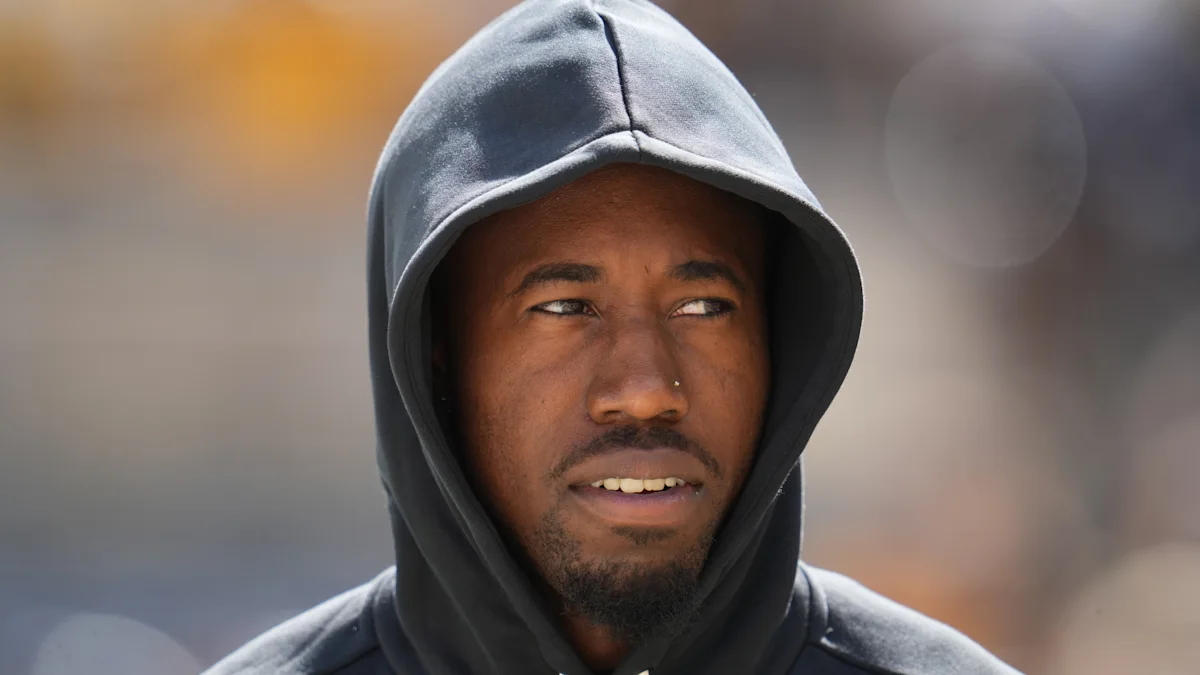
The Pittsburgh Steelers had played the game long enough.
They'd gone along with Joey Porter Jr.'s "back injury." They understood his contract demands and negotiated fairly, even if they didn't agree on his view of his value. They'd even waited three games into the season to see whether a deal could be reached, though the franchise's long-standing policy against negotiating in-season meant the talks that ended around Week 1 were never going to restart. So they moved on, sending him to the Dallas Cowboys for a pair of draft picks .
The Steelers' asking price might have been higher initially, but their return was fairly strong, all things considered .
This was a straight-up business deal, even if there was an emotional element to the negotiations given Porter's family ties to the organization. Sometimes business is just business.
Hometown selection or not, the bottom line is the Steelers didn't see Porter as a $30 million cornerback. They weighed the risk of adding another bloated contract on the defensive side of the ball and concluded that the risk outweighed the potential benefits.
It was a decision they probably had to make. Even if Porter's value — both in financial and draft-pick terms — was not as high as some people wanted to make it.
When the Steelers started getting calls on Porter this summer, their asking price almost certainly was higher — far higher. That's often how these types of things start: throw out an unfair price and see what teams' reactions are.
Were they asking for a first-round pick? That wouldn't be shocking. It also wouldn't surprise anyone if the Steelers had a few teams laugh at that price.
On the one hand, Porter was the first pick of Round 2 (32nd overall) and had played well, starting 41 of 47 games (of a possible 51), defending 31 passes with 3 interceptions. At 26 years old, he's theoretically entering his prime years.
On the other hand, his contract situation lowered his value. Porter was entering the final year of his deal and was asking for elite CB money, reportedly starting at $30 million per year . If the Steelers were balking at this price, it's likely other teams were as well. The general consensus has been that Porter is not in the Devon Witherspoon-Christian Gonzalez tier of cornerbacks, although the real tell will be what Dallas thinks of him whenever that contract extension happens.
When the Steelers couldn't get a first-rounder in return, they likely dropped their asking price to a second-rounder and some change. They got that, but in the 2028 draft, not next year.
In terms of apples-to-apples value, the rule of thumb is that a 2028 second-round pick is roughly worth about a 2027 third-rounder. Even if there might be other factors involved, giving up one year of player value drops the pick value by approximately one round. Throwing in a 2027 sixth-round pick bumps the value up ever so slightly.
Dallas was already giving up the higher of the two 2027 first-rounders in the Quinnen Williams trade, and it had only one pick across Rounds 4 and 5 next year. That likely pushed the Cowboys into offering the 2028 second. Next spring's class is regarded as a talented group at first glance, and potentially top-heavy, which also may have factored into the deal.
Was it a bonanza return? No, but it almost certainly was close to, if not the best, the Steelers were going to get.
How Steelers shape up short term after the trade
It's hard to say the Steelers are better, talent-wise, after the Porter trade. However, the drop-off might not be significant.
The Steelers appear to be in relatively solid shape at corner. The current group is Jalen Ramsey , Jamel Dean , Asante Samuel Jr. , Brandin Echols and 2026 third-rounder Daylen Everette . Ramsey is a jack of all trades, manning multiple roles in the secondary. Dean and Samuel have lined up wide, with Everette also seeing extended snaps in the Week 3 win over the Cincinnati Bengals after Samuel struggled. Echols is more of a depth piece.
Pittsburgh was already paying the short-term price with Porter not playing the first three games. It's painful to help develop a homegrown player and then trade him away in his prime, but the way things were going, it was hard to imagine Porter helping the team this season. The two sides were too dug in.
So in measuring what the Steelers lost in the deal, the "now" price isn't terribly high. The problems they have now are the same ones they've had since Week 1.
If Everette can show something, the Steelers might even raise the value of what they'd received from the position to this point of the season. It also helps that the 2-1 Steelers aren't facing a gauntlet of stacked offenses upcoming. It's a fairly manageable offensive slate through the Week 9 bye, facing the Browns twice, the Alec Pierce-less Colts , the Baker Mayfield-less Buccaneers and the Saints , with or without rookie wideout Jordyn Tyson, who's on injured reserve.
But any Steelers trade also must be viewed through the lens of this season and whether this team has any more upside than recent iterations, with Pittsburgh losing in the wild-card round five of the past six seasons and missing the postseason the other year. With Aaron Rodgers in his final season, it is reasonable to suggest that the Steelers have yet to indicate they're making a big short-term push now.
And while the trade doesn't have to be indicative of how the Steelers view their own limitations, you don't often see true Super Bowl contenders trading Porter-caliber talents in-season. The 2014 Seattle Seahawks dealt Percy Harvin in the same season they reached the Super Bowl. The 2016 New England Patriots shipped out Jamie Collins the same season they won the whole thing. There have not been many comparable examples since.
The Steelers know they have a major QB question staring them in the face this offseason. They have Drew Allar and Will Howard as two candidates to potentially replace Rodgers, and now they also have two more draft picks that could be used toward acquiring another option there. That might not have been the impetus for the deal — Porter's contract standoff was — but it could have been the justification in the end.
If they viewed themselves as true contenders, perhaps they would have found a way to make the contract happen. Either way, the Steelers accepted a deal at a reasonable return and made it happen. This did not feel like a team that was pressured into making a trade. Their hand might have been forced by Porter's demands, but their arm doesn't appear to have been twisted in signing off on it.
Topics in this story
Gathered from external sources. Rights to this text belong to whoever originally published it.