Baker Mayfield makes bold accusation against Chicago Bears after Buccaneers’ loss leaves questions unanswered
Baker Mayfield left the Tampa Bay Buccaneers’ loss to the Chicago Bears with more than frustration over the result.
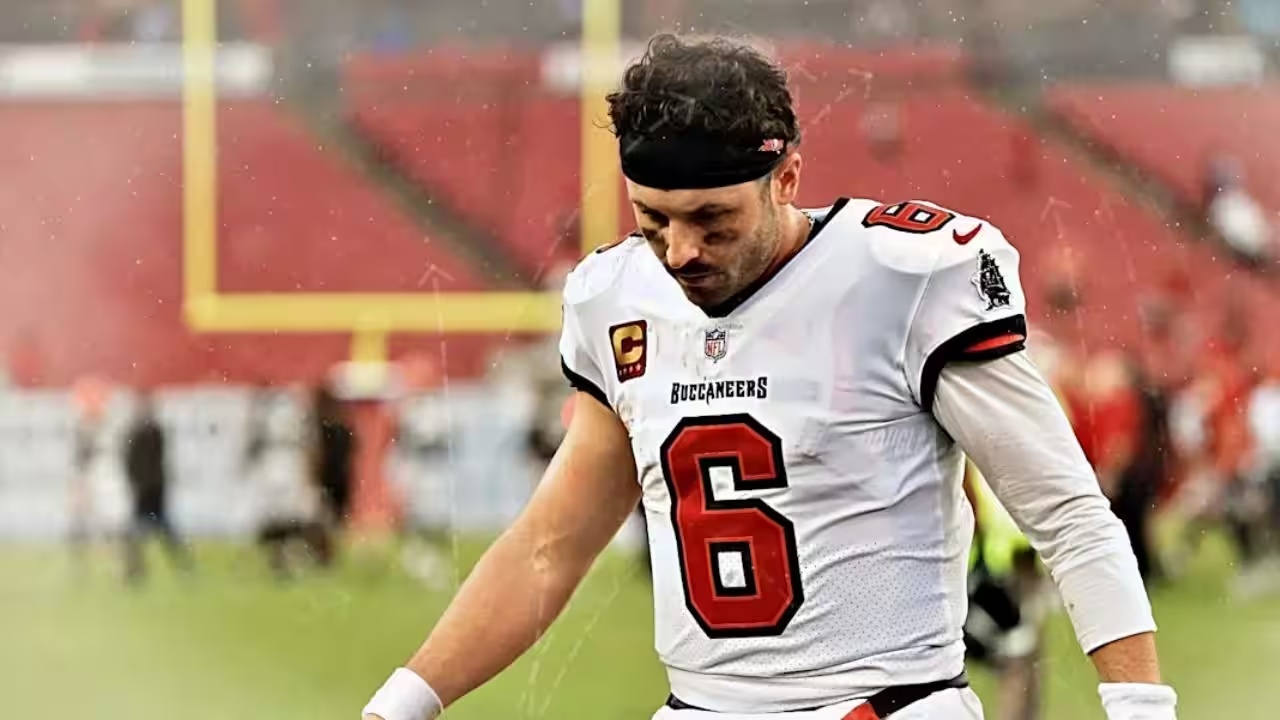
Baker Mayfield left the Tampa Bay Buccaneers’ loss to the Chicago Bears with more than frustration over the result. The quarterback questioned the Bears’ defensive line for what he viewed as activity around the snap that made it harder for Tampa Bay to avoid penalties. The Buccaneers were flagged for five false starts in the Week 9 defeat, and Mayfield’s comments shifted attention toward Chicago’s tactics. But that explanation did not erase the larger issue: Tampa Bay also committed two delay-of-game penalties, giving its offense too many ways to fall behind the chains.Baker Mayfield points to the Bears’ cadence tacticsBaker Mayfield said he could not fully explain why the Buccaneers had so many false starts, stressing that the number was out of character. He did, however, single out the Bears’ defensive line for allegedly calling out the cadence between snaps.“To be honest with you, I don’t know,” said Mayfield on why the team had so many false startse start penalties. “The last one. I know they’re barking out the cadence. Which you can’t do that. So it’s tough for the refs to call that because they’re not right there at the line of scrimmage. But yeah, I think they called that on Tristan, but that’s, you can’t do that.”Mayfield believed the defenders were trying to disrupt Tampa Bay’s timing by shouting during the pre-snap sequence. He also suggested officials had a difficult view because they were not directly along the line of scrimmage. That is his account, not an official finding that Chicago broke a rule.The Buccaneers still had to manage their own operation. Five false starts are a heavy cost for any offense, regardless of the defense’s tactics. Two delay-of-game penalties added to the damage, turning chances to go for it into field-goal attempts.Bowles puts the focus back on Tampa BayHead coach Todd Bowles did not follow Mayfield in blaming Chicago. He said the penalties were not caused by a communication breakdown, but made clear that Tampa Bay needed to control its movement before the snap.“It wasn’t a communication thing,” Bowles said post-game. “We just got to hold our water.”Bowles’ response pointed to the standard Tampa Bay has to meet. A defense can use noise and cadence disruption to make life difficult. The offense still has to stay composed, identify the snap count and avoid giving away free yards. The Buccaneers cannot build their operation around expecting a flag.That difference in tone is worth noting. Mayfield was describing what he believed the Bears were doing; Bowles was judging what his own players could control. The coach did not need to settle whether Chicago’s defenders were trying to draw a reaction. His team had already been penalized, and the result was clear. False starts put the offense behind schedule before a play could develop. Delay-of-game calls then removed options on later downs. Those are separate errors, but together they point to an offense that struggled to get set and execute cleanly.The loss leaves Tampa Bay at 3-6 after a season that had shown signs of turning. The Buccaneers began 0-3, then went 1-2 with Jalon Daniels at quarterback before Mayfield started the next two wins. That lift has faded, even with the NFC South still within reach.Tampa Bay has a bye before facing the Detroit Lions in Week 11. The break offers time to reset, but the offense needs more than a debate over the Bears’ cadence. Mayfield may feel Chicago crossed a line. Bowles’ message was simpler: Tampa Bay has to stop making the mistakes itself.Get the latest Sports News and Live updates. Download the TOI app.
Topics in this story
Gathered from external sources. Rights to this text belong to whoever originally published it.