The recurring strategic mistake NFL teams continue to make
ericbvd/Depositphotos Why NFL teams struggle to build balanced rosters NFL teams often invest heavily in star players, but individual talent cannot solve eve...
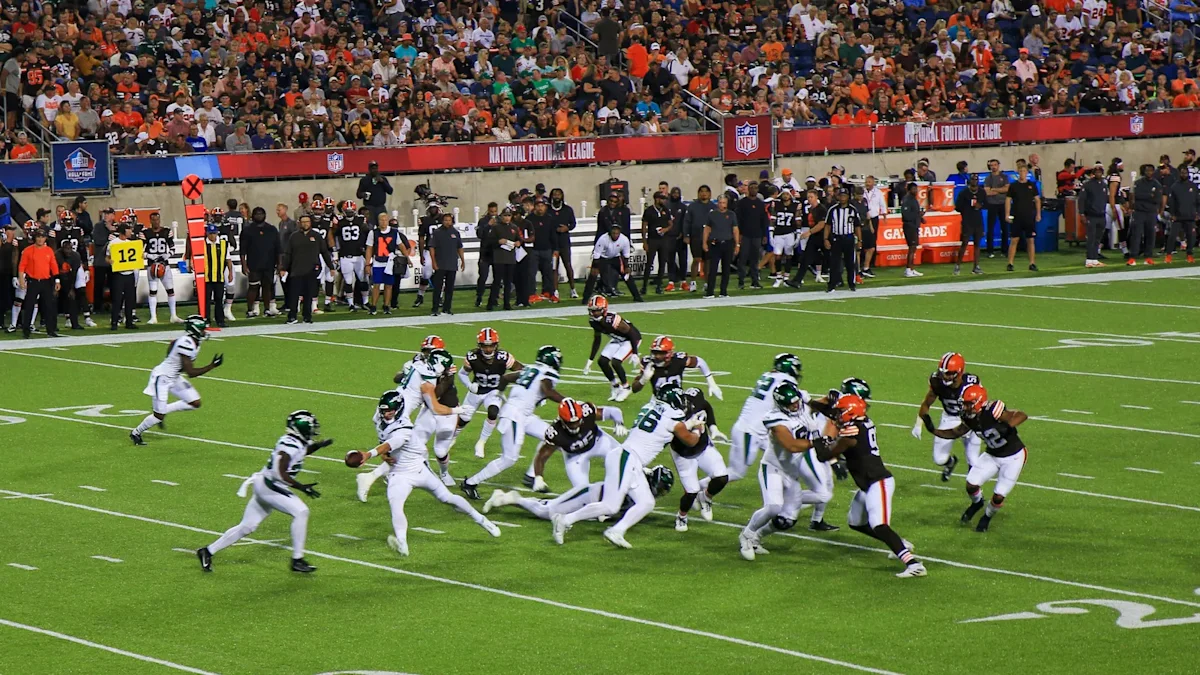
Why NFL teams struggle to build balanced rosters
NFL teams often invest heavily in star players, but individual talent cannot solve every problem on a roster. Offensive-line protection, defensive depth, salary-cap limits and quarterback development all play important roles in a team's success.
Recent roster decisions involving the Detroit Lions, Houston Texans, Cleveland Browns and Dallas Cowboys highlight the challenges of building a balanced team.
Failing to protect the franchise quarterback
Quarterbacks receive major contracts and often become the center of a team's long-term plans. However, Houston's experience entering 2026 shows why quarterback investment must be matched by reliable offensive-line protection.
C.J. Stroud was sacked 90 times during his first two NFL seasons, ranking second among quarterbacks from his draft class behind Bryce Young. His sack total fell to 23 in 2025, demonstrating how changes in protection can affect a quarterback's exposure to pressure.
Treating offensive-line problems as temporary
Offensive-line weaknesses can persist across multiple seasons when teams repeatedly replace departing starters rather than build continuity. Houston continued addressing its protection problems during the 2026 offseason, while Detroit faced challenges following major personnel losses.
Detroit lost guard Kevin Zeitler in free agency and center Frank Ragnow to retirement before the 2025 season. Injuries and replacements led to frequent lineup changes, leaving the Lions with another major offensive-line priority heading into 2026.
Giving quarterbacks a stronger supporting cast
Drafting a promising quarterback does not automatically solve a franchise's offensive problems. Young passers also benefit from effective protection, dependable receivers and clear coaching.
Cleveland evaluated Deshaun Watson and Shedeur Sanders during the 2026 offseason before naming Watson its opening-day starter on August 24. The Browns also rebuilt their offensive line through trades, free agency and the draft, showing how a quarterback decision fits into a broader effort to strengthen an offense.
Spending heavily without accounting for depth
A roster's starting lineup does not tell the full story of its readiness for a long NFL season. Injuries, substitutions and departures can force teams to rely on less experienced players at important positions.
Philadelphia entered the 2026 season with concerns about offensive line depth, including questions about players dealing with recurring injuries. NFL.com also identified depth as a concern for San Francisco's offensive line, showing that even established contenders must plan for personnel changes beyond their starting groups.
Rebuilding the same position group repeatedly
Repeatedly rebuilding a position group can leave teams struggling to establish consistency from one season to the next. Free agency, trades and draft selections offer solutions, but they also require teams to manage departures and replacements together.
The Browns faced this challenge entering 2026 after preparing for significant changes along the offensive line. NFL.com reported that Cleveland was set to lose potentially four of its five 2025 starters, creating a substantial personnel problem alongside its unresolved quarterback situation.
Neglecting the defense while building the offense
An offense filled with productive players cannot, on its own, prevent opponents from scoring. Teams must also maintain an effective pass rush, cover receivers and stop running plays to compete across a full season.
The Dallas Cowboys entered 2026 with significant defensive needs after trading Micah Parsons before the 2025 season. NFL.com identified the pass rush and secondary as areas requiring attention, illustrating how losing a major defensive contributor can create multiple roster-building challenges.
Interesting fact : The NFL's salary cap topped $301.2 million for the first time in 2026.
Building a unit takes more than one signing
A prominent signing can address a clear weakness, but dependable offensive-line play requires several players working together. Teams must consider scheme fit, communication and depth alongside individual ability.
Houston retained Ed Ingram and Trent Brown with contract extensions during the 2026 offseason and added other offensive linemen. Those moves formed part of a broader effort to protect C.J. Stroud and maintain continuity across the unit.
Ignoring how injuries affect long-term plans
Injuries can change a team's priorities even when its original roster plan appears sound. Reliable backup players and flexible personnel options help teams respond when starters miss games or struggle to return to full health.
Detroit used 13 offensive linemen during the 2025 season, tying for the league lead in that category. The number reflected the combined effects of roster changes and injuries, while highlighting the challenge of maintaining a consistent unit throughout an NFL campaign.
Matching draft investments to roster needs
The NFL Draft gives teams a chance to address weaknesses while developing players for the future. Combining draft selections with veteran additions can provide several ways to strengthen the same position group.
Detroit addressed its offensive line by selecting Clemson tackle Blake Miller with the No. 17 pick in the 2026 draft and signing center Cade Mays in free agency. The approach combined a first-round investment with the addition of an experienced professional following significant changes to the unit.
Balancing roster needs against the salary cap
NFL teams must balance immediate improvements against the financial commitments in player contracts. Spending on one position can reduce the flexibility available to strengthen another.
In a February 20, 2026, assessment, NFL.com reported that Houston was $4.7 million over its projected salary-cap limit. The Texans later extended Ed Ingram and Trent Brown, illustrating how roster planning involves both managing financial commitments and deciding which contributors to retain.
Adapting when the original lineup changes
Injuries and personnel changes can force teams to revise their plans during the season. Green Bay responded to early protection problems by adding veteran guard Laken Tomlinson and changing its starting combinations.
Through Week 3, Jordan Love had taken 31 hits, and the Packers ranked 31st in pressure rate allowed at 44.7%. Their protection improved in Weeks 4–5, when Love took 7 hits and the team allowed pressure on 20.3% of dropbacks, according to an October 15 NFL.com report.
The NFL playoff picture can change quickly as teams develop their strengths and capitalize on weaknesses across the league. Check out how these 6 NFL teams could shake up the Super Bowl race .
Repeating mistakes instead of building a complete roster
Star players give teams an advantage, but dependable protection, defensive contributors and capable reserves help keep a season on course. Building that support requires decisions across the roster, from retaining veterans to developing draft picks and responding to injuries.
Detroit's offensive-line investments, Houston's contract extensions and Green Bay's adjustments show the different ways teams can respond. The challenge continues after opening day, as front offices and coaches work to keep their personnel suited to the demands of the season.
Officials play a central role in maintaining order and enforcing rules during high-pressure NFL games, making disciplinary decisions a closely watched issue. Find out why the NFL suspended two referees after heated player incidents .
Which roster-building mistake do you think hurts NFL teams the most? Like this post and share your opinion in the comments.
This slideshow was made with AI assistance and human editing.
Topics in this story
Gathered from external sources. Rights to this text belong to whoever originally published it.