Former Eagles staffer finds another way the Bill Belichick Patriots tried to gain an advantage over opponents
The Patriots of the Bill Belichick era already have Spygate and Deflategate on their resume.
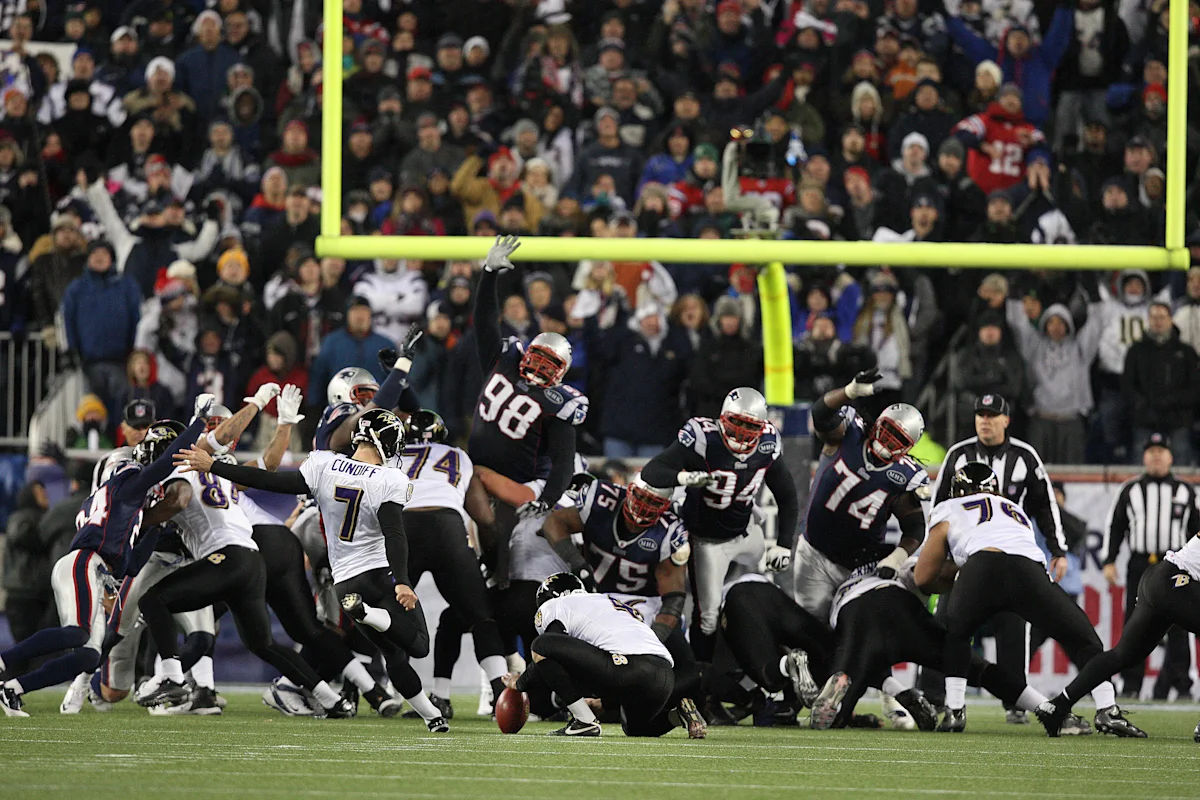
Bill Belichick's New England Patriots' teams proved they would do whatever it takes to win championships. For all the excellence of their individual players, coaches and coordinators, the Patriots teams of that era are no stranger to controversy.
First, it was Spygate and Deflategate. Now, it's … uh Scoreboardgate?
Ryan Paganetti, a former Philadelphia Eagles staffer, posted a thread on X detailing how the Patriots would mess with opposing kickers during the Belichick era.
As Paganetti explained, when opposing kickers were lining up for a field goal at Gillette Stadium, the Patriots' scoreboard team would show a reversed image of the goalpost on the scoreboard to try and mess with the kicker's head.
As you can see from the images Paganetti used in his post, the tactic creates a situation where four uprights appear in the kicker's line of sight. And since the images were reversed, the scoreboard video could play tricks on the kicker, as the wind flags would blow in the opposite direction on the scoreboard.
Paganetti said he reviewed 52 field goals from 2012-2020, and all the clips he posted were from the Belichick era.
Paganetti added that the Patriots did not utilize the same tactic when their kickers attempted field goals at Gillette Stadium. He even said the Eagles tried to utilize the same tactic, but the location of the video boards at Lincoln Financial Field "made it nearly useless."
How effective was that strategy for the Patriots? Paganetti claimed away field goal percentage during the Belichick era was the lowest in the league and that the margin between Patriots kickers and their opponents was the highest in the league.
That certainly seems to suggest the Patriots benefitted in a major way from the tactic, though it's worth mentioning other reasons that may have played a role in opposing kickers missing against New England.
From a weather perspective, playing in New England, especially in the winter months, almost certainly played a role in some of those misses. Patriots kickers would be far more accustomed to how the wind affects kicks at home.
The team's dominance in the era likely also played a role. Once the Patriots emerged as a dynasty, that put extra pressure on opposing kickers in big moments. And since Gillette Stadium hosted a lot of home playoff games, that pressure likely multiplied in those instances.
It also helps that the Patriots benefitted from having Hall of Famer Adam Vinatieri kicking for them for a decent portion of that era. After him, the team utilized Stephen Gostkowski, whose numbers present an intriguing Hall of Fame case.
Those caveats aren't going to stop some from piling on the Patriots. But before you do that, it's worth noting that one kicker from the same era said New England was far from the only team engaging in those shenanigans.
Pro Bowler Graham Gano said teams would use various tactics to throw opposing kickers off their game.
Given that — and the fact that the legality of the tactic is unclear and it happened under a previous coaching regime — it's unlikely the Patriots face punishment from the strategy. The NFL may not even feel compelled to respond to questions on the topic.
While Belichick might even get a question about it during a North Carolina press conference, he's never been one to shed light on details like this, even though he typically loves talking special teams .
Ultimately, Paganetti discovered a new — at least to the public — way the Patriots tried to rig the system to their advantage back in the day. It's unlikely that revelation has an impact on how the league operates today, but it's still a fascinating discovery, one that reinforces Belichick and Co. were going to take every single advantage possible to gain an edge over their competition.
Topics in this story
Gathered from external sources. Rights to this text belong to whoever originally published it.