Hall of Famer Marshall Faulk reveals he's been diagnosed with Parkinson's disease
The seven-time Pro Bowler emphasized the importance of getting diagnosed early.
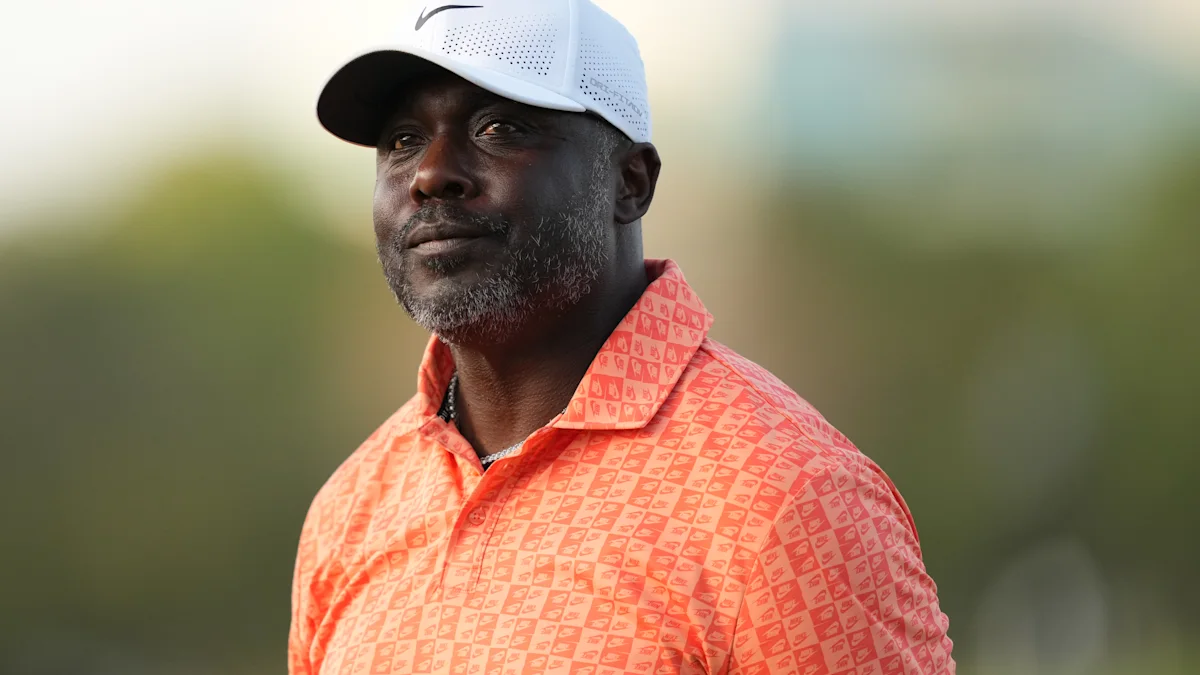
Hall of Fame running back Marshall Faulk has been diagnosed with Parkinson's disease, he revealed on an episode of the "Caring Neurologist" podcast published Wednesday .
Currently working as head coach at Southern University , Faulk said he has been dealing with the disorder for a year and half and caught it early, which has so far allowed for effective treatment. Parkinson's disease is a progressive brain disorder most known for inducing tremors, with no known cure.
Faulk, 53, said he was diagnosed after noticing issues while playing golf and bringing them up to his doctor:
"I get a physical twice a year. I'm a little anal about my health. I literally asked my doctor because I noticed it as I was playing golf. I noticed the rigidity in my hand after I play a lot or practice a lot, I thought it was just normal nerves when putting and stuff like that. But it started to be times where I wasn't playing — I mean, where I was playing, but I wasn't in a match, and it would still do that. "I was like, 'Wow, is that something? Is that normal?' And the doctor was like, 'You need to go get checked. You need to go have X, Y and Z done.'
"I get a physical twice a year. I'm a little anal about my health. I literally asked my doctor because I noticed it as I was playing golf. I noticed the rigidity in my hand after I play a lot or practice a lot, I thought it was just normal nerves when putting and stuff like that. But it started to be times where I wasn't playing — I mean, where I was playing, but I wasn't in a match, and it would still do that.
"I was like, 'Wow, is that something? Is that normal?' And the doctor was like, 'You need to go get checked. You need to go have X, Y and Z done.'
Faulk emphasized the importance of early treatment and indicated that his medications have so far allowed him to continue living his life:
"Since I've started on the medication, I don't really have a lot of issues. I might sleep a little more … Other than that, the rigidity in my hands, I still have that. Can't say that it's gotten worse. The little tremors that I get, they are what they are. I just pay attention to my gait, how I walk, when I'm working out, my ability to balance. It's still where it is. "I don't look at it as something that's terminal. It's like 'Hey, you get to live with this.' There's far worse things out there."
"Since I've started on the medication, I don't really have a lot of issues. I might sleep a little more … Other than that, the rigidity in my hands, I still have that. Can't say that it's gotten worse. The little tremors that I get, they are what they are. I just pay attention to my gait, how I walk, when I'm working out, my ability to balance. It's still where it is.
"I don't look at it as something that's terminal. It's like 'Hey, you get to live with this.' There's far worse things out there."
Neurodegenerative diseases like Parkinson's are widely known as a risk that can come from long football careers, with a study earlier this year finding NFL players to have a Parkinson's mortality risk nearly four times greater than the average person.
Brett Favre , Ahman Green and Bernie Kosar are among the former NFL players currently living with Parkinson's. Another famous case was the late Muhammad Ali, who died in 2016.
Faulk recalled meeting Ali after his diagnosis and said he is now heartened by what he saw:
"I was at one of his dinners at fight night and I sat next to him. He leaned over to me and he whispered, 'You a bad boy.' And then he made a couple other comments. I was like, 'He's all there.' So knowing that, I didn't look at it like life is going to end. "I treat it like, I've had a bunch of surgeries on my right knee. There's some parts of it that aren't mine, that aren't original. My back, it hurts every once in a while. It's something you live with. It's not a detriment to your livelihood. Now, if you don't take of it, there's an opportunity for that to be [a detriment]. But you do have to take care of it."
"I was at one of his dinners at fight night and I sat next to him. He leaned over to me and he whispered, 'You a bad boy.' And then he made a couple other comments. I was like, 'He's all there.' So knowing that, I didn't look at it like life is going to end.
"I treat it like, I've had a bunch of surgeries on my right knee. There's some parts of it that aren't mine, that aren't original. My back, it hurts every once in a while. It's something you live with. It's not a detriment to your livelihood. Now, if you don't take of it, there's an opportunity for that to be [a detriment]. But you do have to take care of it."
Faulk has been enshrined in both the Pro Football Hall of Fame for his career with the St. Louis Rams and Indianapolis Colts as well as the College Football Hall of Fame for his time at San Diego State. He remains one of the greatest running backs in NFL history, and is the league's only player to top 12,000 rushing yards and 6,000 receiving yards in his career.
A seven-time Pro Bowler as well as the 2000 NFL MVP and a Super Bowl XXXIV champion, Faulk began his coaching career last season as the running backs coach at Colorado. He's in his first season at Southern , which is currently 1-3.
Topics in this story
Gathered from external sources. Rights to this text belong to whoever originally published it.