2027 NFL Draft: Top 50 big board 2.0 delivers big changes at quarterback
Eric Edholm's top 50 prospects for the 2027 NFL Draft, from the incomparable Jeremiah Smith down to a rising LB.
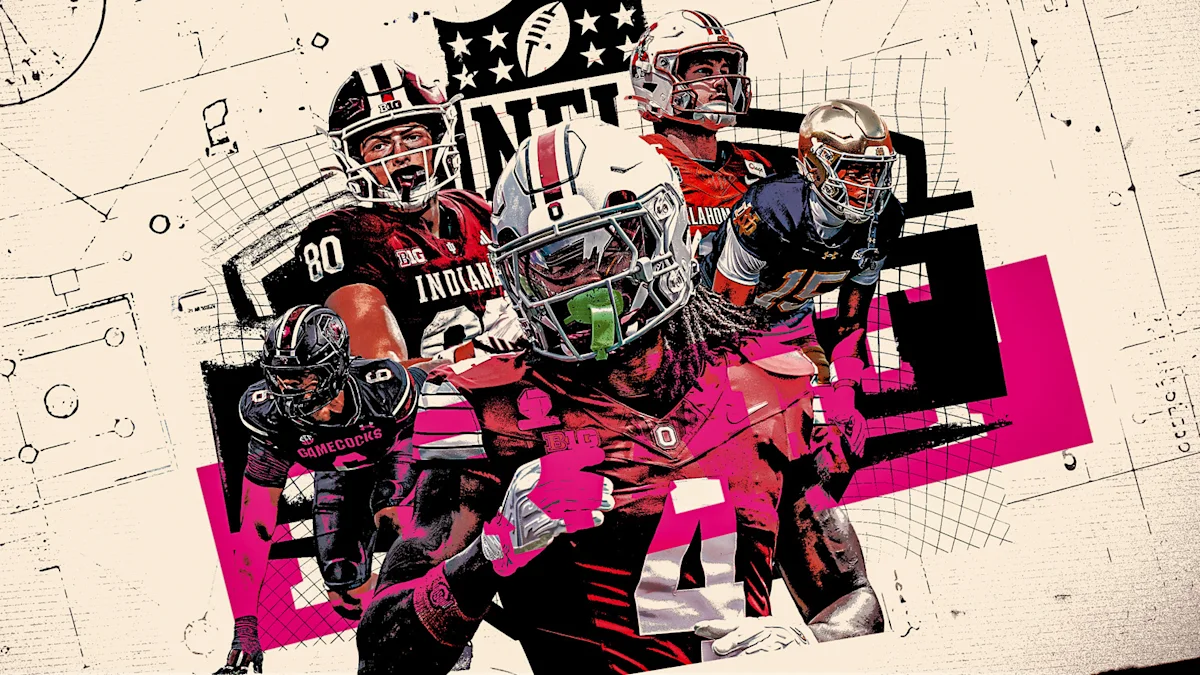
My first version of the Big Board , which dropped in early September, was capped at 30 prospects. With more than half the college football season in the books, we've expanded the list on our second edition to 50 prospects — and there has been a lot of change.
Quarterback is a position that has seen significant change, with what was billed as a potentially generational QB crop turning into a semi-disappointing one. That said, a few new names have emerged there, and it's hardly a total loss.
Other positions where there has been noticeable change include offensive tackle and defensive tackle, with a few out-of-nowhere prospects zooming up the list.
Plenty will change between now and April. For now, here are my top 50 prospects for the 2027 NFL Draft as we enter the home stretch of the college football season.
Smith is one of the best wide receiver prospects to come around in recent years, and I expect him to be the highest-drafted non-quarterback next spring, perhaps even going first overall. Keyshawn Johnson in 1996 was the last WR selected No. 1 overall. It has been a disappointing turn of events with QB Julian Sayin's injury, but Smith has continued executing at a high level.
Moore doesn't have an interception this season, but he has four passes defended and only seven passes allowed on 16 attempts in 2026. He's a Pat Surtain II-Sauce Gardner level prospect who can make an instant impact as a rookie next NFL season.
Stewart's return from suspension has led to some promising developments. He's seen an uptick in snaps and is back to flashing a remarkable get-off. Tools-wise, there are few better defensive prospects than this Brian Burns-ian rusher. Is Stewart finally ready to put it all together?
Becker has expanded his role this season amid QB play that hasn't come close to Fernando Mendoza's level from a year ago. His length, body control, vertical speed and exceptional hands will serve him well in the NFL. With Indiana on the ropes against Minnesota, Becker made two clutch catches late to help win.
Mestemaker has seized the opportunity to claim the top slot among draft QB prospects in what has been a tough start to the season at quarterback. He's a fearless gunner who can manufacture drives with arm, athleticism and creativity but also stunt them with some shaky decision-making.
A high-ankle sprain has sidelined Simmons for the time being, but it's not expected to be a season-ending injury. His production to date dwarfs that of Stewart, but in a traits-over-production league, Stewart rates as a bit more rare.
Clemson's season has been a disappointment, but Hampton has not. After some great reps against Miami's Malachi Toney, the best receiver not named Jeremiah Smith, Hampton looked the part of a possible top-10 pick. He's very well built, and a strong 40-yard dash time could land him very high in the draft.
Echoles' performance against LSU was the kind of tape you could hold up and slap a top-10 grade on. He's been good otherwise, but not at that same dominant level since. Echoles finished strong last season, and I am hoping for a similar flourish to this season to justify a top-10 grade.
Seaton's pass-blocking potential might exceed any other OT prospect in this class, but he's far from perfect. There are questions about his run blocking and pad level, but Seaton's athleticism and quick reaction skills are strong.
Cole ran back a 66-yard fumble return for a TD last week vs. Florida and had an 85-yard scoop-and-score earlier in the season. He's not on the Sonny Styles spectrum of freaky athlete, but Cole isn't far behind. He could have a Roquan Smith-like career and impact on a defense and is ascending quickly.
Gilliam has been one of the bigger risers in the 2027 class and could profile as a Byron Murphy II-like rusher in this class. With a stocky frame, low center of gravity and unusual explosiveness, Gilliam could be a disruptive 3-technique for a slanting front.
Chambliss is already fighting age and size questions, and his play hasn't been close to flawless, with a pattern of starting games slowly before settling in. But he has inherent playmaking traits you can't find in most quarterbacks, a knack for big plays in big games and the ability to create out of structure, putting the whole field in play with his arm talent and athleticism. I'm still buying stock.
Coleman's upside remains elite, but he hasn't put it all together for various reasons. He's been a bit banged up, and Texas' offense has held him back surprisingly. Coleman has still flashed high-end ability in his age-20 season.
Baugh's size-speed profile is top notch, with quick burst and acceleration for such a big back. He can power through contact and also pick his way through small gaps, with shades of Le'Veon Bell as a runner. Baugh's long speed is just ordinary, and I'm not as sold on his three-down ability. He's the best back in this class but perhaps not a generational prospect.
There might be more worry when he arrives in the NFL, but Robinson's leaner frame (180-ish pounds) hasn't held him back in college. He's tough, competitive, always around the ball and plays physically, willing to tackle and mix it up with receivers, even if that can lead to flags.
I underrated Johnson coming into the season, and he's been a big part of the Gophers' success, shifting to center out of necessity the past few games. That likely won't be his NFL position, but he's played all five OL spots in college, combining a good anchor with great size and fairly quick feet.
Pierre is not a refined pass rusher yet, and he lacks elite edge bend. But his game has expanded this season. He's making an impact in coverage, as a run stopper and rushing the passer. He can play in a two-point stance and profiles well for an odd-front defense.
Manning's season hasn't gone as expected, but it's not as if he's turned into some unskilled stiff. Scouts still like the tools and traits, but executing the mundane stuff hasn't come as readily in Year 4 at Texas. He could still declare, but NFL people believe a return to college — though maybe not at Texas — is a real possibility.
Heard has been another OT riser who has benefitted from a new scenery, displaying greater pass-blocking potential with the Wildcats than he did at Tennessee. Heard uses his broad frame and finisher's mentality to bury people in the run game. If he can tighten up against quicker speed rushers, Heard could be a top-20 pick.
I've held back ranking Simmons until now, similar to how I slow-played Ty Simpson a year ago, because of his lack of experience. However, in a QB class that has been disappointing on the whole, Simmons is among the clear winners. He's as pretty a thrower as there is in college football, capable of hitting just about anything anywhere when he's on schedule and the protection holds up. Under pressure is where things get a murky, but Simmons is a talent worth investing in.
I was a bit higher on Goosby than Jordan Seaton coming into the season, but Goosby hadn't dominated early in the season prior to a season-ending knee injury that has left his draft stock in question. He will have a decision on coming out, which is complicated by a 6-to-9-month rehab, and could return to school.
Mensah lacks elite traits, but his production and execution speak for themselves. He'll be appealing to QB-needy teams because of his maturity, unusual accuracy and ability to consume a lot mentally. The showdown against CJ Carr and Notre Dame will be prime scouting tape.
One of the big risers to this point of the season, Williams was a virtual unknown outside of the Utes' program toiling for the prior two seasons as OT3 behind 2026 first-rounders Spencer Fano and Caleb Lomu. Williams' reach, leg drive and good balance are all great traits for a nearly 6-foot-8 blocker, but his pad level and short pass sets can sometimes hinder Williams.
Thompkins has been just as impactful on Bama's defense as Yhonzae Pierre this season, providing solid run defense and pressure on passing downs. He's been a better player than he was at USC and has versatility, lining up at multiple spots. A former high school hoops standout, Thompkins is a 6-5, 290-plus pound athlete who's just starting to tap into his football prowess.
Carr is another QB prospect who has helped his chances of draft success, be it this year or next. His pedestrian schedule is a talking point, but we'll see Carr against Miami — a key battle that could have a big say on whether he comes out or stays in school.
Johnson has been held back by his team's offensive struggles, and he's not the most dynamic athlete, but he's got an NFL-ready frame and natural receiving ability to be a red-zone and middle-field threat. Johnson is very polished as an all-around tight end.
It's hard to know where to slot Moore, who is out of eligibility and reportedly will be shut down for the season. His draft stock has taken a hit amid a slow start to the season, followed by a concussion, and Moore isn't likely to go as high as he would have in the 2026 draft. Yet, he still could be a first-round pick.
A long, press corner, Jones won't be for every team or scheme. There's some stiffness in his hips, struggling to handle quicker receivers, but Jones' length and press-man ability will be valued by teams such as the Browns and Patriots that run a lot of man coverage.
Green's knee injury in Week 3 against Ole Miss sidelined him for multiple weeks but he has since reprised his role as the Tigers' do-it-all star. He can line up in-line, flexed to the slot or in the backfield. He could stand to add mass and strength on his 6-foot-7 frame.
Pieper is playing out of position at right guard. His best NFL position figures to be center, but Pieper has hardly played there at Iowa. He's a very good athlete in a smaller frame (6-foot-3, 298 pounds), and length will give him problems, but his pulling and climbing ability will make him a fit in a zone-blocking scheme.
Lord knows I've fallen for some bigger wide receivers who flopped in the NFL, but I just can't quit Duff. He lacks suddenness off the line and out of his breaks, but Duff's body control, big frame (6-foot-6, 225 pounds), speed (for his size) and his my-ball attitude are all great traits. He can feast on slants and fades in the NFL.
Marsh has flashed in two big areas since arriving at Indiana: blocking and yards after the catch. His effort as a run blocker hasn't gone unnoticed among scouts, and he's been excellent with the ball in his hands in the open field. His separation ability reads as average, but Marsh is a thick-framed receiver with juice.
Lauck's arm length could end up putting him in the guard discussion once he's measured at the scouting combine, but his technique as a leverage blocker should allow him to be successful. He's a good athlete with a higher floor.
Bolden getting hurt (and playing hurt) has dinged his draft stock a smidge, but scouts have noted his toughness and love his mentality, even with a smaller frame (6-foot, 190 pounds) more prone to injury. He's still a potential rookie starter for me, depending on where he lands.
With an elite size-speed-power profile, Washington should have a high draft floor. There are only so many men on the planet this size (6-foot-3, 325 pounds) and movement ability. He'll make you think twice about running through the B-gap, but Washington's pass-rush appeal is limited to bull rushes and closing down passing lanes.
One Texas player who seemingly has helped his draft cause this season has been Siani, who combines light feet with great length and movement skills. A late bloomer who grew up playing soccer (including as a goalkeeper) in Canada, Siani has had a few forgettable reps vs. better players, but he has experience at both OT spots and has upside.
I've been a little disappointed in Stone this season, but perhaps he's been playing in pain after a September knee injury. Because of the relative lack of DT depth, Stone's tools still could serve him well come draft time if he declares. He's toolsy and explosive but also unrefined.
Smith has more than 3,000 college snaps at left tackle and was an underrated cog on last year's national title team. Some NFL teams view him more as a guard at the next level, but he should have fairly broad appeal at either spot considering Smith's intellect, savvy handwork and good-enough anchor.
Heldt has three sacks in his past two games, and his pressure rates have been consistently good this season after a poor showing Week 1 vs. LSU. He might never be a true edge bender, but Heldt is a high-effort defender with great length.
His production is back to freshman-year level, and Coleman-Williams seemingly has kicked the drops problem he suffered as a sophomore. He's an electric, shifty receiver whose game still needs fine-tuning, but the arrow is pointed up again.
Traore was ejected for a dirty hit on BYU's Bear Bachmeier, which cost the Irish dearly, but Traore has been one of Notre Dame's best all-around players this season. He's an extremely well-built athlete with length and a hot motor. He'll get a terrific test Saturday vs. Miami.
Scott remains a tools-over-production prospect now, and he needs a better plan when his initial rush is stalled, but he's a quality athlete who works well laterally to make plays and can beat guards with quickness.
Alexander is a leaner-framed receiver who wins with speed, route tempo and body control. He hasn't been as effective as a deep-ball threat this season, but Alexander has the juice to ignite an offense.
He's cooled off after a blistering start (five INTs in his first three games), and Lopa could return to college in 2027. His traits, however, are very unusual; you don't see 6-foot-5, 210-pound safeties who can move like he does.
Brown was knocked out of the Tennessee game a few weeks ago and hasn't played since but is on track to return soon, perhaps even vs. LSU this weekend. He's a physical, field-fast corner with loose hips and good man-coverage technique. He will, however, lose some battles to more physically gifted receivers and hasn't been a huge playmaker this season.
Lacy has been beset by injuries this season and could miss some time with the dislocated shoulder he suffered against Texas. When healthy, he's a bursty runner with strong contact balance and big-play ability. His heavy workload in 2025 may have had a negative effect.
47. Kyngstonn Viliamu-Asa, LB, Notre Dame
He's a little less than a year removed from his second torn ACL in his left knee, but it appears that Viliamu-Asa has maintained his speed. KVA has missed time this season with a thumb injury, and the medical portion will be big on his evaluation, but he has flashed major talent in a smaller sample size.
Swain has had a few hiccups this season, just as his former running mate Brandon Cisse did a year ago. But I am betting on athletic traits and Swain's competitive style, both of which are NFL-caliber. He's also a terrific punt returner.
If you're looking for a true center-fielder type with range and instincts, McClain is your guy. He should run well, has adequate size and could rise with more plays on the ball.
After a few incomplete seasons at Oklahoma, Omosigho has emerged as the heartbeat of a UCLA defense that has allowed 35 points in its past seven games. He's a thick-bodied, do-it-all defender who has made an impact as a pass rusher, run stopper and in coverage.
Topics in this story
Gathered from external sources. Rights to this text belong to whoever originally published it.