'There’s more to come' as IndyCar and NASCAR leaders eye future doubleheaders
Following a successful weekend at Phoenix, executives explore the operational gains and collaborative future of cross-discipline racing
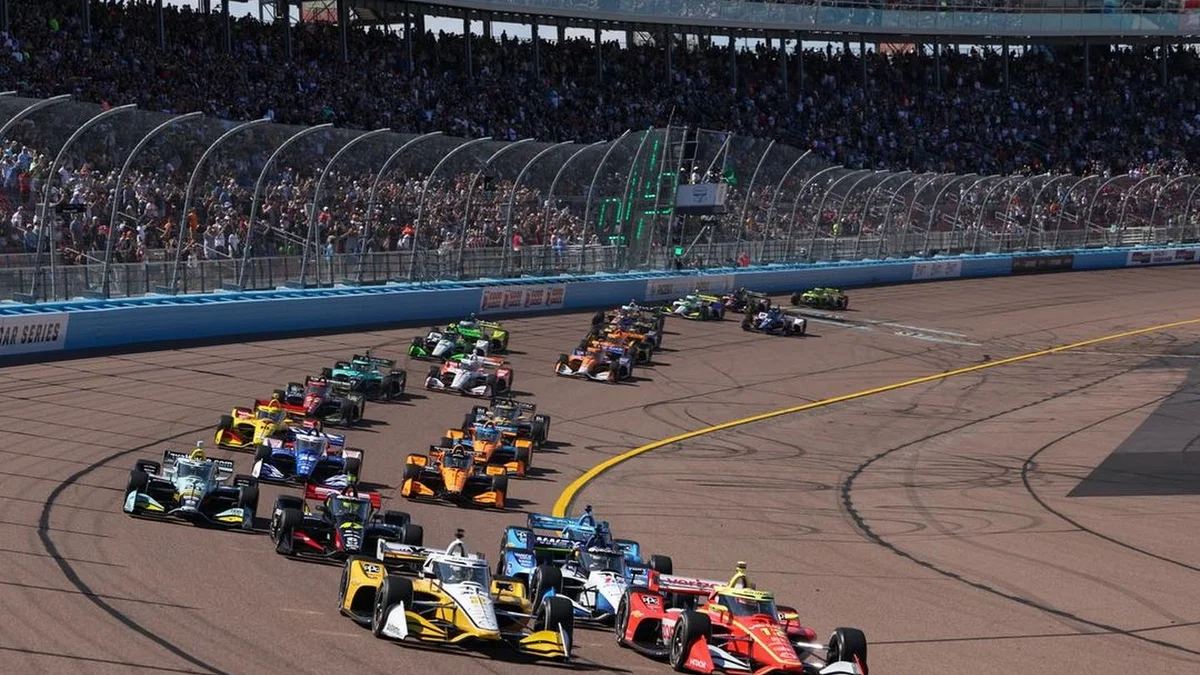
The collaborative future between NASCAR and the IndyCar Series remains bright as executives from both sanctioning bodies highlighted the success and fan appeal of shared racing weekends during the recent Autosport Business Exchange in New York.
The two premier racing series in North America made headlines earlier this year with a "Desert Double" weekend at Phoenix Raceway in March. The event featured a thrilling 250-lap IndyCar race that produced 565 total passes, including 18 lead changes among 11 different drivers, before Team Penske's Josef Newgarden charged to a late victory on Saturday prior to the NASCAR O'Reilly Auto Parts Series race that evening. The action capped off on Sunday with the NASCAR Cup Series headline event.
The successful joint format is set for an encore at Phoenix Raceway from March 12–14, 2027, where IndyCar and the O'Reilly Series will once again share the Saturday lineup ahead of Sunday's Cup race. Discussions suggest next year's running could even feature IndyCar as the day's primetime event.
Joint weekends are not completely unprecedented for the two entities. The concept first took root during the COVID-19 pandemic in 2020, when IndyCar and the NASCAR O'Reilly (then Xfinity) Series raced on the Indianapolis Motor Speedway infield road course on Saturday ahead of the NASCAR Cup Series event on Sunday. The dual-header arrangement continued on the IMS road course from 2021 through 2023 before the format ended as NASCAR returned the Brickyard 400 to the legendary oval.
AJ Allmendinger, Kaulig Racing, LeafHome Water Solutions Chevrolet Camaro and Ty Gibbs, Joe Gibbs Racing, He Gets Us Toyota Supra
Reflecting on the recent success at Phoenix, discussion turned to the measurable benefits and operational challenges of cross-series collaboration.
Jonathan Gibson, Executive Vice President of Marketing and Business Development at Penske Corporation, pointed to significant growth in ticket sales and fan engagement resulting from the joint scheduling.
"Well, it wasn't the first one, Phoenix," Gibson noted. "We started at Indianapolis Motor Speedway with the road course event we did, in '21 and Jimmie (Johnson) was there for that. And I think that we saw a huge lift. Number one, last year, Saturday at Phoenix, I think, was up 100% from a ticket sales standpoint, where you had IndyCar and the O'Reilly Series. And so, I think that, number one, the drivers like it. They like being around the ecosystem and their competitors and other series, but the fans love it. And I think that you're not going to see us do it every weekend, but obviously we're doing Phoenix again next year. And there's probably other opportunities for us to collaborate as well."
Tim Clark, Executive Vice President and Chief Brand Officer at NASCAR, echoed Gibson's optimism, pointing out how much intrigue the crossover generates among drivers and fans alike.
"Yeah, I agree, and I think there's the competitors, it was interesting to watch," Clark said. "Typically, when our drivers aren't on track, they're trying to have what little time they have on the weekends. But when the IndyCar guys were on track, everyone was watching. And I think, back to the earlier point, it's fantastic for the fans, again, of motorsports, not of a particular discipline, to be able to see them. I mean, the IndyCar guys were on track, and within an hour and 15 minutes later our O'Reilly Series was on the track. And to be able to see those side by side, so to speak, to have the differences, it's great for motorsports. And I think there's more to come between NASCAR and IndyCar."
To read more Motorsport.com articles visit our website .
Topics in this story
Gathered from external sources. Rights to this text belong to whoever originally published it.