Chivas and a show of class in San Luis Potosí
Guadalajara defeated Atlético de San Luis 0-3 on Matchday 7 of the 2026 Apertura, in a display of ruthlessness, pressure, and adaptability that once again hi...
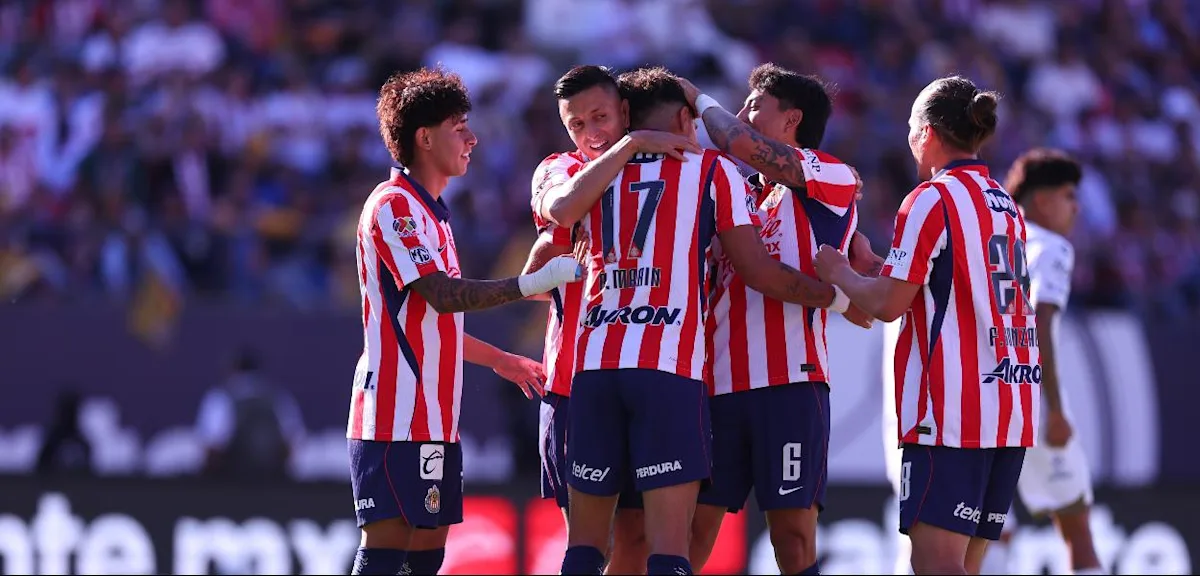
Guadalajara defeated Atlético de San Luis 0-3 on Matchday 7 of the 2026 Apertura, in a display of ruthlessness, pressure, and adaptability that once again highlighted the wealth of resources in Gabriel Milito's team. Some matches are won by a single detail. Others, by an individual moment of brilliance. And then there are performances like Chivas' in San Luis, where the result ends up being merely a reflection of a dominance built through different phases of play.
The 0-3 win at Estadio Alfonso Lastras was a snapshot of what Guadalajara can offer when its pieces correctly execute the game plan. High pressure, clean buildup from the back, the ability to pin the opposing defensive line, and above all, excellent reading from the bench to change the course of the match when Atlético de San Luis tried to respond.
One of Guadalajara's main strengths was its pressing. Chivas constantly disrupted San Luis' buildup and, from that work, recovered the ball in areas that allowed them to attack with an advantage. The defensive structure also had an important adjustment with the return of Daniel Aguirre, who settled in as the right-sided stopper and gave the team a cleaner way out from the back.
Hugo Camberos and Roberto Alvarado did not have to cover great distances as wing-backs. Both played much higher up, more like wingers, which allowed Chivas to have greater presence and width in the opposing half. And when the match began to get bogged down, another virtue emerged: the ability to change roles without having to completely alter the structure.
Alvarado began to get involved much deeper in the buildup, moving closer to the first passes and helping give continuity to possessions. 'Piojo' not only contributed in the attacking half; he also became an important piece in playing out from the back.
Three forwards against three center-backsThe first goal perfectly summed up one of the ideas Gabriel Milito had laid out for the match: creating a three-versus-three scenario against Atlético de San Luis' center-backs. Ángel Sepúlveda, Ricardo Marín, and Santiago Sandoval were tasked with pinning back San Luis' defensive line. Sandoval, who essentially acted as a third striker, perfectly read the space that opened up between the center-backs and appeared there to finish and make it 0-1. It was not an isolated play. It was the consequence of an idea.
Chivas managed to give the home defenders clear references against the red-and-white attackers and, at the same time, found spaces to attack between the lines. The second goal once again showed that same intention.
Sepúlveda received the ball with his marker practically glued to him, but he used his body to shield it and laid it off first-time for Ricardo Marín. The Chivas striker took advantage of the move and finished brilliantly to extend the lead. Two goals, two examples of how Guadalajara managed to make the most of its attackers' qualities.
Milito moved the pieces againAtlético de San Luis changed its approach in the second half. The home side came out more aggressively, took possession, and for several minutes managed to push the match into Chivas' half. Chivas lost some control and the scenario seemed different from the first half. That was when another of Guadalajara's great strengths appeared: its ability to adjust.
Gabriel Milito changed two pieces and once again found the match. The introduction of Efraín Álvarez gave the team a player capable of staying wide on the left, but also of drifting inside. Kevin Castañeda came on to add presence between the lines and behind San Luis' midfielders, while Chivas sacrificed a striker to gain an extra man in that area.
The effect was immediate. Guadalajara once again found better connections and regained control of the ball. Even the first passes began to come from players we usually think of as attackers. Alvarado and Álvarez got involved from deeper positions, offering passing lanes and helping build attacks from the back.
That detail is important: Chivas did not rely solely on its center-backs or midfielders to start plays. Its own attackers were able to become builders.
The third, another display of combination playThe 0-3 scoreline put the finishing touch on the performance. Ricardo Marín once again played with his back to goal, pinned his marker, and laid the ball off precisely for Richard Ledezma, who faced the goal and unleashed a powerful shot that beat the San Luis goalkeeper.
A combination that once again put on display one of this Guadalajara side's great characteristics: the ability to create advantages through short combinations, movement, and players capable of interpreting different roles.
Ledezma also delivered very good minutes after coming on down the right wing. His contribution brought freshness and depth in the closing stages.
A team with answersThe win in San Luis matters because of the three points, but also because of everything it explains. Chivas was able to press, build, pin defenders back, attack spaces, adjust its height, and respond when the opponent changed its approach. It was a team that found solutions from its initial structure, but also from the bench. And that speaks to the number of resources Gabriel Milito has at his disposal.
Guadalajara showed that it can dominate a match in different ways. It can do so with high pressure, with positional attacks, with direct play into its forwards, or by creating superiority between the lines. On a difficult ground, the Rebaño delivered a complete performance and earned a convincing 0-3 win that allowed it to climb the standings. Chivas has resources. Milito has alternatives. And San Luis was further proof of that.
Topics in this story
Gathered from external sources. Rights to this text belong to whoever originally published it.