Inspiring story on hard work: “You can overcome something, if and only if you love something enough” – How Lionel Messi turned a childhood growth hormone deficiency into eight Ballon d’Or wins
Lionel Messi was ten when doctors in Rosario found that his body wasn't making enough growth hormone.
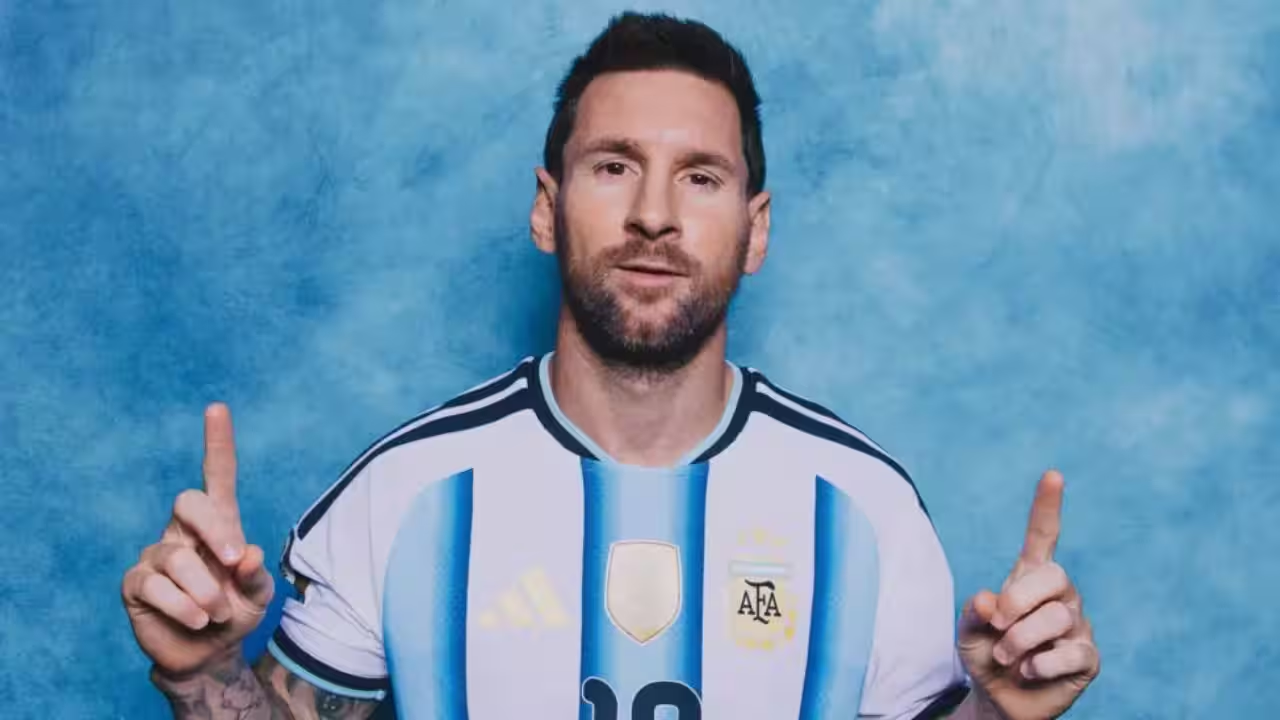
Lionel Messi was ten when doctors in Rosario found that his body wasn't making enough growth hormone. The treatment cost about $900 a month, and his family could not keep up the payments. Barcelona offered to cover the bill, and a boy who barely reached his classmates' shoulders grew up to win eight Ballon d'Or awards, more than any player in history. A line often credited to him explains why he never quit: "You can overcome something, if and only if you love something enough." Here is what it means and how his story backs it up.What Messi meant by "overcome something, if and only if you love something enough"On the surface, the line is simple. Love is the fuel, and obstacles are what it burns through. But the words "if and only if" make it stricter than the usual feel-good advice. Love becomes the one condition that matters. Talent, money and luck can all help, yet without real love for the thing itself, the struggle stops being worth it.Where he said it is harder to pin down. The line has circulated for years on quote websites, and Indian outlets such as Free Press Journal ran it again as a quote of the day on his 39th birthday, 24 June 2026. None of them points to a dated interview or speech, and I could not trace one either. It is best treated as a widely attributed saying, not a verified press-conference moment.That caution matters less than it sounds, because other lines credited to him point the same way. "Everything I did, I did for football, to achieve my dream." And: "You have to fight to reach your dream. You have to sacrifice and work hard for it." Read together, they describe someone who treated football as the point of his life, not a hobby that happened to pay well. His biography gives the words their weight, and it starts in Rosario.How a growth hormone deficiency nearly ended Messi's football dreamMessi was born on 24 June 1987 and picked up a ball almost as soon as he could walk. His father, Jorge, a steelworker, coached a local side, and his grandmother Celia, his first big fan, took him to practice. At Newell's Old Boys, he ran through youth defences. He was also much smaller than everyone else.By ten, his parents knew this was more than a late growth spurt. Doctors diagnosed a growth hormone deficiency. Treatment meant regular injections, and it cost roughly $900 a month. Newell's helped with the bill for a while, then stopped. A steelworker's income and health cover could not carry it alone.Picture what that does to a family. A child with obvious talent, a medical cost they can't meet, and a clock ticking on his growth. River Plate, one of Argentina's biggest clubs, was interested but reportedly would not pay for the treatment either. Football wasn't rejecting Messi. His body, and the price of fixing it, were the real obstacles.The napkin deal and the nightly injections that followedBarcelona saw what Argentina's clubs couldn't. Messi flew to Spain for a trial in September 2000, aged 13, and the club's staff knew quickly they were watching something rare. Sporting director Carles Rexach was reluctant to wait. On 14 December 2000, he wrote an agreement on a paper napkin, and a formal contract followed. Barcelona agreed to pay for the treatment, and the Messi family moved across the Atlantic.The move was not easy. Messi was a shy teenager in a new country, living at the club's La Masia academy while his family struggled to settle. His mother and siblings went back to Rosario for a time. He stayed with his father and kept working.By most accounts, he injected himself in the leg every night for years. Nobody could do it for him, and nobody could play on his behalf. This is the part of the story that makes the quote feel earned. Doing something difficult once is bravery. Doing it every night for years, when you are barely a teenager, is closer to what the quote describes. The treatment worked, and he reached about 5ft 7in, short for an elite striker but enough to compete.From the smallest player on the pitch to eight Ballon d'Or winsMessi made his Barcelona first-team debut in October 2004, aged 17. Many coaches argue his size became an asset, since a low centre of gravity and close control made him very hard to knock off the ball. That is an interpretation, not a medical claim, but his dribbling certainly looked built for tight spaces.The awards followed in bulk. He won the Ballon d'Or in 2009, 2010, 2011, 2012, 2015, 2019, 2021 and 2023. That is eight, a record no other player has reached.The trophies only tell half of it. For years, critics said he had not delivered for Argentina. He lost the 2014 World Cup final and consecutive Copa América finals in 2015 and 2016. After the second, he announced his international retirement, then reversed it. Walking away would have been easier, but he stayed. He won the 2021 Copa América, the 2022 World Cup as captain, and the 2024 Copa América.His eighth Ballon d'Or came in 2023, when he was 36, a long way from a 10-year-old needing a monthly bill paid.Get the latest Sports News and Live updates. Download the TOI app.
Topics in this story
Gathered from external sources. Rights to this text belong to whoever originally published it.