OTD (4/11/1972): Billy Elliott’s Sunderland Debut Brings Fireworks
Billy Elliott took temporary charge after Alan Brown's shock departure in November 1972. Could his first game at the helm spark a revival at Roker Park?
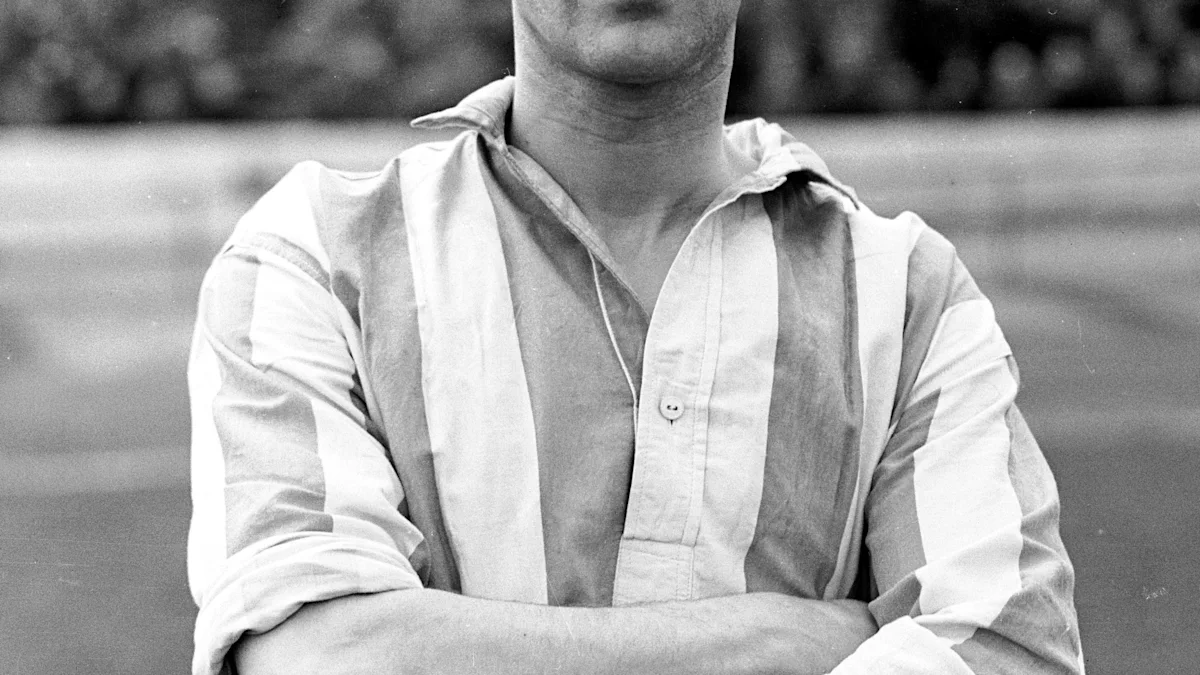
Alan Brown was not the first manager I experienced at Roker Park, but he was the manager I grew up with. His departure was something of a shock to me as a young fan. I had assumed that, like my parents, he would always be there!
Billy Elliott had been shown the door at Roker Park as a player by Alan Brown in 1957. He had then been invited back as a coach in 1968. One of Elliott's first jobs was coaching the youth team and, in 1969, he coached that team to the FA Youth Cup final and victory.
Fourteen games into the 1972/73 season, with the club in 14th position in the table and gates dipping below 12,000, Brown resigned and Billy Elliott was installed as caretaker manager whilst the board figured out if they could get Clough or Revie (the fans' choice) in as Brown's replacement.
Aston Villa at Roker Park was to be Elliott's first game in temporary control.
Typical of the blunt-speaking Yorkshireman that he was, he told Ken Gorman of The Journal: "I am no stuffed dummy, I wouldn't worry about having to speak my mind to anyone, including our directors."
Elliott was 47 years old at the time. He had gained five England caps as a player at Bradford, Burnley and Sunderland, before finishing off at non-league Wisbech Town, having been released by Brown.
Hanging up his boots, Elliott had gone on to coach the Libyan national team, USA servicemen in Germany and manage Belgian club Royal Daring, before coming back to Roker Park as part of Brown's coaching team.
For his first game in temporary control, he wasted no time in making some tough decisions. He dropped Joe Bolton and John Lathan and relegated Mick McGiven to the subs' bench, bringing in transfer-listed Keith Coleman and Brian Chambers, as well as Billy Hughes, who had just come off the transfer list.
He moved Bobby Kerr back to the right-hand side of midfield and opted for a very attacking line-up to try and end a run of one point from four games.
Aston Villa, like Sunderland, were something of a sleeping giant. Managed by the experienced Vic Crowe, they were pushing hard for promotion and were well in touch at this point in the season. Even though the dangerous forward Andy Lochhead was not available, Villa had a strong squad that included some players who would go on to have fine careers. The likes of Chris Nicholl, John Gidman, Alun Evans, Brian Little and Bruce Rioch were players who would grace the game for a generation.
Sunderland's biggest gate of the season, 7,000 up on the last home game, turned up to see if the team could react to Alan Brown's departure – and what a spirited, all-action performance they saw.
I had just made it to my left-of-centre position in the Fulwell End when Villa captain Bruce Rioch attempted a long diagonal pass back to his keeper. The ball fell invitingly for the returning Billy Hughes, who strode majestically forward, rounded Cumbes in the Villa goal and nonchalantly put the ball in the back of the net. What a start to the game and what a roar it got from the crowd.
Hughesie had a characteristic way of marking his goals, and I can picture him still, arms aloft, strutting like a peacock and milking the applause. He knew how to celebrate a goal and work the crowd, did Billy!
The goal was the signal for Sunderland to pour forward at every opportunity, and for 20 minutes Villa could hardly get a touch as Ian Porterfield stroked the ball all over the park to ready and willing team-mates eager to add to the lead they had taken. Cumbes more than earned his match bonus in this period alone, as he just about kept Villa in the game.
It was typical of the way things had gone for us in this season so far that the first error made led to a Villa equaliser.
Keith Coleman had enjoyed a great opening period to the game, with a couple of good runs, solid tackles and interventions, as well as some clever use of the ball. Despite being a big Joe Bolton fan, I always thought Coleman worked in well with Ian Porterfield on that left-hand side.
One area of his game that needed work, in my opinion (as a young teenage expert!), was his tendency towards an impetuous challenge. He went for a tackle he had no right to go for against Bruce Rioch, who slipped the challenge and, in the space he had created, slammed a cracking shot from the edge of the box that went in off the foot of the post. It was a good goal by Rioch, who probably felt he needed to atone for his opening-minute error.
Rioch then took the game by the scruff of its neck and had two blockbuster attempts that caused a bit of frantic defending. His first shot had Jimmy Montgomery scuttling across his goal as the ball flew just past the post. Then another shot, which was goalbound, cannoned off a defender and fell to Evans in the box. His attempt was cleared brilliantly off the line by Dick Malone.
Back came Sunderland through Dennis Tueart. A drive down the right wing led to a powerful shot that Cumbes saved, diving full-length. Moments later, Tueart came down the left wing and cannoned a shot that had the Fulwell End surging in anticipation of the net rippling. The ball sped just past the post.
Half-time saw the Lads warmly applauded from the pitch. It had been a pulsating 45 minutes.
The second half resumed in the same fashion as the first, with both teams looking for the next goal. It was a sharp contrast to some of the games in the latter days of Alan Brown's reign, where low-risk, careful football appeared to be what the Sunderland team had been instructed to deliver.
Evans beat Richie Pitt all ends up with a mazy run and short pass to Peterlee-born Brian Little, whose attempt produced a marvellous point-blank save from Monty.
Rioch was influencing the game in every way possible, as he brought down Tueart right on the byline just after the hour. Ian Porterfield stepped up to take the kick and, with a clever feint, caressed a ball into the near post when it looked like he was going longer. The ball looked, in that split-second, as if it was going to nobody in particular, when a galloping Bobby Kerr arrived and got an angled touch with his head that deflected the ball at pace, across the keeper and in at the far post. If that was a rehearsed move, it was a cracker. The ground erupted as Bobby blessed us with his trademark forward-roll celebration.
Villa were no soft touch at this time and came back strongly. Just six minutes after conceding, they were back level. I remember this as a bit of a soft goal. An aimless cross looped into the box that should have been dealt with (highlighting a difficulty in the air defensively). Brian Little, possibly the second smallest player on the pitch behind Bobby Kerr, rose to get a scruffy touch on the ball. Montgomery might have done better with this one, but it seemed as if the awkward contact created a moment of indecision and the ball looped limply over his head and crept into the net at the angle of the bar and post.
It was a bit of a sickener, but back came Sunderland, with Porterfield finding a great pass to Watson (who had been engaged in a cracking contest with Villa centre-half Chris Nicholl for most of the game). His attempt was only an inch or two past the post.
What then ensued was a ding-dong battle as both teams went for the winner. Sunderland probably came the closest to finding this in the very last minute of the game, when Tueart had another rousing run and rasping shot that was saved by Cumbes at his near post.
On reflection, a draw was probably a fair result. Porterfield was player of the match for me, but honourable mentions go to Tueart and Kerr. The three lads returning to the team gave Elliott something to ponder for the next game, with Chambers showing some nice touches in midfield.
Villa manager Vic Crowe was satisfied with the result that kept his team in the promotion race. He told reporters: "It was a hard match played at a terrific pace."
Billy Elliott was delighted with the effort from his team, so much so that he gave them an extra day off.
The point gained actually saw Sunderland drop a place to 15th in the table, which seemed scant reward for the effort and application delivered.
Elliott hinted to The Journal's Ken Gorman that his relatively inexperienced defence was his priority and that he was considering moving Dave Watson back to centre-half, but would talk this through with Watson. Richie Pitt and Mickey Horswill had been given a torrid afternoon by Evans and Little, but had nonetheless stuck at their task.
Reflecting back on this moment, Dave Watson said: "Billy Elliott always thought I was wasted at centre-forward and that I had much more to give the team at centre-half. I had done alright as a centre-half playing centre-forward, but I felt much happier playing number five. I think Billy saw that and he thought I should be playing at the back, so he moved me there at the earliest opportunity."
Watson was moved back for the next game at Carlisle and, for all bar three games, he played in the number five shirt for the rest of the season, going on to have a stellar career at club and international level as a centre-half.
Elliott's (first) caretaker spell would only last for four games, as Bob Stokoe came in from left field to take the manager's post.
I do not think many of us could have envisaged, at this stage of the season, that we would finish a credible sixth in the table and that we would be FA Cup winners by the end of the campaign. A reminder of how quickly things can turn around in football.
Division Two Date – 04.11.1972 Venue – Roker Park Attendance – 18,717 Sunderland 2 – 2 Aston Villa Goal-scorers – Hughes 1 min; Rioch 20 min; Kerr 62 min; Little 67 min. Sunderland – Montgomery; Malone; Coleman; Horswill; Pitt; Kerr; Chambers; Porterfield; Hughes; Watson; Tueart. Sub – McGiven. Aston Villa – Cumbes; Gidman; Aitken; Nicholl; Turnbull; Ross; Rioch; Vowden; Anderson; Little; Evans. Sub – Brown.
Date – 04.11.1972 Venue – Roker Park Attendance – 18,717 Sunderland 2 – 2 Aston Villa
Goal-scorers – Hughes 1 min; Rioch 20 min; Kerr 62 min; Little 67 min.
Sunderland – Montgomery; Malone; Coleman; Horswill; Pitt; Kerr; Chambers; Porterfield; Hughes; Watson; Tueart. Sub – McGiven.
Aston Villa – Cumbes; Gidman; Aitken; Nicholl; Turnbull; Ross; Rioch; Vowden; Anderson; Little; Evans. Sub – Brown.
Topics in this story
Gathered from external sources. Rights to this text belong to whoever originally published it.