Top WWE Moments That Could Be Horror Movies
October ushers in the Halloween season, when horror movie fans embrace all things haunting, macabre and terrifying.
October ushers in the Halloween season, when horror movie fans embrace all things haunting, macabre and terrifying.
It also offers wrestling fans a chance to revisit WWE's long history of incorporating horror into its programming—with varying degrees of success.
In celebration of all things that go bump in the night, make the hairs on your arms stand up and send shivers down your spine, relive these moments from the last four decades of WWE television—each worthy of a horror movie in its own right.
Imagine if the giant snake in Anaconda had feasted on Jennifer Lopez's character, or the titular serpent had gotten the best of Jessica Rothe's character in Beware Boiúna .
That was the situation in 1991, when Jake "The Snake" Roberts produced a live cobra and taunted "Macho Man" Randy Savage as the reptile bit into the Hall of Famer's biceps.
Miss Elizabeth and fans in attendance and watching at home looked on in horror, fearing for the former WWE champion's safety.
Savage would recover and get revenge on Roberts, but the attack remains unsettling to watch today—especially for viewers afraid of snakes.
He didn't carry red balloons or ask young fans in the front row if they could float too, but the original incarnation of Doink the Clown was evil nonetheless.
Taking great delight in tormenting fans and wrestlers alike, the evil jester would chuckle one moment, then stare menacingly into the camera the next, his expression suddenly turning deadly serious.
It wasn't one particular moment that made the original Doink terrifying—it was the entire experience. He laughed and joked like an innocent circus clown but behaved like a vile, deceitful horror villain.
Much of that could be credited to Matt Borne and his understanding of how to bring Doink to life. His performance gave the character a sinister depth and helped establish a legacy that endures today.
As long as you stop watching before his ill-fated babyface turn.
Still, Doink evoked Tim Curry's portrayal of Pennywise in 1990's It . Beneath the seemingly harmless clown exterior lurked a sinister edge—a reminder that appearances could be deceiving.
The introduction of The Fiend to the WWE Universe came in what was already essentially a film of sorts.
In the spring of 2019, Bray Wyatt was badly in need of a reboot—and he delivered, introducing the wrestling world to the Firefly Fun House. Channeling Mr. Rogers, he greeted the audience with enthusiasm, but a dark, sinister edge lurked beneath his cheerful demeanor.
Each week, fans ventured further down the rabbit hole until Wyatt introduced one of WWE's most terrifying characters: The Fiend.
Wyatt's alter ego was the stuff of nightmares. With a mask designed by acclaimed horror movie effects artist Jason Baker in collaboration with Wyatt, The Fiend was as unsettling as it was cool.
When he made his in-ring debut at SummerSlam in 2019, fans became even more engrossed in what they were seeing.
With an extraordinarily frightening presentation—and a great concept behind it—The Fiend should have been an even bigger success than it was. Unfortunately, as with many disappointing horror sequels, muddled creative direction diluted what made it one of the most revolutionary horror-themed characters in pro wrestling history.
Still, that first incarnation of the character was pure cinema. Enough that Universal Studios included Wyatt, The Fiend and The Wyatt Sicks spin-off as part of the 2025 Halloween Horror Nights haunted house exhibit.
Imagine believing your brother died in a house fire that also killed your parents. Then, two decades later, your former friend tells you that your brother is still alive—and is coming back for revenge because he believes you started the fire.
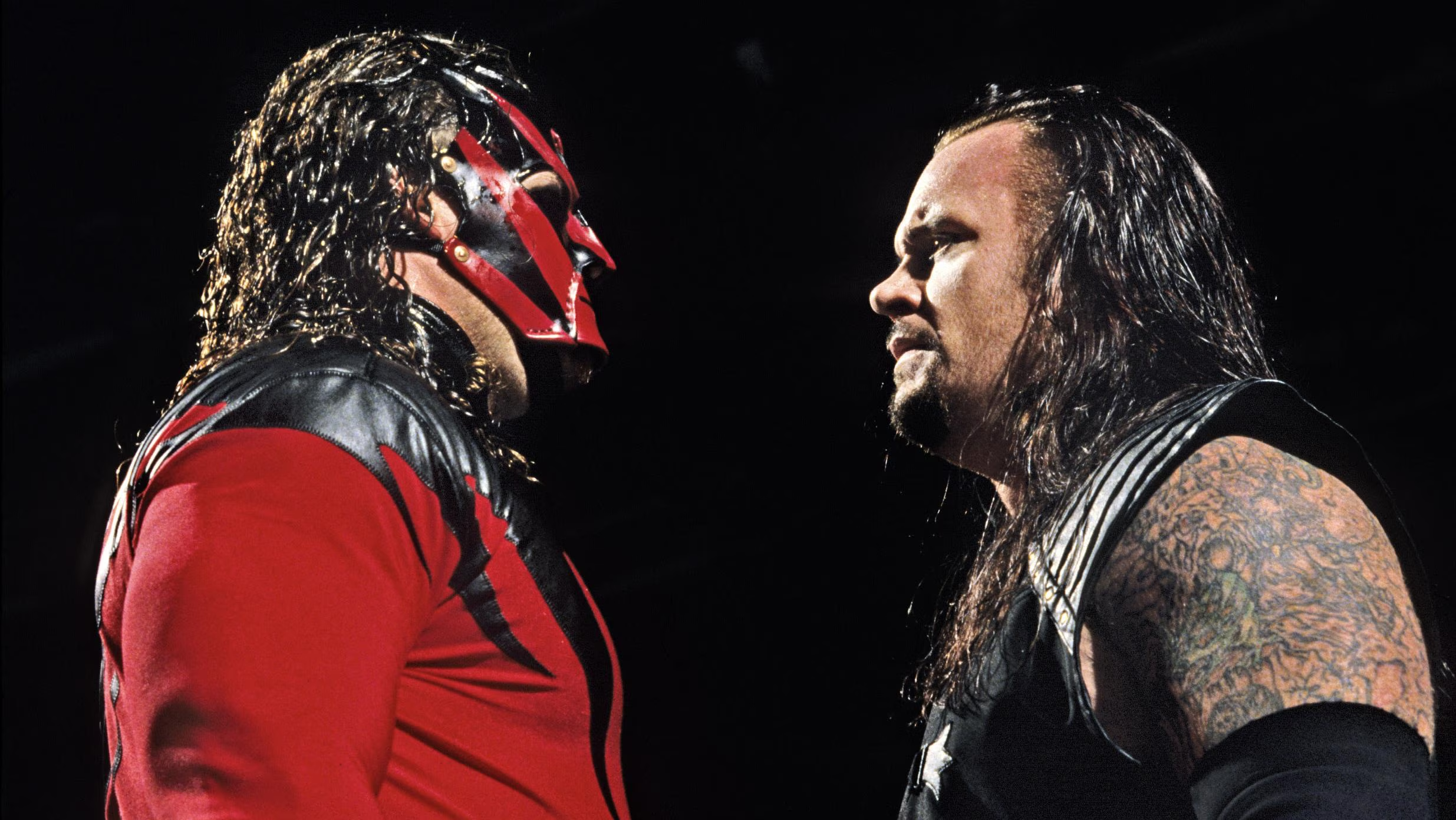
That was the scenario The Undertaker found himself in as In Your House: Badd Blood rolled around in October 1997. With the threat of Kane's impending arrival hanging over him, Undertaker watched as The Big Red Monster stalked toward the squared circle, interrupting his Hell in a Cell match with Shawn Michaels.
Kane came face-to-face with The Phenom, and fans saw a rare sight: The Undertaker showing fear.
The Deadman looked genuinely scared as his brother stood across from him, Kane's supposedly burned face hidden behind a red-and-black mask.
Kane dropped 'Taker with a Tombstone piledriver that night, costing him his match against Michaels and setting the stage for one of the most epic story arcs in WWE history.
This storyline was worthy of the big-screen treatment, delivering pure cinema as it built toward the brothers' iconic WrestleMania 14 showdown the following March.
Few fates are more horrific than being buried alive and slowly running out of air. Horror fans have seen that scenario play out countless times, but Ryan Reynolds' performance in 2010's Buried offers a particularly effective portrayal of the desperation it inspires.
In 1991, fans watched in horror as The Ultimate Warrior experienced a similar scenario.
The former WWE champion found himself on the receiving end of a sneak attack from The Undertaker, who emerged from a coffin and jumped him from behind.
From there, Undertaker slammed Warrior into a casket and locked it shut. For several minutes, officials struggled to free Warrior, using tools to pry it open. They eventually freed him, but the scene suggested the damage had already been done.
Undertaker and Warrior never got a major pay-per-view blowoff, leaving the angle without a definitive payoff. Even so, it terrified a generation of young fans and offered a glimpse of how dark The Deadman's character could become.
Big Boss Man would find that out eight years later, but the less said about that one, the better.
Topics in this story
Gathered from external sources. Rights to this text belong to whoever originally published it.