LaMelo Ball Gives Anthony Edwards Fresh Chance to Cut Down on Ugly Turnovers
The Minnesota Timberwolves have asked Anthony Edwards to carry the offense by himself on too many plays. He has brought the ball upcourt, made the initial mo...
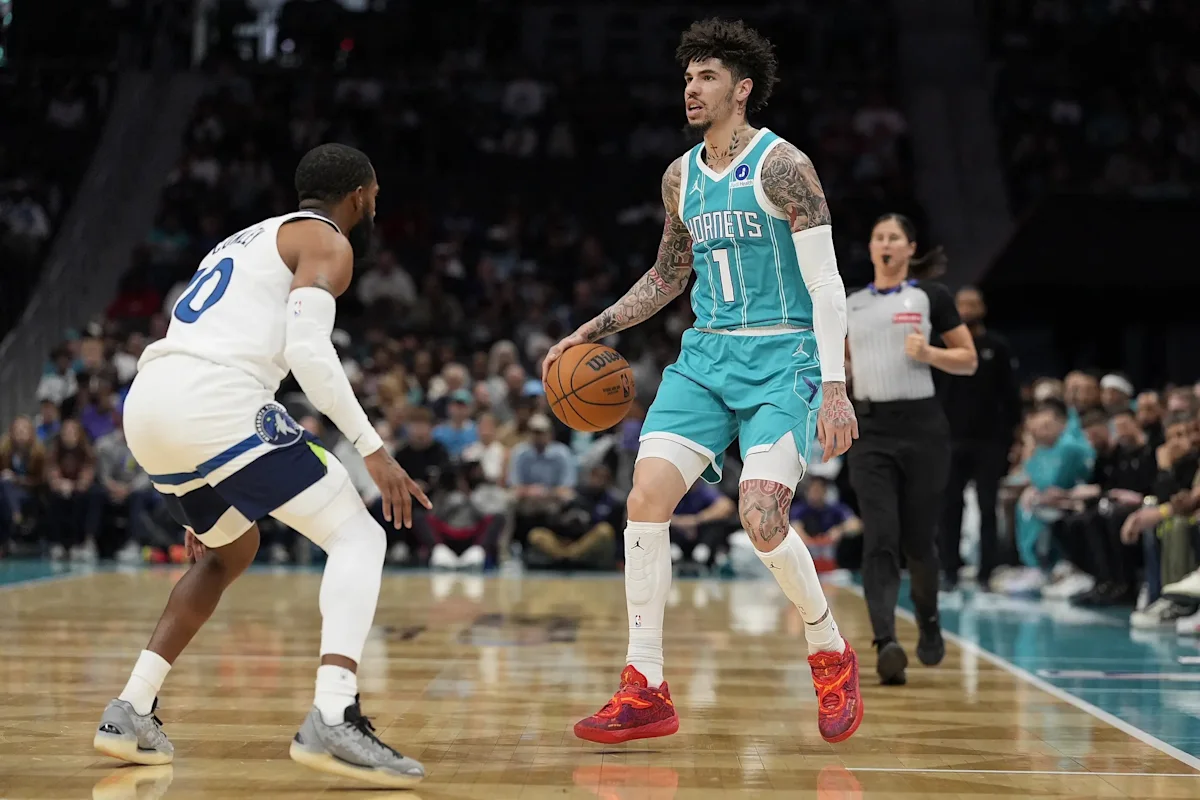
The Minnesota Timberwolves have asked Anthony Edwards to carry the offense by himself on too many plays. He has brought the ball upcourt, made the initial move past his defender, and often had to make a desperation pass when the offense stopped moving.
Now LaMelo Ball gives Minnesota another guard who can start the plays. That addition could change not just how often Edwards loses the ball, but why those mistakes happen in the first place.
LaMelo Ball Gives Anthony Edwards Fresh Chance to Cut Down on Ugly Turnovers
Edwards averaged 28.8 points, 3.7 assists and 2.9 turnovers in 61 games last season. He also shot a career-best 48.9% from the field and 39.9% from three, so the issue was not that he was inefficient every time he handled the ball.
The bigger issue was the amount of work attached to those possessions. Edwards was often the player expected to create something when the first action failed, which meant more chances to score and more chances to make a mistake. That same burden was a major part of Minnesota's turnover problem last season.
That is where the new backcourt changes the conversation.
Ball put up 20.1 points and 7.1 assists for Charlotte last season. Now, he gives the Timberwolves a main ballhandler who can set up the offense and make that quick first pass to kickstart a play.
That takes a ton of playmaking pressure off Edwards . He does not have to create every single shot from the top of the key anymore, and now he can catch the ball after Ball has already forced the defense to scramble.
This change is significant and is more important than just reducing his turnover rates.
There is a massive difference between cutting down on turnovers and just making different kinds of mistakes.
When Edwards is the primary ballhandler from the jump, he has to face a locked-in, set defense and figure out a way to break it down. With Ball running the point first, Edwards gets to catch the pass after a defender has already blown their coverage or got pulled out of position.
That makes life way simpler for him. Instead of burning five seconds on the shot clock trying to cook his defender, he can shoot it, attack a closeout, or make the extra pass.
But do not expect the turnovers to vanish completely. Edwards is still going to attack the paint like a maniac, and heavy downhill drives will always lead to a few wild passes or lost balls. The real goal is to put him in better positions to take smart risks, not to turn him into a passive player who fears making mistakes.
This is where the new duo actually pays off.
A turnover does not always mean a player made a brain-dead read. Sometimes it is just the tax you pay when you force a superstar to bail you out with a junk shot late in the shot clock.
Minnesota needs to eliminate those ugly possessions. If Ball can initiate the offense and let Edwards attack a defense that is already scrambling, the Wolves give their best scorer a much easier mental workload.
That will boost his efficiency. Edwards shot 48.9% from the field and 39.9% from deep last year, so the real goal now is letting him hunt buckets without forcing him to carry the entire play on his back.
But there is one major catch to this whole plan.
Ball is definitely not some magic, mistake-free fix for Edwards' playmaking struggles. He coughed up 2.8 turnovers per game last season alongside his 7.1 assists, which shows how aggressively he tries to make plays.
So do not think Minnesota is suddenly erasing turnover risk from their offense. They are basically just shifting that messy responsibility onto someone else's shoulders.
That can still be a massive win, though, if it means Edwards spends way more time finishing plays in the end zone and less time trying to spark them from the backfield.
Chris Finch has to make the new backcourt work differently. If Edwards still has to take the ball out, start the action, and rescue every broken possession, then adding Ball will not change much.
The Wolves need a clearer order. Ball can organize the first part of the possession, while Edwards can decide when to attack after the defense has already been forced to move.
That is a much better use of both players, and it builds on the new job Edwards faces with Ball beside him.
The real test will come when opponents have seven games to study the Wolves' backcourt.
A playoff defense will try to make Minnesota's creators uncomfortable. It will decide which player it wants to help from, which action it wants to take away, and which passer it is willing to live with.
That is where the Ball-Edwards partnership has to prove itself. Minnesota cannot simply hope the two guards share the ball well. The Wolves need their new division of labor to produce better possessions when defenses become more aggressive.
Edwards does not need to become a point guard who makes fewer turnovers. He needs to become a scorer who is asked to make fewer unnecessary decisions.
That is the opportunity Ball gives him. The Wolves will know the experiment is working when Edwards' mistakes become less frequent, his scoring chances become cleaner, and the offense no longer depends on him solving every possession himself.
Photo Credit: Jim Dedmon, Imagn Images via Reuters Connect
Topics in this story
Gathered from external sources. Rights to this text belong to whoever originally published it.