Why Carrick Had To Drop Manchester United Captain Bruno Fernandes
Why Michael Carrick had to drop Bruno Fernandes, what recent dressing-room disputes reveal, and whether a harder line can turn Manchester United’s troubled s...
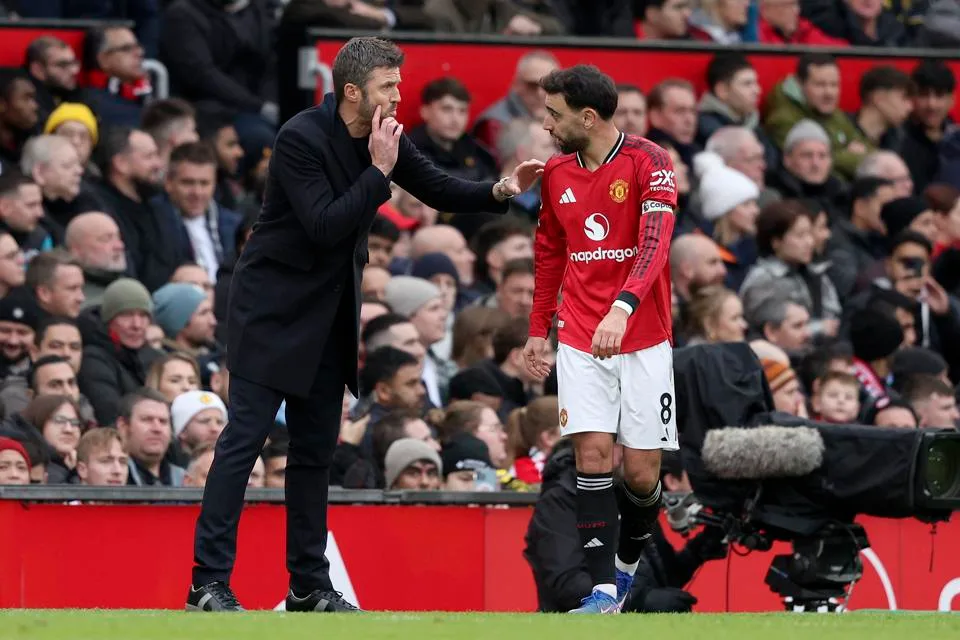
Michael Carrick was left with no choice. Whether he'd made the decision in the immediate aftermath of Bruno Fernandes's public criticism of his tactics in Como last week or shortly before last weekend's defeat to Bournemouth, the Manchester United head coach had to act.
His captain had left him with no choice. For Carrick to retain any level of credibility within the Old Trafford dressing room – or, in fact, show he won't tolerate such insubordination in a future role – he had to leave the Portuguese out of his next team.
Carrick claimed Fernandes was dropped for "purely sporting reasons" when quizzed about the decision following the 3-0 loss against Bournemouth, although it's easy to assume there was more to it. To leave out an ever-present skipper and his side's best player only days after giving the interview Fernandes did is a mighty coincidence otherwise.
But while the beleaguered coach's show of strength didn't reap immediate rewards, if there is any hope of a reprieve in the coming weeks, he needs to take a hard-line approach.
It's a common move made by bosses trying to get hold of a difficult dressing room, either at a point of crisis or upon their arrival. It's a jolt to the team that shows every player, regardless of talent or status, has to buy into the expected discipline of the club – and that extends to publicly sounding off about the manager.
In Carrick's playing days, he wouldn't have dared speak out against legendary United boss Alex Ferguson and while Fergie's iron-fist approach may not have had quite the same effect in the modern game, the theory remains sound. The man in charge can't be willingly undermined.
Another of Carrick's predecessors, Erik ten Hag, wasn't averse to doing the same when it was needed. He left out Cristiano Ronaldo after the forward refused to come on as a substitute against Spurs – a rift that ended with Ronaldo leaving the club – and named Marcus Rashford on the bench after the Englishman missed a team meeting.
It's not just a United thing, either. Only last season, Chelsea imposed a two-game internal suspension on Enzo Fernandez after the Argentinian made public overtures towards Real Madrid, while Mo Salah was left out of the Liverpool squad when he spoke about being "thrown under the bus" and his failing relationship with boss Arne Slot.
A key moment in Mikel Arteta's early reign at Arsenal also came when he stripped Pierre-Emerick Aubameyang of the captaincy for not returning home on time from a club-approved visit to France in 2021.
Some of these incidents end more successfully than others. But while there are many more factors at play for a coach, history suggests that maintaining strong standards and values is always a strong basis to work from.
For Carrick, the question is if he turns to Fernandes again for this weekend's match with Chelsea, which the United boss is expected to remain in charge of despite rumours about his job security.
Since the Bournemouth defeat, the Red Devils captain has been noted for liking an Instagram post about "loyal people getting taken for granted". What goes on behind the scenes will likely dictate what happens next, but taking Fernandes out of the firing line for only one game may not be deemed more than a token effort.
Instead, there's a fair chance that Carrick names Fernandes on the bench at Stamford Bridge again and expects him to earn his place back in the side from there. It shouldn't be too difficult given United's abject run of form.
Although if Carrick can stumble upon an effective way of playing without his talisman in the team, creating a more balanced midfield that doesn't play almost entirely through the playmaker, there's no guarantee how this ends.
The trouble for Carrick and Manchester United as a whole is that, with Fernandes in the team or not, the trajectory is unequivocally downwards.
Topics in this story
Gathered from external sources. Rights to this text belong to whoever originally published it.