Why did CAS overturn AFCON final decision? Explaining court ruling to reinstate Senegal as African champions
After a long battle to protect the on-field result of the 2025 AFCON title match, Senegal have been reinstated as champions of Africa in a seismic decision b...
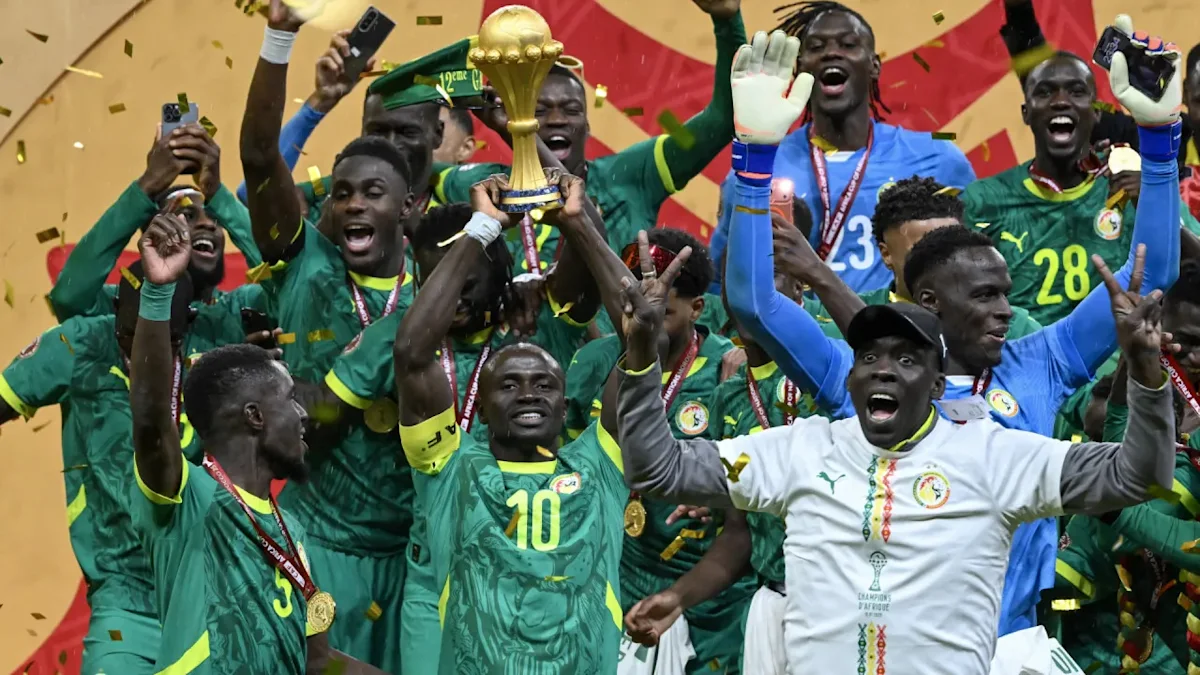
Senegal may have won the Africa Cup of Nations title all the way back in early 2026, but they have been fighting to protect their trophy through nearly the entirety of the calendar year.
Now, the Lions of Teranga have officially — and finally — retained their continental championship.
After defeating Morocco 1-0 in a controversial and contentious final on January 18, Senegal saw their title stripped in mid-March, with the African federation (CAF) reversing the result of the match and awarding Morocco the title based on a technicality.
Now, that decision itself has been overturned, and the result of the match reinstated, leaving Senegal with their second-ever AFCON championship.
CAS overturns AFCON final decision, reinstates Senegal as champions
On Tuesday, November 24, the Court of Arbitration for Sport handed down a seismic ruling that shifted the balance of power in African football once again.
CAS officially reinstated Senegal as AFCON 2025 champions, reversing the decision by the African federation (CAF) to disqualify the 1-0 final winners and hand Morocco the title by default.
Why did CAS name Senegal as AFCON champions?
The Court of Arbitration for Sport determined that Senegal were the rightful winners of the 2025 AFCON final, reinstating the final score of the match and overturning the CAF ruling that they should be disqualified.
According to the CAS decision, Senegal were deemed winners of the game because the tournament regulations were wrongly applied in favor of Morocco.
"AFCON Regulations are intended solely to determine the outcome of a match when a team's conduct leads the referee to call off the game permanently, they are therefore not applicable in this case," the CAS decision read. "After having examined the arguments raised by the Parties, the Arbitral Panel considered that the Referee's decision to resume the match or stop it fell definitively within his sole authority. By blowing his whistle to restart play, the Referee considered that the conditions for resuming the match had been met — both teams were on the pitch again, and both expressed their willingness to resume. "In the Panel's view, there is no doubt that the effects of the referee's decision were limited to the pitch. As such, the panel considers that the referee's decision was covered by the 'field of play' doctrine. "Since Articles 82 and 84 of the AFCON Regulations are intended solely to determine the outcome of a match when a team's conduct leads the referee to call off the game permanently, they are therefore not applicable in this case. In conclusion, the panel considers that in resuming the match, the referee did not err in law." "The panel acknowledged that the referee had to make a decision in an atmosphere of extreme tension. However, these circumstances do not justify describing the decision as 'arbitrary.' On the contrary, the Referee's judgment did not appear to have been affected by factors external to the game."
"AFCON Regulations are intended solely to determine the outcome of a match when a team's conduct leads the referee to call off the game permanently, they are therefore not applicable in this case," the CAS decision read.
"After having examined the arguments raised by the Parties, the Arbitral Panel considered that the Referee's decision to resume the match or stop it fell definitively within his sole authority. By blowing his whistle to restart play, the Referee considered that the conditions for resuming the match had been met — both teams were on the pitch again, and both expressed their willingness to resume.
"In the Panel's view, there is no doubt that the effects of the referee's decision were limited to the pitch. As such, the panel considers that the referee's decision was covered by the 'field of play' doctrine.
"Since Articles 82 and 84 of the AFCON Regulations are intended solely to determine the outcome of a match when a team's conduct leads the referee to call off the game permanently, they are therefore not applicable in this case. In conclusion, the panel considers that in resuming the match, the referee did not err in law."
"The panel acknowledged that the referee had to make a decision in an atmosphere of extreme tension. However, these circumstances do not justify describing the decision as 'arbitrary.' On the contrary, the Referee's judgment did not appear to have been affected by factors external to the game."
Why was AFCON 2026 final result overturned?
Deep in stoppage time of the 2026 Africa Cup of Nations final, with the score still unblemished, Congolese referee Jean-Jacques Ndala Ngambo awarded Morocco a penalty and a chance to win the match.
The decision was made to whistle for a foul on Brahim Diaz by El Hadji Malick Diouf. The Senegal full-back was judged to have pulled Diaz to the ground during a corner.
The match quickly descended into chaos, as Senegal players protested in full voice. Manager Pape Thiaw summoned his players to the sideline and encouraged them to leave the field of play, apparently in protest. After a few minutes of arguments on the touchline, the team headed down the tunnel to the locker rooms, with the exception of captain Sadio Mane.
Eventually, Mane was able to recall the group back out onto the pitch to continue the game, and goalkeeper Edouard Mendy saved Diaz's penalty. The game went to extra time, and Senegal would emerge as winners after Pape Gueye scored a 94th-minute goal.
On March 17, CAF ruled that Senegal were "declared to have forfeited" the 2026 Africa Cup of Nations final , and Morocco were declared winners of the match by a 3-0 default score. The adjudication came as a result of an official appeal by Morocco regarding the result of the match.
CAF ruled that Senegal's decision to leave the pitch to protest a refereeing decision was a violation of Articles 82 and 84 of the AFCON regulations, which stated that: "If, for any reason whatsoever, a team withdraws from the competition or does not report for a match, or refuses to play or leaves the ground before the regular end of the match without the authorisation of the referee, it shall be considered loser and shall be eliminated for good from the current competition. The same shall apply for the teams previously disqualified by decision of CAF."
CAF's appeal board argued that by leaving the pitch for more than 10 minutes, Senegal had refused to play, and thus should be eliminated from the competition.
For all intents and purposes, the Court of Arbitration for Sport is the highest court in the land for these decisions.
However, there could be one avenue left for Morocco and CAF to pursue if they wish to continue this fight.
The only appeal remaining for Morocco is to the Swiss Federal Court, which they could legally pursue. However, this appeal would be on procedural grounds only and would not be heard on the facts or substance of the case itself.
According to multiple reports right before the CAS decision was revealed on Tuesday, including from French journalist Romain Molina , there was a phone call between Senegal FA president Abdoulaye Fall and Ulrich Haas, one of the three CAS judges. This could potentially constitute a legal quagmire, as CAS arbitors are meant to be completely impartial in these cases.
It's unclear at this point if Morocco wish to pursue this legal avenue.
Topics in this story
Gathered from external sources. Rights to this text belong to whoever originally published it.