Weight-loss drugs in sport: Ozempic, Mounjaro not on Wada banned list for athletes
Athletes will not be banned from using weight-loss drugs, but the substances will remain on a monitoring list.
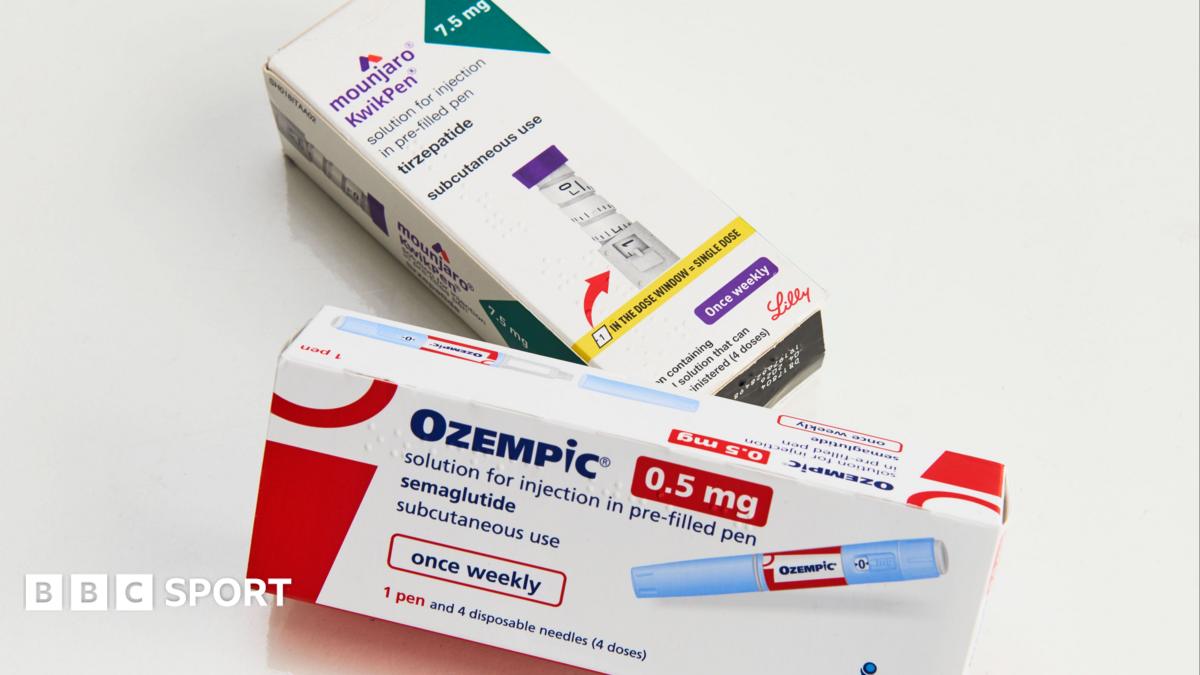
Athletes will not be banned from taking weight-loss drugs under the World Anti-Doping Agency's rules for 2027, but the substances will remain on its monitoring list.
Wada confirmed the decision following a meeting of its executive committee as it continues to examine the potential of the drugs, known as GLP-1 receptor agonists, to enhance performance and the risk of abuse in sport.
The rules take effect in January and are reviewed annually.
Medications such as Ozempic and Mounjaro have become increasingly common outside elite sport.
The 23-time Grand Slam singles champion Serena Williams revealed last year - while on a break from professional tennis - that she had been using weight-loss medication.
Professor Olivier Rabin, Wada's senior director for science and medicine, warned athletes to be "very careful using those drugs and never without medical advice and supervision".
"It's such a drastic change in your physiology that it can come with serious side effects and risks, in particular for athletes," he told BBC Sport.
Semaglutide, often marketed under the Ozempic and Wegovy banners, was first placed on Wada's monitoring list in 2024. Tirzepatide, commonly branded as Mounjaro, was added this year.
For a substance to move from the monitoring list to the prohibited list, it needs to meet two of three criteria: that it can enhance sport performance, it poses a health risk to an athlete, or it violates the spirit of sport.
Wada has started one study and is preparing another to examine the effects of the drugs in conditions designed to mimic high-level exercise.
"It's still going to take us a little bit of time to collect all this information, because they are highly controlled studies in very specific conditions," said Rabin.
"What we want to see is whether some of the pharmacological impact on human physiology that has been observed in obese patients would also occur in non-obese, highly trained people."
Rabin said potential benefits could also be offset by side effects such as nausea, fatigue and the loss of muscle mass.
"If you're an athlete and you lose muscle mass, that may be very counterproductive for what you're trying to achieve," he said.
"So all these elements show you that it's not a very straightforward answer."
Under the usual timetable, a change approved at next September's executive committee meeting would take effect in January 2028.
Which sports could be at risk of misuse?
Weight-loss drugs seem most likely to appeal to athletes in weight-category sports such as boxing and wrestling, as well as horse racing, where jockeys have to meet strict weight requirements.
"A lot of sports would benefit from weight control and weight management," said Rabin.
"Not only those in weight-category sports, but all sorts of sports."
He highlighted long-distance runners and cyclists as other athletes with weight control "very high on their agenda".
"There are sports as well where aesthetics play a role," he said. "It can be gymnastics, can be horse riding, can be many different sports where you don't have weight categories, but physical appearance is quite important."
Very few athletes have spoken publicly about using weight-loss drugs. The most high-profile is Williams, who said she struggled to lose weight after having children.
She is also a spokesperson for Ro, a company which sells GLP-1s and in which her husband is an investor.
A recent Loughborough University study, , external which surveyed more than 100 sports medicine physicians around the world, found 12% were aware of athletes using GLP-1 drugs despite having no medical need for them.
Topics in this story
Gathered from external sources. Rights to this text belong to whoever originally published it.