Welles Crowther’s inspiring 9/11 story: How a former Boston College lacrosse player became the man in the red bandana
International Sports News: Twenty-five years after September 11, 2001, the story of Welles Crowther still carries a powerful message about courage. A former Boston College lacro.
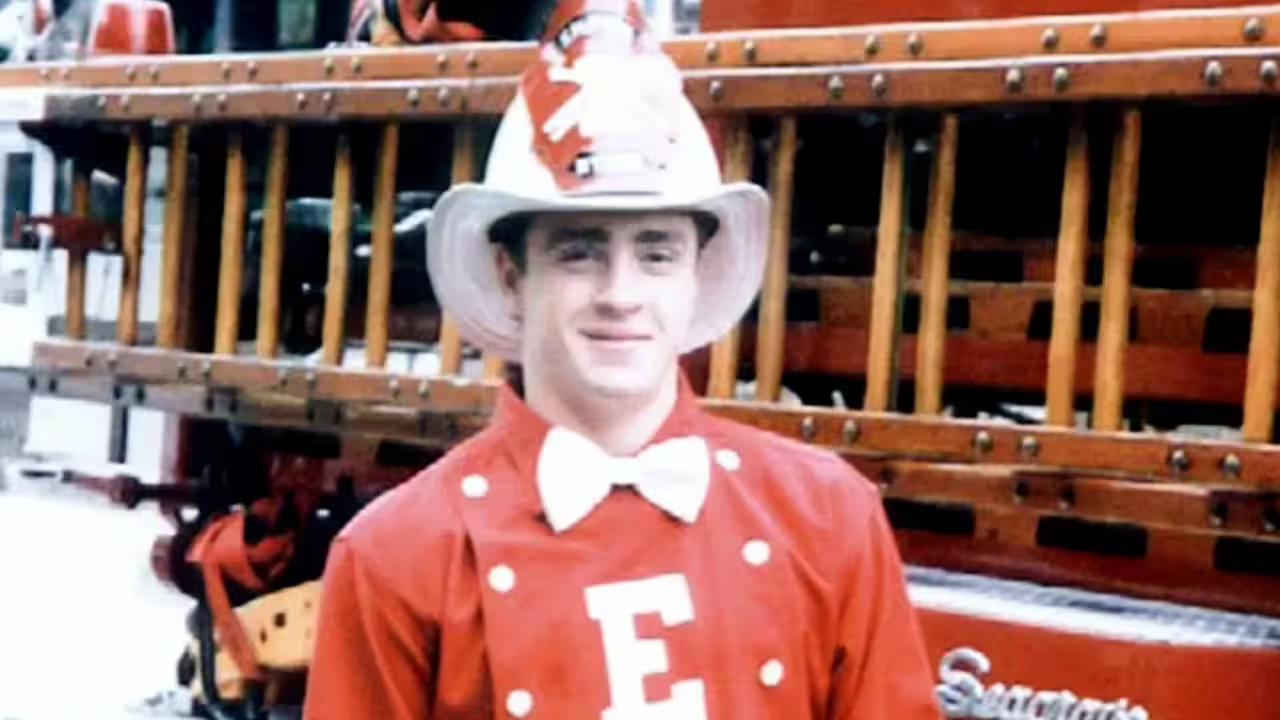
Twenty-five years after September 11, 2001, the story of Welles Crowther still carries a powerful message about courage. A former Boston College lacrosse player working in the World Trade Center, Crowther chose to help others when thousands were trying to escape. His red bandana became a symbol of hope for survivors and a lasting reminder of one man’s extraordinary decision to put strangers before himself.Welles Crowther and the red bandana that became his legacyCrowther had carried a red bandana since childhood. His father gave it to him when he was six, and it eventually became part of his identity.Long before the tragedy, Crowther had already shown an interest in helping others. At 16, he signed up to become a junior firefighter. His father, Jefferson Crowther, later remembered a conversation that showed where his son's ambitions were heading.“Welles called me one day and said, ‘I think I want to change my career,’ ” his father, Jefferson Crowther, recalled in a 2019 ESPN feature, The Man in the Red Bandana. “He said, ‘I think I want to be a New York City firefighter.’ ”Instead, Crowther began a career in finance. In 1999, he joined an equity firm and worked on the 104th floor of the South Tower.On September 11, 2001, his professional life became secondary to something far more urgent.After the attacks, survivors recalled a young man moving through the smoke and confusion, helping injured people and directing them toward safety. They did not know his name. They remembered the red bandana covering his face.One survivor, Ling Young, later described the moment Crowther appeared.“A young man come out of nowhere. This man’s voice said, ‘I found the stairs, follow me and only help the ones you can help.’ It was the way he said it, we just got up and we followed.”Crowther helped people reach a functioning stairwell and guided them toward firefighters. But rather than leaving with those he had helped, he went back upstairs.That decision became the defining part of his story.The man in the red bandana became a 9/11 heroCrowther continued moving through the South Tower, helping people escape and providing assistance to those who were injured. Judy Wein was among those he helped, according to accounts later shared by her husband, Gerry.“She had just come out of surgery,” Gerry recalled of the days after the terrorist attack. “At that point, she could hardly speak but she wanted to tell me what happened. She said a young man appeared out of nowhere. She watched as he went around helping people, putting out fires and administering aid to the injured,” he recalled.For Crowther’s parents, the mystery surrounding their son’s final hours lasted for months. They eventually learned about the unidentified rescuer described by survivors. When they showed photographs of Crowther, survivors recognized him as the man who had guided them.Crowther’s body was later found in the lobby of the South Tower alongside firefighters. Accounts credit him with helping as many as 12 people survive the attacks.His actions also created a legacy that reached far beyond New York.In 2006, Crowther was posthumously named a New York City firefighter. That same year, his Boston College teammate Tyler Jewell honored him while competing in the Winter Olympics.“For me, the red bandana symbolizes everything I want to be and everything Welles was,” Jewell said in The Man in the Red Bandana. “Strength, honor, courage — he’s a true hero.”The red bandana has since become closely associated with Crowther’s memory at Boston College. The school’s annual Red Bandanna Game keeps his story alive for a new generation of students and athletes.The tradition is more than a tribute to a former lacrosse player. It reflects the values that Crowther displayed when his own safety was at stake.His story remains striking because he did not know the people he helped. He had no guarantee that anyone would remember his name. He simply saw people who needed help and acted.That is why Welles Crowther’s legacy has endured. The red bandana is easy to remember, but the choice behind it is what made him a hero.Get the latest Sports News and Live updates. Download the TOI app.
Topics in this story
Gathered from external sources. Rights to this text belong to whoever originally published it.