Jalen Coker and Tyler Allgeier Lead This Fantasy Football Waiver Wire Debate After a Wild Week 2
The fantasy football waiver wire is heating up, with Jalen Coker and Tyler Allgeier emerging as intriguing options for managers looking to add depth.
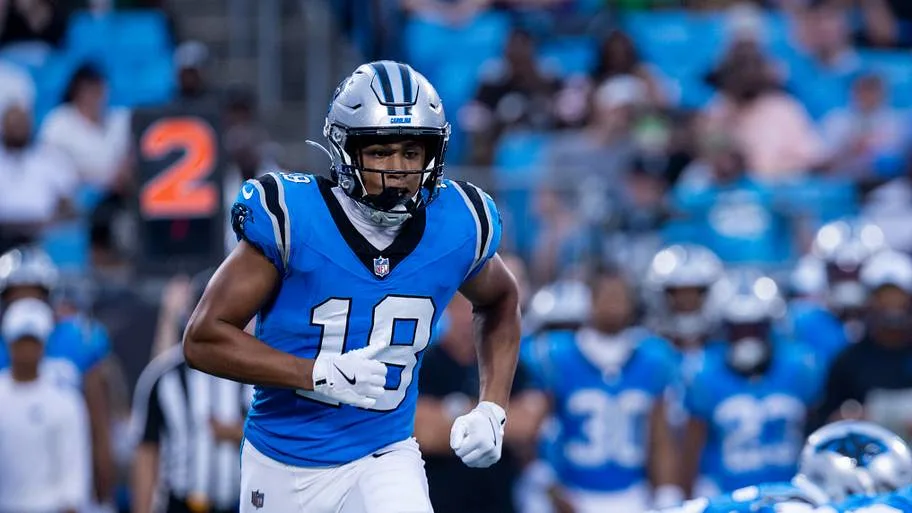
When early-season injuries and unexpected depth chart shakeups hit, fantasy managers are forced to make high-stakes decisions on the waiver wire. Early in the season, two distinct types of targets emerge. The explosive wide receiver flashing immediate target-earning ability and the opportunistic running back inheriting a sudden, high-volume backfield role.
The debate centers on Jalen Coker (WR, Carolina Panthers) and Tyler Allgeier (RB, Arizona Cardinals). Both saw their valuation spike after unexpected usage trends. The debate hinges on what you value more in fantasy football. Is it high-upside receiving efficiency? Or is it floor-raising backfield volume?
Snap Percentage: 78% snap rate, establishing himself as a full-time route runner.
Routes Run/ Opportunities: 32 routes run on 38 dropbacks (84% route participation).
Red-Zone Usage: 2 red-zone targets, converting both into touchdowns.
Recent Role Change: shifted from a rotational slot option to a primary perimeter and power-slot hybrid, stepping up alongside Tetairoa McMillan
Snap Share: 57% snap share in favorable games, dropping to 34% in negative game scripts.
Efficiency: 3.59 yards per carry on early downs in Week 1, dropping to 2.0 YPC against Seattle's front in Week 2.
Red-Zone Opportunities: 3 red-zone carries, including 2 goal-line attempts inside the 5-yard line.
Team Situation: In line for a heavy workload while rookie Jeremiyah Love works through a lingering ankle injury and James Conner resides on injured reserve.
When comparing path to volume, Allgeier has a higher floor when game scripts favor the run , while Coker controls the higher-ceiling path to earned volume . Allgeier's volume is heavily game-script dependent. In Week 1 against the Chargers, Allgeier saw a backfield-leading 17 carries and logged a 60% rushing share in a close contest. In Week 2 against the Seahawks, as the Cardinals fell behind early, his workload evaporated to just 5 carries.
Coker earns his volume through route efficiency. His 28% target rate per route run (TPRR) and 4.31 yards per route run (YPPR) in Week 2 demonstrate elite target-earning ability. While WR targets fluctuate, Coker's 11.2 average depth of target and 26% target share suggest his volume comes with high-value air yards.
If you need a spot-start running back hoping for positive game script, Allgeier offers a solid solution. If you want high-value targets that can win a matchup on their own, Coker holds a significant edge.
Coker: Moderate floor (5-7 targets per game) with a high-end WR2 ceiling if he sustains a 20%+ target share.
Allgeier: Volatile floor (3-17 touches depending on game script) with a capped ceiling due to low passing-game involvement and 0 touchdowns scored through two weeks.
Coker: Positioned to consolidate his role as a primary receiving option alongside McMillan, maintaining an 80%+ route participation rate.
Allgeier: Rotational early-down back. While Conner is sidelined, he will share work with Love, likely capping out around a 45-50% overall backfield share.
The core distinction between these two waiver wire targets comes down to situational running back depth versus true season-long breakout potential. Allgeier is a short-term option for roster-strapped managers who is in desperate need of a running back and hoping for positive game scripts. Coker is a priority add for managers who's seeking an ascending, target-earning pass-catcher who possesses multi-week fantasy starter upside.
Topics in this story
Gathered from external sources. Rights to this text belong to whoever originally published it.