FIA introduces strict rules to prevent ‘tricks’ within the cost cap regulations
The FIA is significantly tightening the rules for Formula 1 teams from 2027 onwards. The motorsport federation wants to prevent teams from gaining an advanta...
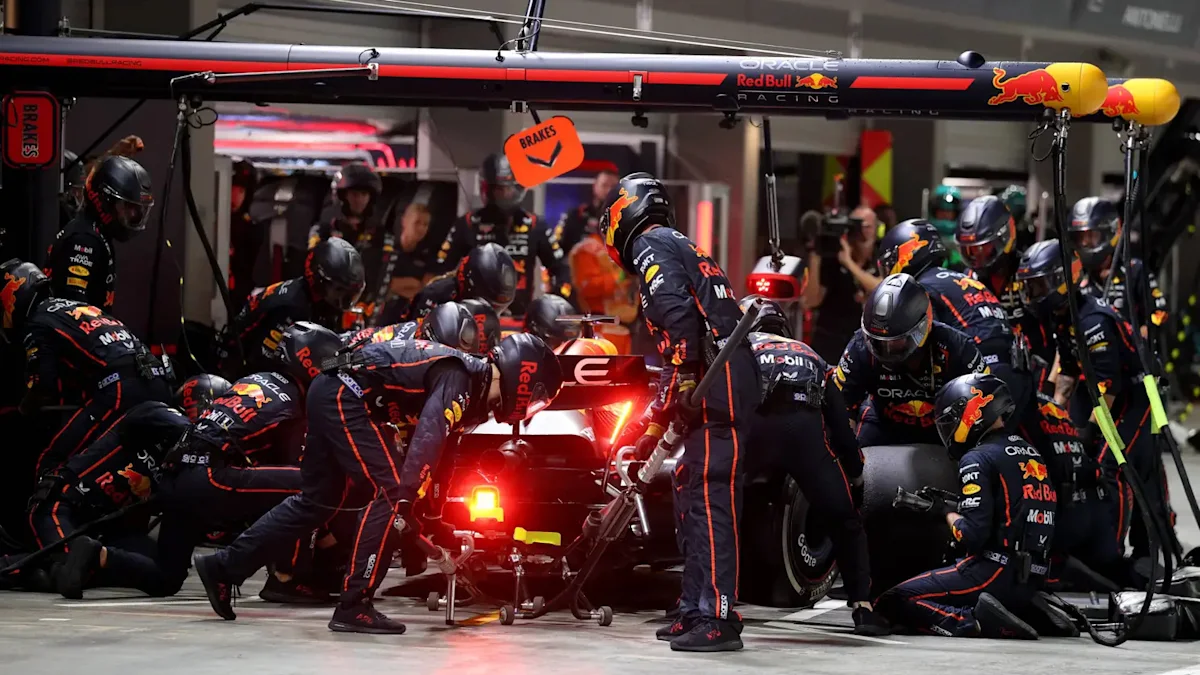
The FIA is significantly tightening the rules for Formula 1 teams from 2027 onwards. The motorsport federation wants to prevent teams from gaining an advantage through other projects within their organisations that fall outside the cost cap. The measures go so far that they could even affect where employees are allowed to work.
The cost cap limits how much teams can spend on their Formula 1 operations. Its purpose is to prevent the wealthiest teams from investing unlimited funds in their performance. Enforcement becomes more complicated, however, when an organisation has departments working on other technologies alongside its F1 team.
Red Bull, for example, has its 'Advanced Technologies' division, Mercedes has 'Applied Science', and Aston Martin has 'Performance Technologies'. Ferrari is also working on the Hypersail sailing project. These activities are separate from Formula 1, but the technical expertise they develop could also be of interest to the racing departments.
That is the FIA's concern. An employee could officially be working on a project outside Formula 1 while their expertise also benefits the F1 team. The associated costs would then remain outside the cost cap, even as the team benefits from their work. However, there is no proof that teams have actually broken the rules in this way.
The FIA has previously introduced measures to prevent such arrangements. For example, technical expertise transferred to the F1 team from another department had to be counted towards the cost cap. It was also stipulated that the full salaries of employees contributing to F1 activities must fall within the spending limit. From 2027, the governing body is going a step further. A new 12-page chapter in the operational regulations requires a strict separation between the F1 department and employees working on other projects.
The FIA has significantly tightened a number of rules - Photo: Red Bull Content Pool
This means, among other things, that the two groups will no longer be allowed to work in the same office. Factories must be divided into restricted-access zones with electronic entry controls. Teams must retain access logs for three years so the FIA can later check who entered which areas. Facilities such as wind tunnels, simulators and engine test benches may still be used by both departments under certain conditions. However, employees from the two groups may not be present at the same time, and no information may be exchanged.
Restrictions will also apply to shared spaces. Employees can still have lunch together in the canteen, but they may not carry out their actual work there. The same applies to other shared areas, such as corridors and car parks.
Separate offices alone are not enough. IT systems must also be kept apart so employees cannot access information belonging to the other department. Teams may not circumvent the restrictions through messaging services, external storage devices or contractual arrangements either. Under limited circumstances, expertise may be transferred from the F1 department to a project outside Formula 1.
The reverse route is also being closed off: information from those other projects may not flow to the F1 team. The FIA wants to prevent an organisation from conducting research outside the cost cap and then using the results to make its Formula 1 car faster.
Formula 1 teams face further restrictions related to the budget cap - Photo: Red Bull Contentpool
Moving between departments within the same company will become harder
The transfer of employees between departments will also be restricted. Anyone moving to the F1 team from a project outside of the competition must first complete a three-month period without any work, and during that time, the employee is barred from accessing the restricted IT systems. They must then commit contractually to working exclusively on F1-related matters for at least 12 months.
Strict conditions will apply to moves in the opposite direction as well. An F1 employee moving to another technical department must receive a new contract, revised access rights and a new email address. That employee must then work exclusively for the new department for 12 months. Their salary will also continue to count towards the F1 cost cap for that year. This means a team cannot simply move staff to another department during the season to free up cap space.
Topics in this story
Gathered from external sources. Rights to this text belong to whoever originally published it.