Explaining New NHL Rule Changes for 2026-27 Season and Details on Stanley Cup Bracket
The new collective bargaining agreement the NHL and NHLPA ratified in July 2025 goes into effect on September 16, just ahead of the 2026–27 regular season. There are numerous changes affecting everything from on-ice play, off-ice behavior and financial/contract terms.
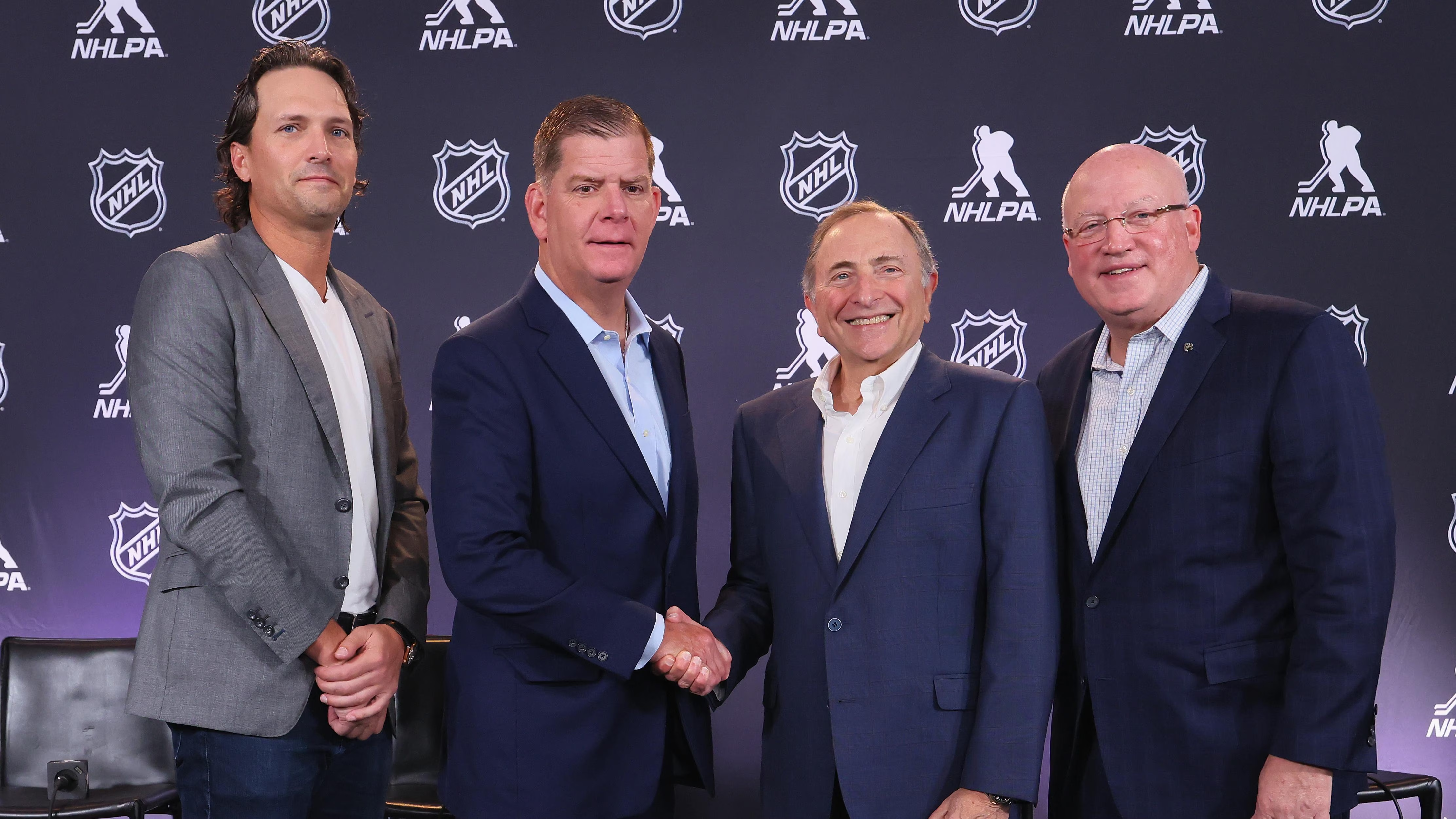
The new collective bargaining agreement the NHL and NHLPA ratified in July 2025 goes into effect on September 16, just ahead of the 2026–27 regular season. There are numerous changes affecting everything from on-ice play, off-ice behavior and financial/contract terms.
For instance, the CBA formally confirms NHL player participation in international events like the Winter Olympics following their return to the Milan Cortina 2026 games. It also eliminates the league-wide dress code, which will make for interesting game-day arrivals.
Other rules, including regular season expansion and changes to the salary cap and contract lengths, won't be as obvious on the ice but will greatly impact how teams retain talent.
Let's break down the biggest rule changes ahead of the 2026–27 NHL season.
The biggest change to the 2026–27 regular season will be in the number of games played. Every team will play 84 games, up from 82, for the first time since 1993–94.
Every team will play two additional games against divisional opponents, making it an even four games against every team in its division, two home and two away. This makes the divisional schedule much more uniform.
To offset the two extra in-season games, however, the new CBA reduces the number of preseason games to four max, with veterans who have 100+ career NHL games capped at playing in just two.
New Players Required to Wear Neck Protection
Beginning in 2026–27, any player with zero previous NHL games must wear cut-resistant neck protection, including goaltenders.
This rule is not retroactive, so if a player saw time in even one game before 2026– 27, neck protection remains optional.
The rule also applies during pregame warm-ups.
Sadly, in 2026–27 we must bid adieu to one of the greatest traditions in sports: random emergency backup goalies. Local Zamboni drivers and accountants can no longer suddenly get the call to appear in net, rush to the arena and enjoy a night of playing the game at the highest level.
Moving forward, teams must now designate a full-time, dedicated EBUG who travels with the team and participates in practices. This player must never have played an NHL game under a Standard Player Contract, must have played in fewer than 80 professional games at any level and cannot have played professional hockey in the past three seasons.
If activated during an emergency, the EBUG will sign either an amateur tryout or professional tryout contract, which allows them to sit on the bench without counting against the team's active roster limits.
The one positive of this new rule is that the designated EBUG can participate in practices and morning skates, which could mean more rest for regular goalies.
1 Prospect Every Team Can Get Hyped About 🤩
Teams must dress lineups that comply with the salary cap during the Stanley Cup Playoffs, closing the loophole that previously allowed teams to stash high-salary players on long-term injured reserve during the regular season and use that freed-up space to play an over-the-cap roster in the playoffs.
Maximum contract lengths are reduced to seven years for staying with a current team or six years for unrestricted free agents.
Singing bonuses are capped at 60% of total contract value, which prevents teams from handing out contracts where over 90% of the money is paid upfront in bonuses. Teams are also completely prohibited from deferring salary or bonus money on new deals. For front-loaded contracts, the salary and bonus difference between adjacent years cannot exceed 20% of first-year compensation (down from 25%).
The maximum contract length has been reduced to seven years, and six years for unrestricted free agents.
Topics in this story
Gathered from external sources. Rights to this text belong to whoever originally published it.