The Top 25 Michigan men’s basketball players since 1989: No. 1
The end of the offseason is here. Find out who takes our top spot of the best Michigan basketball players since 1989:
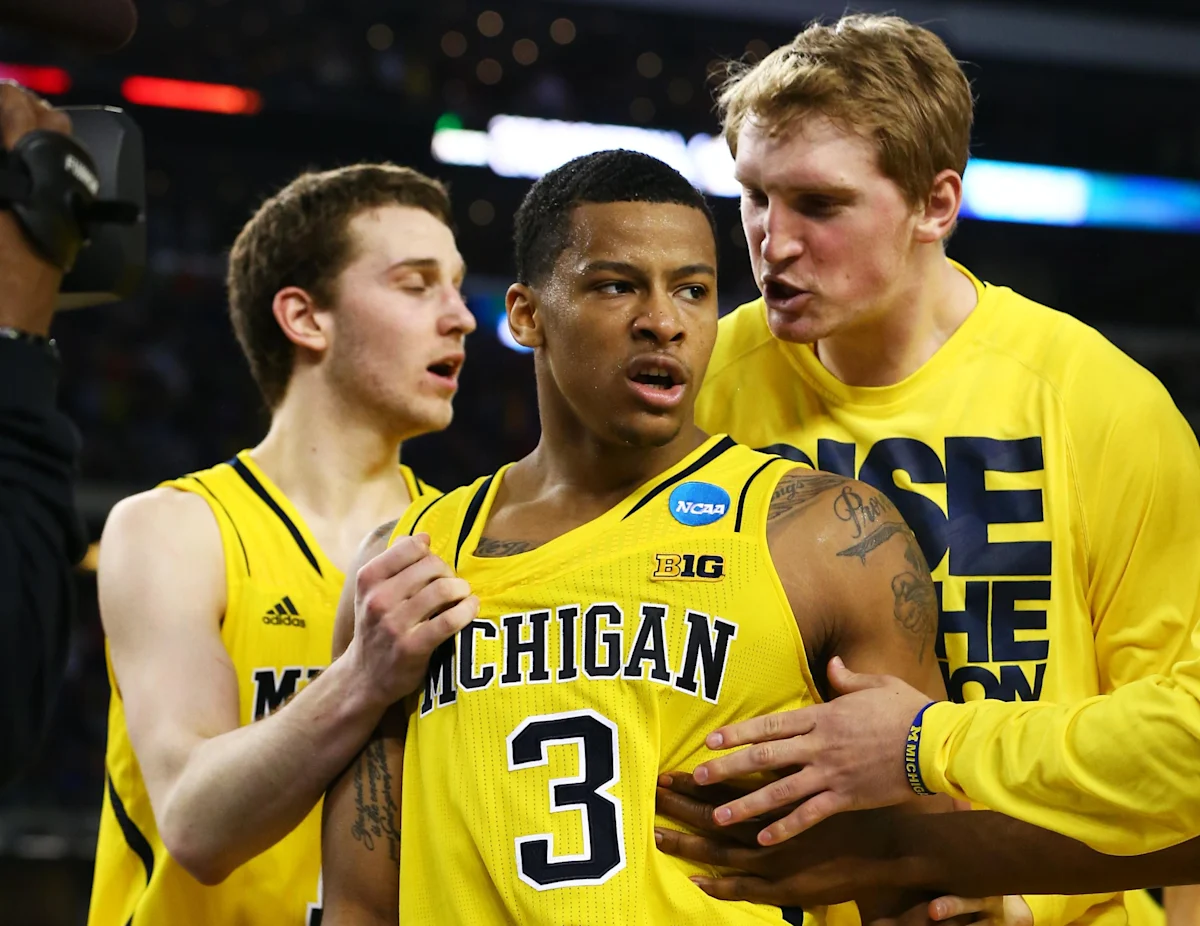
We've reached the end of the Michigan Wolverines' athletics offseason, and with that concludes our series ranking the top-25 players for the men's basketball team in between the 1989 and 2026 national championships. The celebration of Dusty May and this program winning their first national title in more than three decades concludes with the only National Player of the Year in this era and one of two in the history of the program — Trey Burke.
Chris Webber may have been the better basketball prospect. Juwan Howard had the longer Michigan career. Yaxel Lendeborg won a national championship and Big Ten Player of the Year.
But Burke reached a level of individual accolades none of those greats did in their careers. For one season, Burke was not merely the best player in Ann Arbor, he was the best player in college basketball. And unlike many others who have earned that crown, Burke backed it up with one of the most memorable NCAA Tournament runs in Michigan history.
Despite playing only two seasons in Ann Arbor, Burke finished with 1,231 points, 416 assists and 93 steals. His 416 assists ranked seventh in Michigan history when he left, despite playing just two seasons. In 73 career games, he accomplished what most players need four years to even approach.
It was even more pivotal because Burke was the face of the turning point of the John Beilein era, and he wasn't an elite prospect coming out of high school. Michigan needed a point guard after Darius Morris left for the NBA, and Burke did more than just fill his shoes. Burke averaged 14.8 points, 4.6 assists and 3.5 rebounds per game as a true freshman. He led the team in scoring, steals and assists, breaking a 27-year old freshman assist record in the process. That led to him winning Big Ten Freshman of the Year and seven Big Ten Freshman of the Week honors, and being named a second-team All-Big Ten, an AP All-American honorable mention.
Led by a freshman Burke, the Wolverines went 13-5 in the Big Ten, earning a share of the program's first Big Ten regular-season championship in 26 years. In the Big Ten Tournament opener, Burke exploded for a career-high 30 points in a 73-69 overtime win while shooting 11-for-14 from the field. A disappointing loss to Ohio State ended the Wolverines' tournament run, and then a stunning loss in the Round of 64 in the NCAA Tournament to Ohio could have spelled the end of his career.
Instead, Burke decided to return for one more season, in part because of the best freshman class Beilein brought in during his tenure. Nik Stauskas, Glenn Robinson III, Mitch McGary, Spike Albrecht and Caris LeVert all joined the team and played large roles alongside Burke and his counterpart Tim Hardaway Jr. It was the culmination of everything clicking at the right time and Burke was the focal point, ascending from Big Ten Freshman of the Year to National Player of the Year.
Michigan came into the 2012-13 season as the No. 5 team in the country and started 16-0. But the team played in a LOADED Big Ten — Ohio State, Michigan State, Indiana and Minnesota all ranked in the top-10, and the Wolverines had two top-five matchups with the Hoosiers. Still, the Wolverines earned the No. 1 ranking in the AP Poll for the first time since the Fab Five era in late January.
Despite the loaded conference, Burke was by far the best player. In Big Ten play, Burke averaged 20.2 points, 6.4 assists and two steals per game while shooting 40.4 percent from behind the arc. He scored at least 15 points in all 18 Big Ten games and broke Michigan's single-season assist record with 260 on a 3-to-1 turnover ratio. It was statistically one of the most efficient seasons a guard has had in program history.
Not only did Burke win Big Ten Player of the Year over the likes of Victor Oladipo, Cody Zeller and Aaron Craft from both the coaches and media, but he also swept the national awards. He earned the Wooden Award, Naismith Trophy, AP National Player of the Year, NABC Player of the Year, Oscar Robertson Trophy, SI's National Player of the Year, and the Bob Cousy Award. It wasn't just one organization, it was consensus that Burke was the best player in college basketball.
The NCAA Tournament run that coincided hung on Burke's shoulders. There's no better example than the Sweet 16 matchup with the AP's No. 3 team in the country, the Kansas Jayhawks. Michigan trailed by 14 in the second half and were still down double digits with seven minutes remaining. After not scoring in the first half, Burke took over. For the rest of the game, Burke scored 23 points and hit "The Trey" to tie the game and send it to overtime:
It capped a 23-8 run for the Wolverines over the final seven minutes, and Michigan won 87-85 in overtime.
Beilein's team road the momentum from that game into a National Championship appearance against the AP No. 2 team in the country, Louisville. It was a fantastic back-and-forth game, as Burke carried the Wolverines with 24 points.
The turning point was with 5:09 remaining. Louisville led 67-64 when Burke chased down Peyton Siva in transition and cleanly blocked the ball. However, it was called a foul by the officials in one of the most controversial calls in NCAA Tournament history:
Instead of Michigan riding the momentum from its best player making a championship play, the Cardinals extended their lead to two possessions and went on a 9-2 run that sealed the game.
Despite falling short, Burke led the resurrection of Michigan men's basketball. He wasn't just the face of college basketball, he helped Michigan win a Big Ten regular-season title, reach No. 1 in the polls, appear in the program's first Final Four in 20 years, and make their first National Championship appearance since the Fab Five era.
For the first time in what felt like eons, the Wolverines were back among college basketball's elite. Without Burke and this run, what we saw last season with Dusty May and crew wouldn't have happened. He trailblazed the path to a title and a made Ann Arbor a place for college basketball's best once again.
Topics in this story
Gathered from external sources. Rights to this text belong to whoever originally published it.